Constellation Energy Raises 2026 Earnings Outlook After Reporting $5.06 in Adjusted Q3 EPS
Constellation lifted its full-year adjusted earnings forecast to $12.50–$12.80 per share as Calpine and stronger commercial performance helped boost quarterly profit.
Our editorial standards
MarketReview publishes clear, independently produced financial information using reliable sources and transparent editorial standards.
Read our Editorial Policy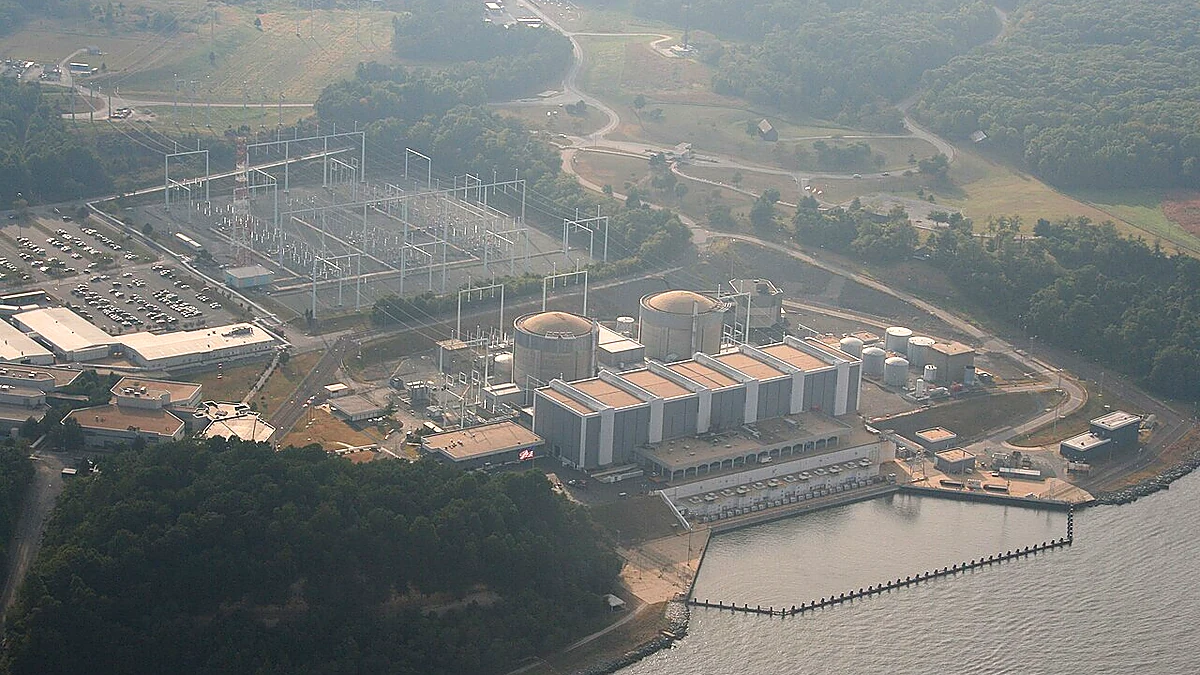
Constellation Energy raised its full-year 2026 adjusted earnings outlook after reporting $5.06 per share in third-quarter adjusted operating earnings, up from $3.04 a year earlier. The Baltimore-based power producer now expects adjusted operating earnings of $12.50 to $12.80 per share, lifting the lower end of its prior forecast and narrowing the range for the remainder of the year.
The updated forecast marks Constellation’s second guidance increase this year. Its new midpoint of $12.65 is 65 cents above the previous $12.00 midpoint and $1.15 higher than the $11.50 midpoint of its original 2026 forecast. Management credited strong commercial performance and favorable market conditions, alongside contributions from Calpine, which Constellation acquired in January.
The quarter ended September 30 also produced $5.19 in earnings per share under generally accepted accounting principles, compared with $2.97 in the year-earlier period. Constellation reported the results on November 9 in its third-quarter earnings release. The distinction between reported and adjusted profit matters because the company excludes certain valuation changes, acquisition-related costs and other items from its adjusted measure.
Calpine and commercial performance lift quarterly results
Operating revenue rose to $9.55 billion from $6.57 billion, an increase of roughly 45%. Net income attributable to common shareholders nearly doubled to $1.835 billion from $930 million. Operating income increased to $2.492 billion from $1.086 billion, although the broader business also carried higher fuel, purchased-power and operating costs.
Constellation described the main drivers of adjusted earnings as favorable market and portfolio conditions and the addition of Calpine. It said unfavorable interest impacts and its nuclear production-tax-credit portfolio partly offset those benefits. That qualification is important: the comparison reflects both the enlarged generating business and the environment in which its power and customer contracts performed, rather than an increase in output alone.
Adjusted operating earnings totaled $1.792 billion for the quarter, compared with $952 million a year earlier. The average diluted share count was 354 million, up from 313 million, so the increase in per-share adjusted profit occurred despite a larger denominator. The company has also continued repurchasing shares, with its earnings presentation showing approximately $3 billion spent on buybacks in the first nine months of 2026.
The gap between GAAP and adjusted results did not overturn the overall direction of the quarter: both measures rose sharply. Still, adjusted operating earnings are a company-defined, non-GAAP metric and are not directly interchangeable with GAAP net income. Constellation’s reconciliation includes effects from fair-value adjustments, nuclear decommissioning activities and costs related to the Calpine merger and subsequent operational integration.
New guidance raises the floor and narrows the range
Constellation entered 2026 with adjusted operating earnings guidance of $11.00 to $12.00 per share. In August, it raised that range to $11.50 to $12.50. The latest $12.50 to $12.80 forecast puts the former upper end at the new lower end, reducing the width of the expected range from $1.00 to 30 cents per share.
The latest guidance reflects commercial outperformance in a volatile market, according to the company’s earnings presentation. Some of that benefit is expected to be offset by higher operations and maintenance expenses related to performance. A narrower range also leaves less distance between management’s best and worst currently stated outcomes, but it remains a forecast, not a guarantee of full-year profit.
Constellation based the revised outlook on an expected average diluted share count of 356 million. Its original 2026 guidance used 361 million shares, and the August revision assumed 357 million. Share-count changes can affect earnings per share independently of changes in total profit, so the assumptions are relevant when comparing the three sets of forecasts.
There is no equivalent GAAP earnings forecast in the release. Constellation said it could not reliably reconcile forward-looking adjusted earnings to future GAAP net income because changes in the values of derivatives and investments held by nuclear decommissioning trusts cannot be projected with sufficient certainty. Actual reported earnings could therefore differ from the adjusted range for reasons not captured by the current forecast.
Long-term power contracts support nuclear investment plans
The financial update arrives as Constellation builds a portfolio of long-duration agreements aimed at supplying electricity to large customers and financing additional generation. In September, the company announced a 20-year, 690-megawatt power purchase agreement with Amazon, together with a related retail supply arrangement for Amazon operations in the PJM power market.
Constellation says the Amazon agreement will support more than $3 billion in investment at the Calvert Cliffs Clean Energy Center in Maryland. The planned work includes plant improvements and a 190-megawatt capacity expansion expected to enter service between 2030 and 2032. Those are proposed future additions, not megawatts that contributed to the third-quarter results.
A separate 20-year agreement announced in October with Google is expected to underpin more than $4.3 billion of spending across 11 nuclear units in Illinois, Pennsylvania and New Jersey. Constellation projects that work will add approximately 890 megawatts of capacity to the PJM grid, with the first increase expected in 2028. The companies also reached a 15-year financial energy arrangement covering 2,700 megawatts in PJM.
Another agreement covers 270 megawatts of energy, capacity and nuclear attributes from Constellation’s existing nuclear fleet over 20 years, starting in 2028. It is the first agreement under Peak+, the company’s customer offering that links electricity supply with additional capacity and demand-response resources. These contracts can provide greater visibility into future revenue, although their economic effects depend on delivery dates, project execution and contractual terms.
Operational performance provides a separate measure of the fleet behind those plans. Including its owned share of the Salem and South Texas Project stations, Constellation’s nuclear generation reached 46,677 gigawatt-hours in the quarter, versus 46,477 gigawatt-hours a year earlier. Excluding those two stations, the company reported a 97.2% capacity factor, up from 96.8%, with fewer planned refueling outage days.
Constellation has also agreed to acquire the 609-megawatt Rhode Island State Energy Center, a natural gas-fired facility that sells power and capacity into New England’s competitive wholesale market. The acquisition remains subject to regulatory approvals and other closing conditions. Its inclusion would further expand the fleet beyond the nuclear assets central to many of the new long-term agreements.
Funding for nuclear upgrades is not yet fully settled. In October, Constellation signed a conditional U.S. Department of Energy loan commitment covering up to $5 billion for proposed power increases at several nuclear plants. The contemplated financing would have a 30-year term, but it depends on a final loan agreement. That distinction, like the future startup dates for the Amazon and Google projects, separates the growth investments under discussion from earnings already reported.
More from Investing


Latest News
View all news- U.S. Wholesale Sales Jump 2.8% in September as Inventories Rise 0.7%
- RBI Injects ₹50,003 Crore Into Banking System Through Four-Day Repo Auction
- USDA Finalizes Rural Mortgage Rule Excluding Agent Commissions From Seller Concession Cap
- SEC Holds Roundtable on AI-Readable Financial Data and Market Risks
- New York Fed Research Finds Major U.S. Monetary-Policy Improvements Came Only in Recent Decades