
Dallas Fed’s Logan Calls for At Least Two More Interest Rate Increases
Logan says stubborn inflation warrants at least two more quarter-point rate hikes and suggests the Fed could move faster this winter.
Our editorial standards
MarketReview publishes clear, independently produced financial information using reliable sources and transparent editorial standards.
Read our Editorial Policy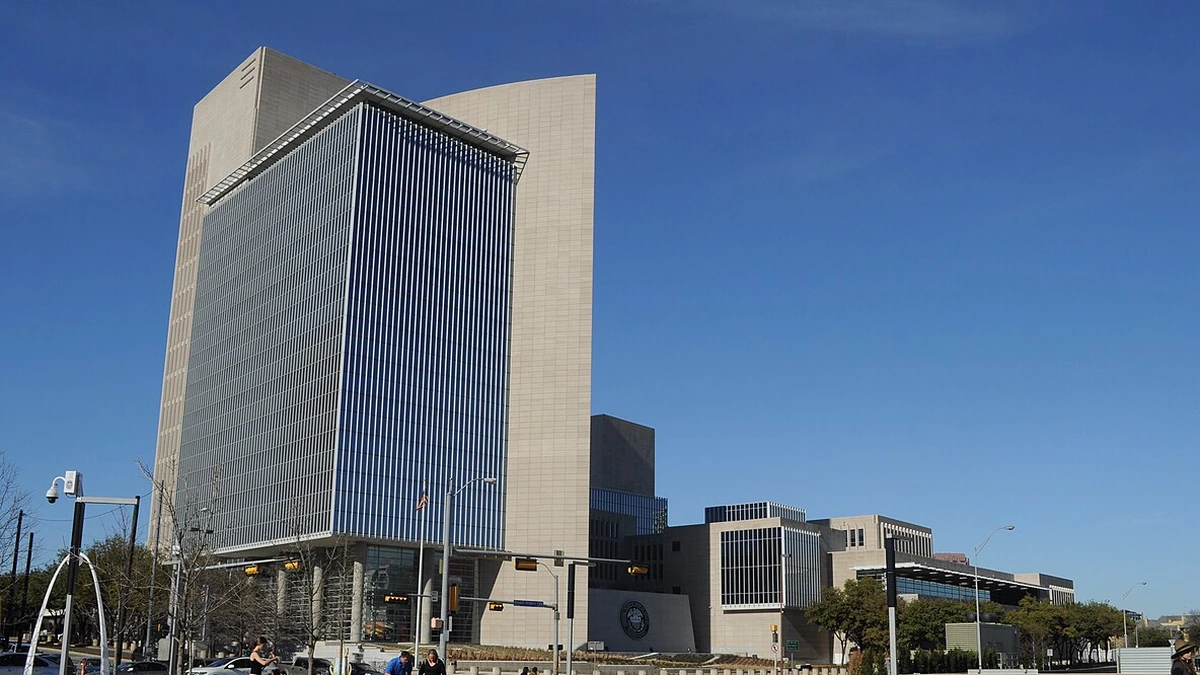
Dallas Federal Reserve President Lorie Logan reiterated her call Tuesday for at least two more quarter-percentage-point interest rate increases, saying inflation remains too persistent for the Federal Reserve to stop tightening policy. She also raised the possibility of moving faster this winter than policymakers have moved so far this fall.
Logan said the additional increases would be needed to bring monetary policy to a modestly restrictive setting, after which she would favor pausing to assess the economy. Her preferred course would add at least half a percentage point to the federal funds rate target, which currently stands at 3.75% to 4%.
Speaking at a Dallas and Kansas City Fed energy conference in Houston, Logan laid out her case in prepared remarks published by the Dallas Fed. The call for two more increases was not new: she made the same recommendation on October 30. Tuesday’s speech added that the pace could quicken if economic and financial conditions permit. Her comments expressed her own policy preference, not a decision by the Federal Open Market Committee.
Inflation remains broader than the energy shock
Logan’s argument begins with inflation that has stayed above the Fed’s 2% target for nearly six years. The personal consumption expenditures price index, the central bank’s preferred inflation measure, rose 3.6% over the 12 months through September, according to the Bureau of Economic Analysis. Excluding volatile food and energy prices, the index increased 3.1% over the same period.
Energy has been an important source of the recent pressure. Logan said crude oil prices were up nearly 50% from the previous year’s conference, and disruptions associated with conflict in the Persian Gulf have pushed up costs. She also pointed to price increases affecting imported manufactured goods amid tariffs. Those forces could fade, but she argued that the broader pattern of inflation cannot be explained by temporary shocks alone.
One piece of evidence is the price of services less directly exposed to energy and trade disruptions. Non-housing, non-transportation core service prices rose 3.2% over the year through September, Logan said. That was eight-tenths of a percentage point above the pace historically consistent with the Fed’s inflation objective. The category includes expenses such as medical appointments, childcare and restaurant meals, suggesting that pressure is extending beyond gasoline and other conspicuous price changes.
Different measures of underlying inflation also tell a less reassuring story than the headline numbers alone. The Dallas Fed’s trimmed mean PCE index showed a 2.3% annual increase through September, but Logan said research by her staff suggests it is currently excluding too many price increases and may understate the trend. A New York Fed measure of core inflation registered 2.8%, reinforcing her concern that underlying inflation is still too high.
New figures released Tuesday offered little comfort. The Bureau of Labor Statistics reported that consumer prices rose 0.4% in October after a 0.6% increase in September. Prices excluding food and energy climbed 0.3% for the third consecutive month. Logan described the October report as hotter than expected and said it increased her concern that the next PCE reading could rise. The October PCE report is scheduled for November 25.
A resilient economy shapes the case for higher rates
Logan does not see an economy in which weaker demand is already doing enough to contain prices. Real gross domestic product expanded at a 3.4% annual rate in the third quarter, up from 2.2% in the second quarter, according to the BEA’s advance estimate. She also cited resilient consumer spending and an investment boom supported by demand for artificial intelligence infrastructure.
In her account, real business spending on equipment was 14% higher in the third quarter than a year earlier. Computers, peripherals and communications equipment, categories heavily used in data centers, accounted for more than 80% of that increase. Investment has started to spread into related machinery and electrical equipment, giving the expansion support beyond consumer purchases.
The labor market also appears sufficiently firm to Logan for the Fed to focus more heavily on bringing inflation down. Employers added 165,000 jobs in October, while the unemployment rate held near 4.1%, the Bureau of Labor Statistics reported last week. Logan characterized the market as broadly balanced and slightly tighter, although she acknowledged that finding a new job remains difficult for many people because businesses are cautious about hiring.
A central part of her reasoning is that interest rates may not yet be restrictive. The current nominal federal funds rate is about 3.88%, while a collection of surveys indicates expected inflation of roughly 3.1% over the coming year, she said. Subtracting one from the other yields an estimated real rate of about 0.78%. That is below the 1% to 1.85% range of real neutral-rate estimates from eight published models she examined.
The neutral rate is not directly observable, so those estimates cannot establish an exact policy setting. They do explain why Logan believes the current stance is still supporting economic activity rather than slowing it enough to bring inflation back to target. She also cited elevated stock prices, relatively narrow credit spreads and banks’ willingness to lend as signs that financial conditions remain supportive.
October’s pause has not changed Logan’s preferred path
The Fed increased its benchmark rate by 25 basis points in September, then held the target range at 3.75% to 4% on October 28. That decision passed by a 10-2 vote. Federal Reserve Governor Lisa Cook and Cleveland Fed President Beth Hammack dissented, preferring another quarter-point increase at the October meeting.
Logan defended the value of a slower approach during periods of unsettled financial markets. She said volatility surrounding technology investment and geopolitical developments before the October meeting made it sensible to allow households and businesses time to adjust to higher borrowing costs. A pause, however, should not be mistaken for a change in the eventual interest rate level she believes the Fed needs to reach.
Her proposal for at least two more 25-basis-point increases would take the target range to 4.25% to 4.5% if implemented from its current level. Logan did not commit to a particular meeting for either move, and her suggestion that increases might come more quickly this winter was explicitly dependent on incoming economic and financial conditions. She said she would favor reassessing the outlook after the two increases rather than committing now to an open-ended series of hikes.
The distinction matters because one policymaker’s view does not determine the path of borrowing costs. The FOMC makes rate decisions collectively, and mortgage rates, Treasury yields and other longer-term borrowing costs also respond to expectations for growth, inflation and future policy. Logan argued that a clearly communicated destination can help markets adjust even when the Fed skips a meeting.
She also left room to change course if the outlook shifts, including through changes in energy prices, geopolitical risks or investment spending. The next scheduled FOMC meeting is December 8-9, when policymakers will issue updated economic projections. Before then, the October PCE report on November 25 will provide another reading on the inflation trend that lies at the center of Logan’s case.
More from Banking


Latest News
View all news- U.S. Consumer Prices Rise 0.4% in October as Inflation Remains Elevated
- India’s Unemployment Rate Falls to 5.1% as Rural Job Market Improves
- U.S. Real Hourly Earnings Stall in October as Inflation Offsets Wage Gains
- Fed Governor Waller Backs December Rate Increase Despite Stable U.S. Labor Market
- U.S. Small-Business Confidence Holds Near Long-Term Average as Tax Concerns Rise
