
First Citizens Authorizes $1.2 Billion Share Buyback Alongside Third-Quarter Earnings
The new authorization is for 2027 and follows $600 million in third-quarter repurchases, even as quarterly net income declined.
Our editorial standards
MarketReview publishes clear, independently produced financial information using reliable sources and transparent editorial standards.
Read our Editorial Policy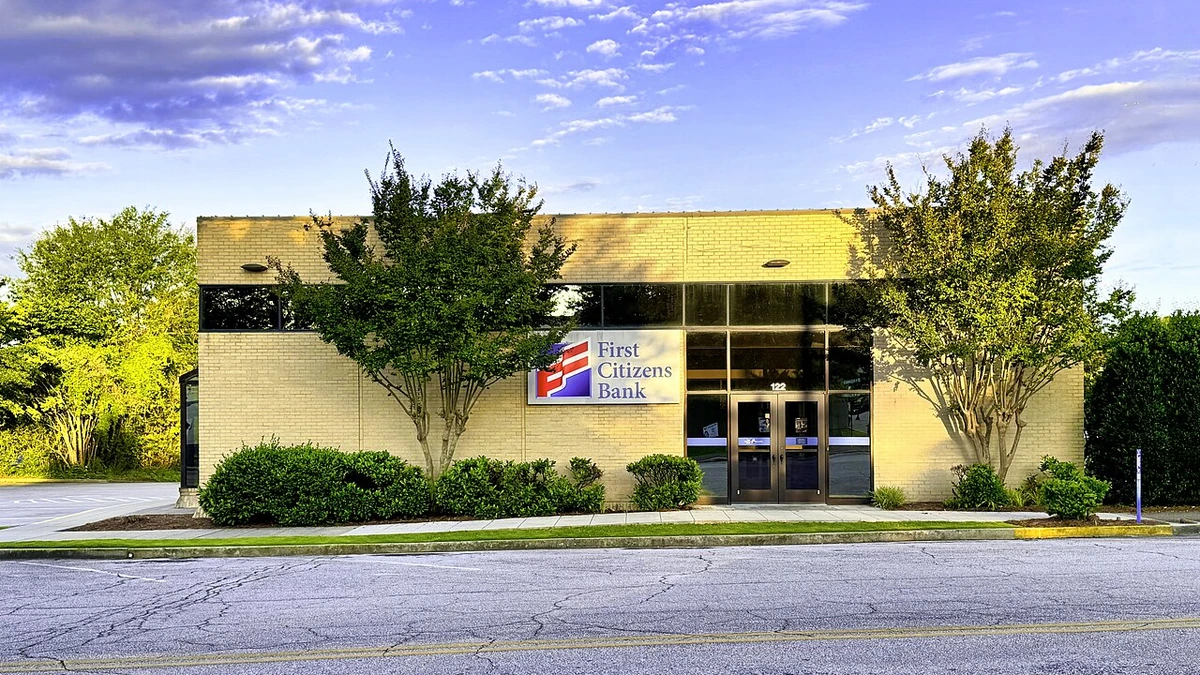
First Citizens BancShares authorized a new share repurchase plan of up to $1.2 billion for 2027 on Friday, October 23, as the bank holding company reported a decline in third-quarter profit despite growth in lending and deposits. Net income was $606 million for the quarter ended September 30, down from $672 million in the second quarter.
The announcement extends a substantial capital-return effort, but the new authorization is separate from the shares First Citizens has already bought this year. The company spent $600 million repurchasing Class A shares during the third quarter and still had $711 million available under its earlier repurchase plan as of September 30.
The company’s third-quarter earnings release also showed higher net interest income, a larger loan portfolio and a sharp increase in deposits. Those operating gains came alongside higher funding costs and a swing in the provision for credit losses, helping explain why reported earnings fell even as the balance sheet expanded.
The $1.2 Billion Authorization Is for 2027
The board approved the latest program for repurchases of First Citizens’ Class A common stock during 2027. Its predecessor, announced in July 2025, permits purchases through 2026. The distinction matters: the $1.2 billion is authorization for a future period, not an amount spent in the quarter just reported, and it should not be confused with the $711 million remaining under the older plan.
Third-quarter purchases totaled 278,828 Class A shares at an aggregate cost of $600 million. First Citizens said that represented 2.68% of the Class A shares outstanding at the end of June. The company also paid a quarterly common dividend of $2.10 per share on both its Class A and Class B stock, another form of cash returned to shareholders.
The repurchase effort has already reduced the share base substantially. From the start of the program launched in 2024 through September 30, 2026, First Citizens bought 3,420,683 Class A shares for $6.79 billion. That total equaled 25.29% of the Class A shares outstanding on June 30, 2024. The percentage is measured against that earlier share count, rather than the number of shares outstanding today.
An authorization sets a maximum amount the board permits management to spend; it does not require the bank to purchase that much stock. First Citizens said repurchases under either plan can be suspended or stopped and that timing and amounts will depend on market prices, business conditions, regulatory requirements and competing uses of capital. Investors therefore cannot treat the full 2027 authorization as a fixed reduction in outstanding shares.
Share repurchases can raise earnings per share by reducing the share count, assuming earnings and other factors stay the same. They also consume capital that could otherwise support lending, acquisitions or balance-sheet flexibility. First Citizens’ decision to establish a plan for next year signals an intention to retain that option, without committing to a particular pace of purchases.
Higher Interest Income Was Not Enough to Prevent a Profit Decline
Net income available to common shareholders dropped to $577 million, or $51.23 per common share, from $640 million, or $55.52 per share, in the preceding quarter. On the company’s adjusted, non-GAAP basis, net income was $652 million versus $691 million in the second quarter. These adjusted figures exclude specified items and should not be treated as interchangeable with reported profit.
The central lending measure improved. Net interest income reached $1.70 billion, an increase of $43 million from the second quarter, supported by larger interest-earning balances and higher returns on certain assets. Excluding purchase accounting accretion, which can affect comparisons involving acquired loans, net interest income was $1.66 billion, up $47 million.
The improvement did not translate into a wider interest margin. Reported net interest margin slipped three basis points to 3.07%. Interest income on loans increased $88 million and investment securities contributed another $26 million, but interest expense on interest-bearing deposits rose $90 million. The bank attributed that expense increase to both higher balances and higher rates, especially in direct banking and brokered deposits.
Borrowing costs provided some relief, falling $19 million as First Citizens reduced the outstanding balance of its Purchase Money Note. The bank repaid another $8.00 billion on that obligation during the quarter. More income from loans and securities, alongside the cost of attracting deposits, illustrates the different forces affecting profitability as the company grows.
Other components also weighed on the quarterly comparison. Noninterest income was $734 million, down from $776 million, with changes in the valuation of equity warrants among the drivers. Noninterest expense increased $22 million to $1.57 billion, including higher acquisition-related and other expenses. In addition, the provision for credit losses was $55 million after a $10 million benefit in the previous quarter, a swing that reduced reported earnings.
A Branch Acquisition Helped Lift Deposits
Part of First Citizens’ growth reflected a branch purchase completed shortly before the quarter ended. Its banking subsidiary acquired 138 branches from BMO Bank on September 4, adding approximately $4.9 billion of deposits and about $650 million of loans. The acquired locations are in the Midwest, Great Plains and western United States.
Total deposits reached $185.26 billion at September 30, an increase of $11.84 billion, or 6.8%, from June 30. General Bank deposits rose $5.66 billion, largely reflecting about $4.86 billion transferred with the BMO branches. Corporate deposits grew $4.71 billion, primarily through the direct bank and brokered deposits, while the Commercial Bank segment added $1.46 billion.
Loans and leases increased $6.16 billion, or 4.1%, to $157.19 billion. Most of the increase came from the Commercial Bank segment, where loans grew $5.48 billion, concentrated in fund banking. General Bank loans rose $633 million, with the BMO branch purchase a major contributor. The distinction separates expansion in existing lending activities from balances brought in through the acquisition.
Deposit growth also altered the funding mix. Deposits accounted for 88.3% of total funding at quarter-end, up from 84.3% in June. Borrowings declined to $24.47 billion from $32.19 billion, mainly because of the Purchase Money Note repayments. A larger deposit base can reduce reliance on other forms of borrowing, although it is not cost-free: the average cost of total deposits rose to 2.16% from 2.07% quarter over quarter.
The proportion of deposits paying no interest fell as well. Noninterest-bearing balances represented 22.9% of total deposits at September 30, compared with 24.5% at the end of June. This is a useful qualification to the headline deposit gain: more funding was available, but the company was paying more for its deposit base overall.
Capital and Credit Trends Remain Important for Repurchases
First Citizens reported an estimated Common Equity Tier 1 capital ratio of 10.24% at September 30 and a total risk-based capital ratio of 12.90%. Both figures were above applicable regulatory requirements, according to the company. It also issued $300 million of Series F perpetual preferred stock during the quarter, which it said is included in Tier 1 capital.
Reported liquid assets were $57.33 billion at quarter-end, down from $59.14 billion in June. That decline occurred as the company repurchased shares, expanded its balance sheet and made the large Purchase Money Note repayment. The release does not assign a single cause to the change in liquidity, and the size of the new authorization should not be interpreted as cash already set aside for buybacks.
Loan-quality indicators were mixed in a way that requires more context than the provision figure alone. Net charge-offs decreased to $103 million, or 0.27% of average loans, from $108 million, or 0.29%, in the second quarter. Nonaccrual loans declined to $1.37 billion from $1.45 billion. At the same time, the bank recorded a credit-loss provision rather than the previous quarter’s benefit, partly because the release of reserves was smaller.
The allowance for loan and lease losses totaled $1.44 billion at September 30, compared with $1.48 billion at June 30. As a percentage of loans, the allowance moved to 0.91% from 0.98%. These figures help put the credit-loss provision alongside actual charge-offs and problem-loan balances, rather than treating the earnings charge as evidence by itself of a sudden deterioration in credit quality.
The next practical distinction is between the authorization made in October and repurchases actually completed. The existing plan can be used through the rest of 2026, while the new $1.2 billion program applies in 2027. First Citizens has said decisions under both plans remain discretionary, subject to capital needs and regulatory conditions; future quarterly disclosures will show how much of the available capacity the bank ultimately uses.
More from Banking


Latest News
View all news- U.S. Consumer Sentiment Holds Near Record Lows as Inflation Expectations Rise
- U.S. Business Growth Moderates in October as Selling-Price Inflation Accelerates
- SEC Sets 2027 Examination Priorities, With Private Credit and AI-Related Risks in Focus
- University of Michigan Research Warns Long-Term Inflation Expectations Could Become Entrenched
- American Express Raises 2026 Profit Outlook After Record $20.1 Billion Quarterly Revenue
