
FTC, USDA Launch Joint Inquiry Into Agricultural Equipment Market Practices
The FTC and USDA are seeking public comments on business practices in agricultural equipment manufacturing and distribution, including restrictions that may affect repairs, pricing, market entry and farmer welfare.
Our editorial standards
MarketReview publishes clear, independently produced financial information using reliable sources and transparent editorial standards.
Read our Editorial Policy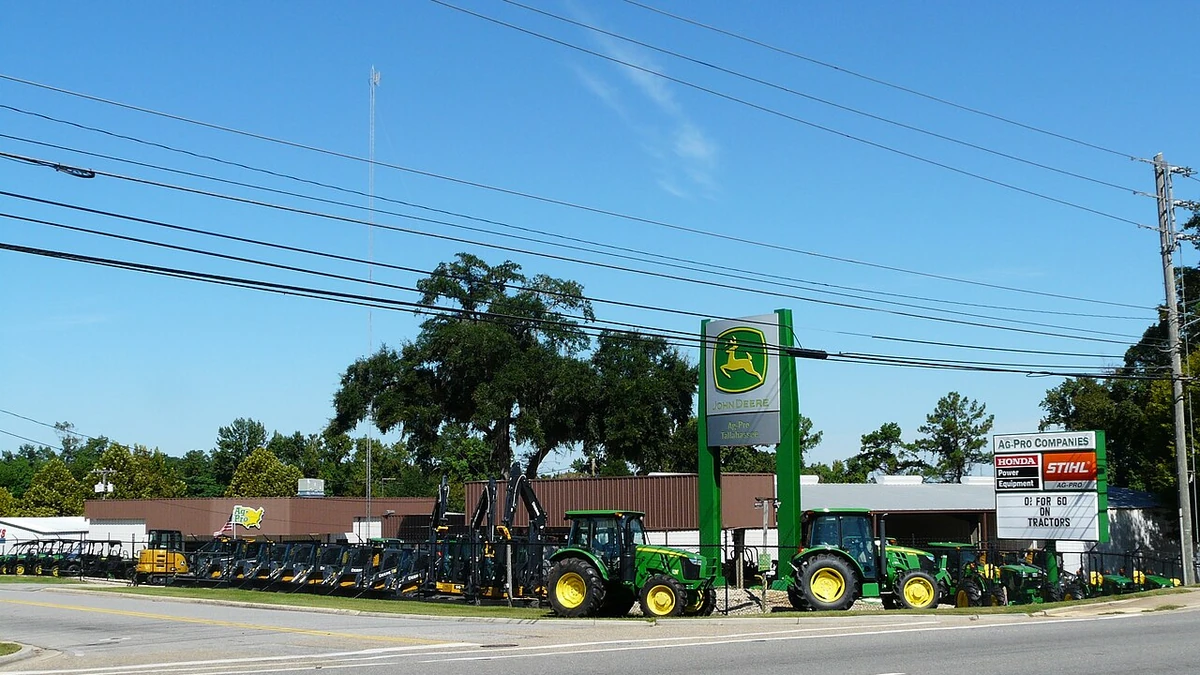
The Federal Trade Commission and the U.S. Department of Agriculture have opened a joint public inquiry into the way agricultural equipment is manufactured, distributed and serviced, widening a broader federal push on farm competition into a fresh area that reaches from dealer agreements to repair access and equipment pricing.
The agencies said Wednesday they are seeking comments on practices that may be limiting competition in the market for tractors and other farm equipment. The request is not a formal finding of wrongdoing against any one company, and it does not itself impose new rules. Instead, it is a fact-finding step that the agencies said could help shape future enforcement and regulatory priorities.
What the inquiry is asking the public to provide
In the FTC’s announcement of the joint request for information, the two agencies asked farmers, independent repair providers, and current and former employees of equipment manufacturers and dealers to submit comments about business models, policies, agreements and contractual terms that affect the sector. They also want firsthand accounts or documented cases involving restrictions, penalties or retaliation.
The agencies framed the effort broadly. They said comments can address whether particular practices affect pricing, market entry, innovation, farmer welfare or the resilience of rural economies. That means the review is not limited to whether farmers can fix their own machines. It also reaches questions about how equipment reaches buyers, what conditions govern dealer relationships, and whether service and parts access can be restricted in ways that reduce competition.
Comments are due by December 7, 2026, at 11:59 p.m., and submissions will be made through Regulations.gov. By using a public inquiry rather than announcing an enforcement case at the outset, the FTC and USDA are signaling that they want a wider factual record before deciding whether additional action is warranted. That approach also gives the agencies a way to collect evidence from producers and local service businesses that may not otherwise appear in public filings or court records.
For manufacturers, dealers and repair networks, the breadth of the questions matters. A narrowly tailored inquiry could have focused on a single practice or a single contractual bottleneck. This one instead opens the door to a wider debate over whether the structure of equipment distribution, after-sales service and parts availability is working competitively for farmers who depend on costly machinery during narrow planting and harvest windows.
Why equipment and repair access are back in focus
The FTC said the inquiry is part of its ongoing work to preserve competition in agriculture. In the same announcement, it pointed to two recent matters: a settlement, joined by twelve states, involving Corteva’s alleged conduct in pesticide markets, and a settlement, joined by five states, in an antitrust case over repair restrictions imposed by Deere & Company. The Deere settlement, according to the agency, is intended to ensure that farmers and independent repair providers can obtain the tools and resources needed to service John Deere equipment.
USDA added the equipment inquiry after receiving what the FTC described as a growing number of complaints from farmers who say they face barriers not only in buying equipment but also in obtaining the services needed to keep it operating. That is an important distinction. The agencies are not portraying the issue purely as a parts-and-software dispute. They are also examining whether the broader manufacturing and distribution ecosystem may be creating chokepoints that raise costs or reduce practical choice in rural markets.
That distinction matters because agricultural machinery is unlike many other manufactured products. A broken tractor, combine or sprayer can leave a farmer with only a short window to act, particularly during planting, spraying or harvest. If service access, repair tools, software permissions, dealer territories or supply arrangements reduce the number of realistic options available in those moments, the competitive effects can be larger than they might look in a conventional retail market.
The inquiry also arrives after a difficult period for many farmers, who have faced weaker crop prices and high borrowing costs even as machinery remains expensive. The FTC and USDA did not tie the inquiry to any one price cycle, but the pressure on farm economics gives the question more urgency. When equipment purchases are large and downtime is costly, even limited restrictions on repairs, parts or dealer relationships can have outsized effects on farm budgets.
What the inquiry could mean from here
Nothing in Wednesday’s announcement predetermines an enforcement case, a rulemaking or a settlement. The agencies said the information gathered will be used to inform enforcement and regulatory priorities and future actions. In practice, that means the current step is investigative and agenda-setting rather than punitive. Market participants therefore need to read the move as the opening of a record, not as a final agency judgment on the conduct being examined.
The inquiry also fits a broader interagency competition push in agricultural inputs. A day earlier, the Justice Department and USDA said they had reaffirmed and expanded their partnership to protect competition across food and agricultural inputs, including equipment. That separate announcement does not mean a coordinated case is imminent, but it does show that farm input competition remains an active cross-agency priority rather than a one-off headline.
For equipment makers and dealer networks, the immediate consequence is likely to be heavier scrutiny of contract terms, service policies, software controls and distribution practices. For farmers and independent repair businesses, the practical near-term opportunity is the comment period itself. If the agencies receive detailed submissions with concrete examples, the inquiry could give them a stronger basis for deciding whether sector-wide guidance, additional investigations or future cases are justified.
The next concrete milestone is the close of the public comment period on December 7. After that, the agencies will have to decide whether the record supports targeted action against specific conduct, broader policy recommendations, or no further step beyond monitoring the market. Until then, the inquiry chiefly serves as a signal that agricultural equipment practices, especially where they intersect with distribution and repair access, will remain under close federal review.
More News


Latest News
View all news- Safe Pro Expects Q3 Revenue Above $2.5 Million as U.S. Government Contract Work Accelerates
- OCC Launches Direct Payments-Fraud Reporting Tool for Community Banks
- Norway Proposes NOK 608.4 Billion in Wealth-Fund Spending and NOK 6.4 Billion Income-Tax Cut in 2027 Budget
- New York Fed Research Finds Most Firms Barely Change Investment After Rate Shocks, but a Small Minority React Sharply
- German Production Rebounds 2.0% in August as Construction Surges
