German Business Confidence Improves Despite Weakening Manufacturing Sentiment
The ifo index rose to 90.6 in November as service providers reported better conditions, but factory managers became more cautious about the outlook.
Our editorial standards
MarketReview publishes clear, independently produced financial information using reliable sources and transparent editorial standards.
Read our Editorial Policy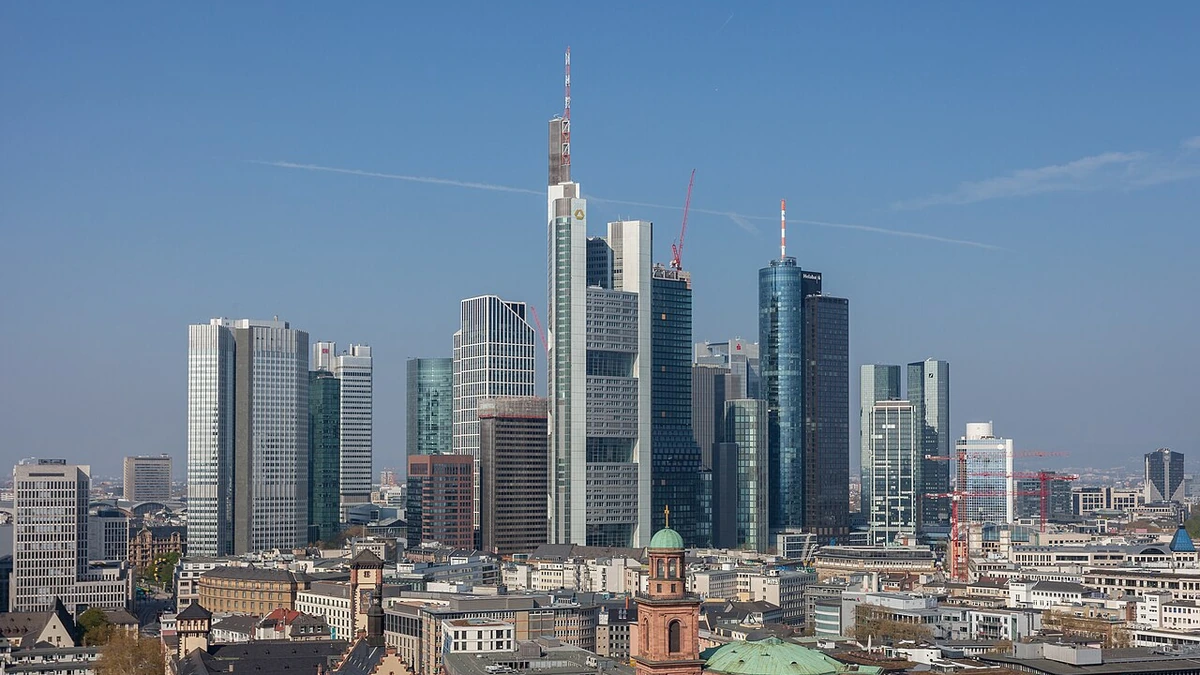
German business confidence improved for a seventh consecutive month in November, but manufacturers grew more pessimistic about their prospects. The ifo Business Climate Index rose to 90.6 from a revised 90.1 in October, extending a recovery that began in the spring of 2026.
Companies across the economy reported better business conditions and a more favorable outlook. The improvement was particularly evident in services, whereas the industrial sector’s recent run of rising confidence came to an end. Construction businesses also reported a slight deterioration in sentiment.
November’s reading puts the headline index 5.8 points above its April level of 84.8. It is the highest reading in the 13-month series accompanying the latest survey, although both components of the index remain below their 2015 reference levels.
Factory managers become more cautious about the months ahead
Manufacturing confidence fell for the first time in seven months, according to the November 24 release from the ifo Institute. The change originated in companies’ assessment of future conditions rather than a marked deterioration in business at the time of the survey. Manufacturers reporting good current conditions were roughly balanced by those reporting poor conditions, but negative assessments of the outlook once again outweighed positive ones.
Producers of consumer goods were among those reporting weaker sentiment. Their responses are worth noting in light of the latest evidence of a modest improvement in German consumption. Demand for manufactured consumer products need not follow spending on services, and the survey does not establish how much of the deterioration reflects domestic rather than overseas demand.
Recent industrial statistics provide a mixed backdrop to the survey. Germany’s Federal Statistical Office, Destatis, reported on November 5 that inflation-adjusted factory orders increased by 4.4% in September from August, following a revised 10.1% decline the preceding month. Orders were 5.1% higher when large individual orders were excluded from the September comparison.
The quarterly picture was less encouraging. Manufacturing orders increased by just 0.2% in the third quarter relative to the second, or 0.1% without large orders. September’s improvement in demand was therefore not enough to establish a strong upward trend over the quarter as a whole. Domestic orders rose 6.6% in September, compared with a 2.8% increase in orders from abroad, both on a monthly basis.
Industrial output also rebounded in September, rising 0.7% from August, according to provisional Destatis figures published on November 6. Production nevertheless contracted by 0.4% over the third quarter compared with the previous three months. Energy-intensive industries performed particularly poorly over the quarter, recording a 3.5% reduction in output.
September’s production increase was heavily influenced by the automotive sector, where output jumped 17.1% after two weak months. Machinery and equipment production, by contrast, fell 6.5%. The divergence illustrates how a recovery in the aggregate industrial figures can coexist with difficult operating conditions for particular groups of manufacturers.
Service businesses and retailers report better conditions
Outside manufacturing, the November survey was more encouraging. Service providers reported a better current position and stronger expectations, with logistics continuing to recover. Conditions in the trade sector also improved overall, but the retail and wholesale readings moved in opposite directions. Retail sentiment rose, whereas wholesale sentiment declined.
Builders were less satisfied with their current circumstances despite a modest improvement in their outlook. The sector’s overall confidence slipped. Actual construction output had fallen 2.6% in September from August, according to the industrial production release, though that earlier figure cannot by itself explain how construction businesses answered the November survey.
Across all covered sectors, the ifo current conditions index increased to 89.4 from 88.8 in October. The expectations measure reached 91.9, compared with 91.5 a month earlier and 84.1 in April. November was thus a month in which assessments of existing business improved more than expectations in point terms, even though the longer recovery since spring has been stronger in the forward-looking component.
The distinction is important when interpreting the headline reading. The index is based on about 9,000 monthly business responses, weighted by industry. Managers assess their own operations and give an outlook for the following six months. Its normalized readings measure sentiment relative to the reference period rather than the rate of economic expansion. An increase of half an index point does not mean that output or business revenue has increased by half a percent.
Modest GDP growth provides an incomplete picture
Germany’s economy expanded by 0.2% in the third quarter from the second on a price, seasonal and calendar-adjusted basis, according to the preliminary GDP estimate published by Destatis on October 30. Real output was 1.3% higher than in the same quarter of 2025, or 1.2% after also accounting for calendar effects.
The composition of that growth matters as much as the headline rate. Preliminary estimates pointed to a small rise in final consumption, but capital formation declined and export momentum eased after a stronger first half. Positive GDP growth, therefore, does not necessarily imply a favorable environment for businesses that depend on sales of investment goods or exports.
The November survey offers a more recent indication of business conditions than the third-quarter GDP release, but it does not yet establish how the economy has performed in the final quarter. Better expectations may precede stronger activity, and the latest deterioration among manufacturers may prove temporary. Neither interpretation can be settled by one month’s responses. Subsequent orders and production releases will help establish whether September’s industrial rebound persisted into October.
More detail on the sources of Germany’s third-quarter growth is due on November 25, when Destatis is scheduled to publish its fuller GDP estimates. The ifo Institute’s next monthly business confidence reading is scheduled for December 17.
More News


Latest News
View all news- Philadelphia Fed Survey Shows Business Cost Pressures at Highest Since February 2023
- Freeport-McMoRan Subsidiary Completes $750 Million Bond Sale to Refinance Debt
- Home Prices Rise 2.5% Annually but Stall in September, FHFA Reports
- Case-Shiller Home Price Growth Holds at 2.1% as Regional Markets Diverge
- Best Buy Raises Annual Earnings Outlook as Quarterly Sales Grow 5.8%