Gold Rebounds Above $3,600 as Silver Surges in Post-Thanksgiving Trading
Precious metals recovered from a midweek selloff, with silver outperforming gold as persistent US inflation kept the prospect of further Federal Reserve tightening in focus.
Our editorial standards
MarketReview publishes clear, independently produced financial information using reliable sources and transparent editorial standards.
Read our Editorial Policy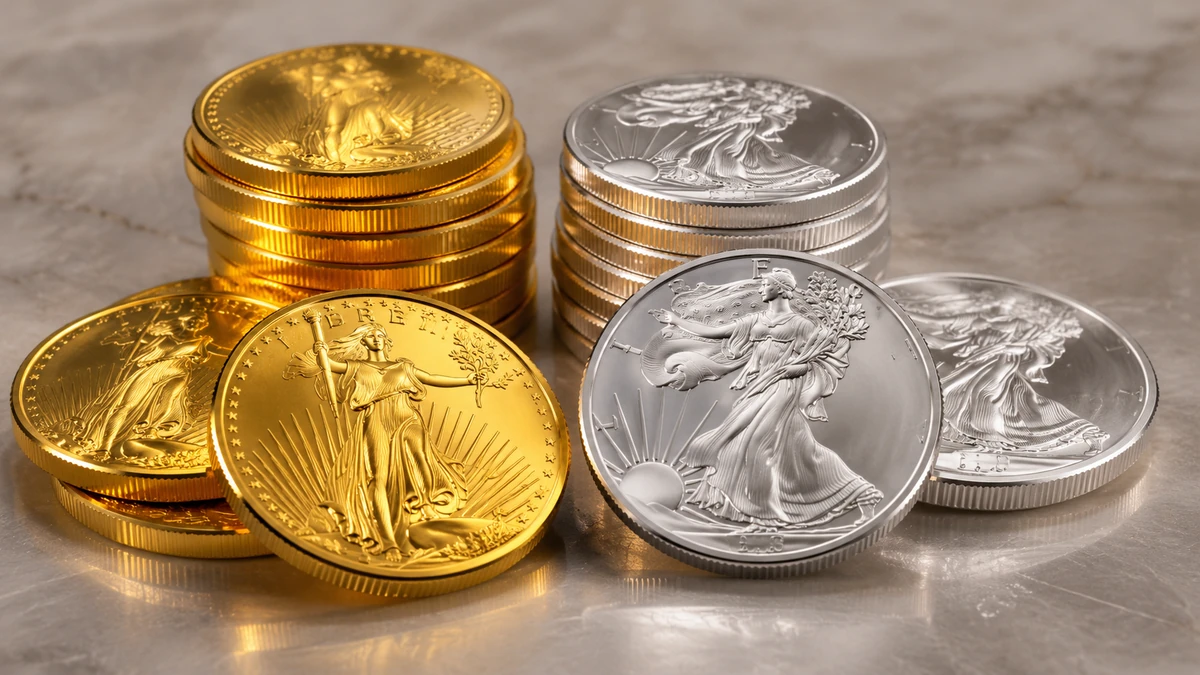
Gold rebounded above $3,600 an ounce on Friday, November 27, and silver posted much larger percentage gains as precious metals recovered from a sharp selloff earlier in the week. The rebound came during the holiday-shortened US trading session following Thanksgiving, with gold still facing pressure from expectations of further Federal Reserve interest rate increases.
At 11:05 a.m. Eastern time, spot gold was up 1.6% at $3,622.71 per troy ounce, according to Reuters market reporting. Silver gained 4.4% to $43.30. Earlier in the morning, Kitco’s market report put gold at $3,649.60 and silver at $43.64. Both had retreated from those levels by the time of the Reuters update. These were spot quotes, not futures settlement prices.
Friday’s move followed a particularly difficult Wednesday for bullion. Reuters reported that spot gold had fallen to $3,426.35, a roughly 15-month low. The subsequent recovery has taken the metal almost $200 above that level, but it has not resolved the economic concerns that contributed to the decline.
Gold recovers despite renewed pressure from interest rates
The latest US inflation figures help explain why the recovery has been uneven. The Bureau of Economic Analysis reported on Wednesday that the personal consumption expenditures price index was 3.8% higher in October than a year earlier. Core inflation, which strips out food and energy, reached 3.3%. Both measures rose 0.3% from September.
Higher inflation can strengthen the case for holding gold as a means of preserving purchasing power, but the monetary policy response is important. When investors anticipate higher interest rates, the income they can earn on government securities increases relative to the return on bullion, which pays no interest. A stronger US dollar can add to the pressure by raising the cost of gold for buyers using other currencies.
The Federal Reserve held its policy rate at 3.75% to 4% at its October meeting, with two voting members favoring a quarter-point increase. Minutes released on November 18 showed that some policymakers considered the prospect of tightening in December and beyond consistent with their own policy assessments. Two participants suggested that a larger increase could be considered if incoming inflation data were unfavorable.
Friday’s bounce did not follow a change in that policy stance. Reuters reported that bargain buying helped lift gold, even as firmer Treasury yields and a relatively strong dollar limited its gains later in the morning. Holiday trading conditions also complicate the interpretation of a sharp move. With fewer participants in the market, relatively modest orders can have a larger effect on prices than they would during a normal session. The size of the rebound alone does not establish that investor expectations for rates have shifted.
Silver’s industrial demand sets it apart
Silver’s larger advance is worth considering in the context of its broader exposure to industrial demand. Like gold, it is held for investment and traded in response to changes in currencies and interest rates. Its extensive use in manufacturing means the outlook for industrial activity is also relevant, particularly when sentiment about economic growth and technology investment changes.
The Silver Institute’s November 12 forecast, prepared with Metals Focus, puts the expected global supply shortfall at 35 million ounces for 2026. It would be the sixth successive year in which annual consumption exceeded supply, although the researchers said the smaller gap and selling by exchange-traded products had eased pressure on physical availability.
Demand from industrial applications other than solar cells is projected to grow 4.5%, with electric vehicles and charging equipment among the sources of support. Solar manufacturers, by contrast, have faced incentives to reduce silver content or use other materials as the metal became more expensive. Solar installations have also disappointed earlier expectations, especially in China. The deficit therefore does not imply that demand is growing across every major end market.
The supply response is important too. The institute anticipates a slight decline in mine output to 834 million ounces this year, alongside a 6% increase in recycled supply to 210 million ounces. Recycling can respond to higher prices more readily than new mining capacity, limiting some of the pressure that would otherwise arise from a shortfall. An annual deficit provides context for silver’s valuation, rather than a direct explanation for Friday’s intraday price change.
Longer-term gold demand and the December Fed meeting
The latest quarterly figures from the World Gold Council show that institutional demand remained stronger than some segments of the retail market before the November selloff. Central banks purchased a net 321 metric tons in the third quarter, 42% more than a year earlier. Physically backed gold exchange-traded funds added 211 tons, reversing the outflows recorded in the preceding quarter.
Purchases of bars and coins were considerably weaker, falling 19% from the same period of 2025. The distinction is useful when assessing a recovery in prices: reserve managers and fund investors can remain active even when household buyers are reluctant to commit at prevailing levels. Quarterly demand figures also describe an earlier period and should not be read as evidence that central banks or ETF investors were responsible for Friday’s rebound.
For the immediate outlook, the next scheduled Federal Open Market Committee meeting is on December 8 and 9. Policymakers will issue updated economic projections alongside their decision, giving markets a fresh indication of the likely path of interest rates beyond December. The next monthly PCE inflation release is due on December 23, after that meeting.
More from Investing


Latest News
View all news- U.S. Extends Auto Tariff Eligibility Determinations Under USMCA Until March 2027
- U.S. Goods Trade Deficit Jumps 10.7% to $149.5 Billion as Imports Hit Record High
- Tokyo Core Inflation Hits 16-Month High of 2.9% Ahead of BOJ Rate Decision
- Spanish Inflation Drops to 4.1% in November as Core Inflation Eases to 2.6%
- Skydance Registers Up to 4.62 Billion Shares for Resale Following Warner Bros. Discovery Acquisition