Norway’s Economy Contracts as Petroleum Activity and Investment Decline
Mainland GDP grew just 0.1% in the third quarter, while fixed investment across Norway fell 3.2% despite stronger exports.
Our editorial standards
MarketReview publishes clear, independently produced financial information using reliable sources and transparent editorial standards.
Read our Editorial Policy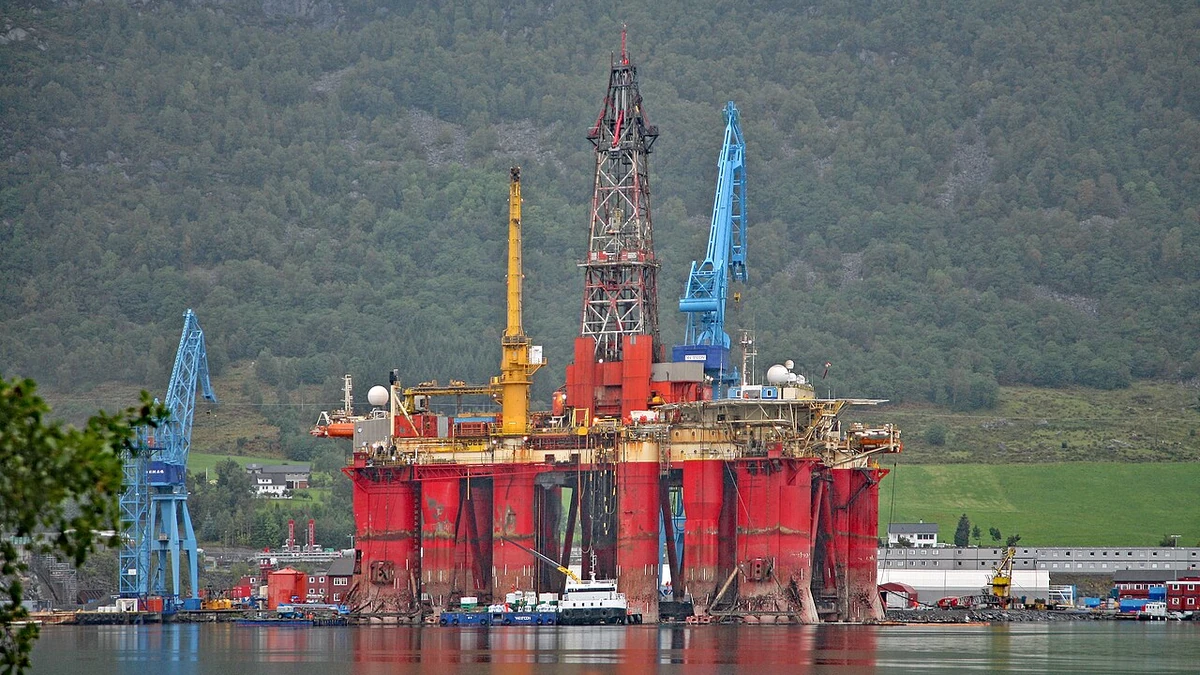
Norway’s economy contracted by 0.3% in the third quarter of 2026 amid a decline in petroleum activity and a broad pullback in capital expenditure. Preliminary national accounts published by Statistics Norway on November 26 showed that output in petroleum activities and ocean transport fell 1.6% from the previous quarter, with gross fixed capital formation across the economy down 3.2%.
Mainland gross domestic product (GDP) grew by just 0.1%. Although that measure remained positive, it pointed to a slow pace of domestic economic growth heading into the final months of the year. Household spending increased, but investment weakened. Several large offshore development projects have reached completion, according to Statistics Norway.
Higher export earnings mask a decline in real output
Norway’s contraction occurred during a quarter in which the value of its economic output actually increased. Seasonally adjusted GDP at current prices reached approximately 1.59 trillion Norwegian kroner, up from 1.52 trillion kroner in the second quarter. The corresponding volume measure, which removes the effect of price changes, fell. Higher energy prices and the resulting export income help explain why the two measures moved in opposite directions.
The latest national accounts also show a sharp monthly swing in petroleum activities and ocean transport. Output in the combined category fell 10.7% in July, followed by increases of 2.1% in August and 2.3% in September. The recovery in August and September followed an unusually weak start to the quarter.
Export volumes increased by 2.7% compared with the previous quarter, and import volumes were virtually unchanged. Foreign trade therefore provided some support to GDP at a time when capital expenditure was falling. The value of exports rose much faster than the volume of goods and services sold abroad, consistent with the statistical agency’s assessment that high oil and gas prices had boosted Norway’s trade surplus.
For an energy-exporting country, the difference between income and production is particularly important. A rise in the price received for existing output can improve export receipts without requiring an increase in extraction. Conversely, falling real GDP need not mean that the country’s export revenues or the nominal income generated by its petroleum sector have fallen.
Offshore investment loses momentum as projects mature
A separate Statistics Norway investment survey released on November 12 had already pointed to a slowdown in spending on oil and gas extraction and pipeline transport. Actual third-quarter expenditure was 62.3 billion kroner before seasonal adjustment. On a seasonally adjusted basis, the survey recorded a 6.5% quarterly decline.
Much of the recent investment cycle dates back to a wave of offshore developments launched near the end of 2022. A number of smaller projects have since entered production, reducing the need for construction expenditure. Larger developments remain under way, with completion anticipated in 2027. Relatively few new projects have started to replace the work that has finished.
For 2026 as a whole, the November survey puts spending at 266 billion kroner, a reduction of 9 billion kroner from the previous estimate. Compared with the equivalent survey estimate made in November 2025 for that year, the new figure implies a nominal decline of 3.4%. Lower projected spending on exploration and development has contributed to the reduction.
The investment outlook matters beyond the companies extracting oil and gas. Offshore projects generate demand for mainland engineering firms, equipment manufacturers and other service providers. Once construction is completed, the new capacity can support petroleum production, but the suppliers that helped build it may face fewer orders unless additional developments are approved. Newly completed fields can add to production after the bulk of the construction spending has ended.
The survey is not the same measure as gross fixed capital formation in the national accounts: it covers particular petroleum-related industries and reports spending in monetary terms. The national accounts capture investment more broadly and adjust their growth figures for price movements. Read together, the two releases indicate that weakening offshore demand is part of a wider decline in capital spending, rather than providing interchangeable estimates of its size.
Household spending grows, but interest rates remain high
Household consumption offered some relief during the quarter. In the seasonally adjusted constant-price figures, spending rose about 1.6% from the previous three months. Government consumption increased by approximately 0.3%. Those gains were not enough to prevent a contraction in aggregate output, and the mainland economy itself registered only marginal growth.
Borrowing conditions remain an obstacle to a stronger domestic recovery. Norges Bank raised its policy rate to 4.5% in September and left it unchanged at its November meeting. The central bank said inflation continued to exceed its 2% objective and indicated that another increase remained possible if needed to restrain price growth.
The weakness in output does not necessarily make a rate cut imminent. The central bank must weigh the slowdown against persistent inflation, and Norway’s exposure to energy prices complicates that assessment. More expensive energy can benefit exporters and at the same time increase costs elsewhere in the economy. For households financing homes and businesses considering new projects, the cost of credit remains important even when national export earnings are high.
Norges Bank will announce its next policy decision on December 17, alongside a new Monetary Policy Report. The updated projections will be the first since the central bank’s September rate increase and will follow the new quarterly national accounts.
More News

Latest News
View all news- U.S. Treasury Schedules $82 Billion in One-Year Bills and Floating-Rate Notes for Issuance
- Weight Watchers Retires $16.3 Million in Debt Using $10 Million in Cash
- SEBI Opens Physically Settled Non-Agricultural Commodity Derivatives to Foreign Portfolio Investors
- Spanish Inflation Drops to 4.1% in November as Core Inflation Eases to 2.6%
- Skydance Registers Up to 4.62 Billion Shares for Resale Following Warner Bros. Discovery Acquisition