
Riksbank Publishes September Minutes as 1.75% Rate Hold Takes Effect
The September minutes show Anna Seim and Governor Erik Thedéen leaning toward a November increase, while the board kept room to respond to inflation, growth and the krona.
Our editorial standards
MarketReview publishes clear, independently produced financial information using reliable sources and transparent editorial standards.
Read our Editorial Policy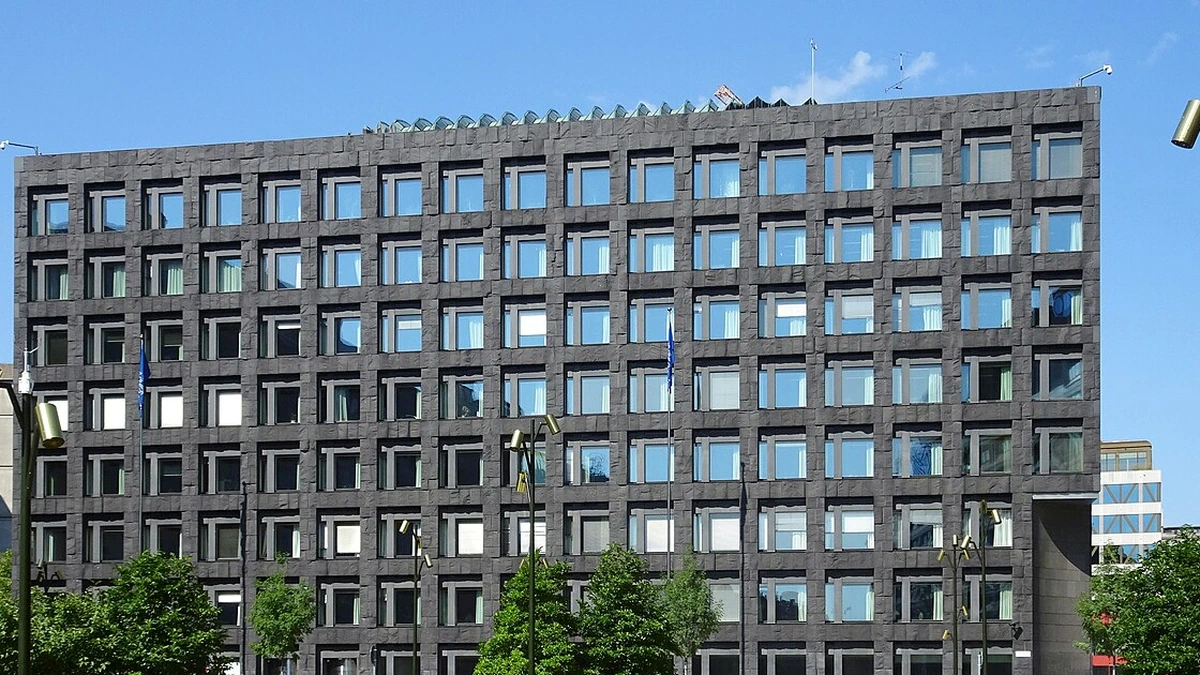
Sweden’s Riksbank published the minutes of its September monetary policy meeting on Wednesday, giving a fuller account of why policymakers kept the policy rate at 1.75% while preparing for the possibility of tighter policy before year-end. The September decision takes effect on September 30, but the rate itself is not new: the Riksbank has kept it at 1.75% since its September 2025 cut took effect at the start of October last year.
More important than the unchanged rate is the direction of travel. All five Executive Board members supported leaving the rate unchanged at the September meeting, yet several described the case for future increases as materially stronger than it was earlier in the year. Governor Erik Thedéen said there were strong reasons to move the rate to 2% in the near term, while Deputy Governor Anna Seim said she would support a first increase at the November meeting unless the economic outlook changed.
Published Wednesday, the minutes from the September 23 meeting show that the board’s debate was less about whether rates may need to rise and more about how soon the tightening should start. The Riksbank had already signaled with its September decision that rate increases were expected to begin this year if the outlook for inflation and economic activity held. The minutes make clear that November has become a plausible starting point for at least some members.
November emerges as a live option
Seim’s comments were the clearest. She supported the September hold because the economy was still emerging from a prolonged downturn and unemployment remained high, but she judged that resource utilization was approaching normal levels. On that basis, she said she would advocate an initial rate increase in November if incoming information did not overturn her current assessment.
Thedéen reached a similar conclusion from a somewhat different angle. He argued that the support to the recovery that justified last year’s cuts was no longer needed to the same degree, while global supply shocks and a weak krona had increased the risk that inflation could end up above the 2% target. His assessment was that a move to 2% in the near term had strong justification and that November would be a reasonable time to act, though he stressed that the path beyond that remained uncertain.
First Deputy Governor Aino Bunge also said the policy rate should rise from its current level going forward. She backed the Riksbank’s new rate path but emphasized that policymakers would need to learn from incoming data rather than commit to a fixed amount of tightening. Deputy Governor Per Jansson supported both the September hold and a sizable upward revision to the rate forecast, arguing that the stronger recovery, worsening supply conditions and weaker krona had made higher rates more likely even though current inflation readings still allowed the bank to wait.
Göran Hjelm was somewhat more cautious about the projected path. He still considered an increase to 2% during 2026 reasonable if the outlook held, but described the overall forecast path as slightly high and put more weight on the costs of tightening too aggressively while the labor market was still healing. That difference matters because the minutes point to broad agreement on the direction of policy without showing the same degree of conviction about how far rates should ultimately rise.
Stronger growth has shifted the balance
September’s forecasts reflect a Swedish economy that has proved stronger than the Riksbank anticipated. The central bank raised its forecast for 2026 GDP growth to 2.8% from 2.2% in June, while its assessment of resource utilization also moved higher. Thedéen noted that second-quarter GDP was 3.3% above a year earlier and that the expansion had broadened across domestic demand and exports.
That stronger activity changes how the board views inflation risks. Measured CPIF inflation was just 0.7% in August, and CPIF excluding energy was 0.5%, but policymakers repeatedly stressed that temporary fiscal measures were holding the published figures down. Adjusting for the direct effect of those measures, the minutes put CPIF inflation at 2.2% and inflation excluding energy at 1.6%, levels that made the underlying picture look less benign than the headline data alone suggested.
Members also focused on factors that could keep price pressure elevated. The minutes cite continued supply disruption linked to the conflict in the Middle East, higher energy costs, a weaker krona and stronger demand at home. The concern is not that inflation is already far above target, but that a stronger economy could make it easier for supply-driven cost increases to feed through into prices if policy remains too supportive for too long.
That shift in the balance led the Riksbank to raise its rate path even though the board did not increase rates immediately. The Riksbank now projects an average policy rate of 1.85% in the fourth quarter of 2026, 2.07% in the first quarter of 2027, 2.24% in the second quarter and 2.38% in the third quarter. In the June forecast, the corresponding figures were 1.82%, 1.89%, 1.93% and 1.97%, so most of the change is concentrated in 2027 rather than in the current quarter.
The next decision will test the board’s new bias
Nothing in the minutes commits the board to a November increase. Several members explicitly described the rate path as a forecast that can change, and the September decision itself was a hold rather than a pre-announced first step in a tightening cycle. Inflation, the krona, the labor market and the strength of domestic demand can all shift the balance before the next vote.
Still, the September discussion marks a change from the Riksbank’s earlier posture. The board spent much of 2026 weighing low measured inflation and high unemployment against supply shocks and the risk of renewed price pressure. By September, the stronger recovery had reduced the case for keeping policy as supportive, while the inflation risks associated with energy, imported costs and the exchange rate had become harder to ignore.
Policymakers meet next on November 3, with the decision due on November 4. If the economy develops roughly as the Riksbank now expects, the September minutes suggest that the debate at that meeting will start from a more hawkish position than it did only a few months ago, even if the size and pace of any subsequent increases remain open.
More from Banking


Latest News
View all news- U.S. Private Employers Add 90,000 Jobs in September, ADP Says
- KKR’s Integer Acquisition Clears U.S. Antitrust Waiting Period Early
- U.S. Core PCE Inflation Holds at 3.0% as Consumer Spending Jumps 0.9%
- UK Economy Grew 0.5% in Second Quarter, Revised Up From 0.4%
- Skyworks Secures All Regulatory Clearances for Qorvo Merger, Targets Oct. 5 Close
