SEC Settles Insider-Trading Case Linked to ANI Pharmaceuticals’ Alimera Acquisition
Two relatives of a former ANI board member agreed to pay a combined $126,500.95 after the SEC found they profited from trading Alimera shares before the 2024 deal announcement.
Our editorial standards
MarketReview publishes clear, independently produced financial information using reliable sources and transparent editorial standards.
Read our Editorial Policy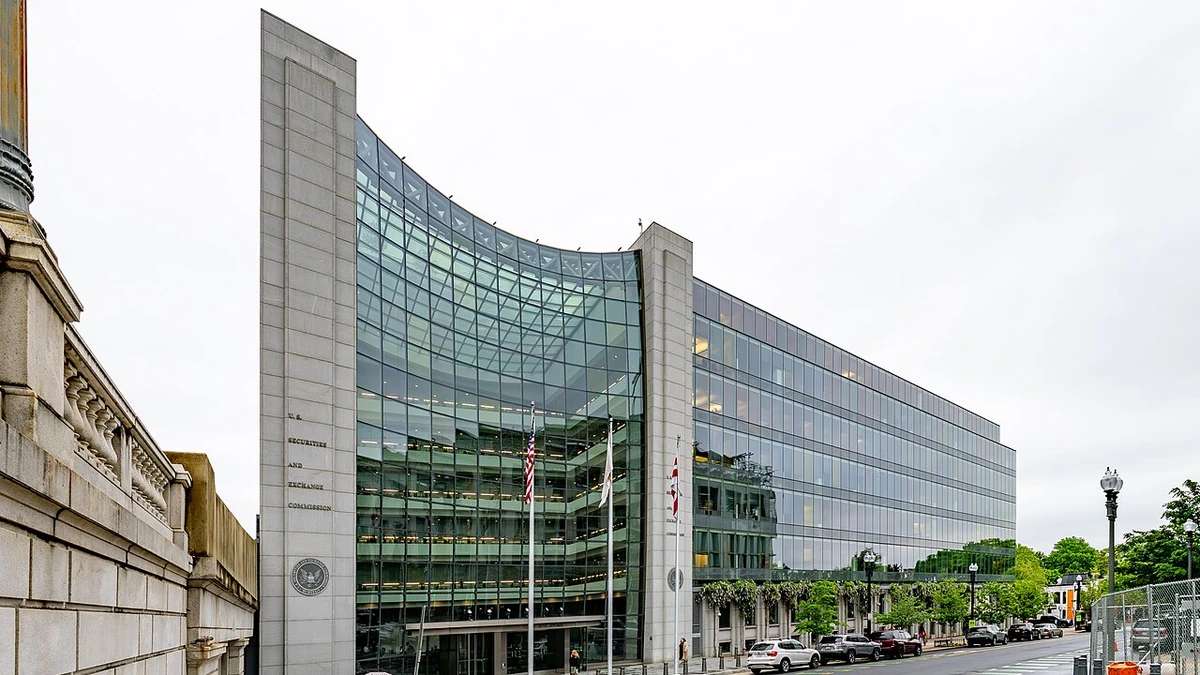
The U.S. Securities and Exchange Commission settled two insider-trading proceedings on Monday involving purchases of Alimera Sciences shares before ANI Pharmaceuticals announced its acquisition of the drugmaker in June 2024. The respondents were Sankar Shanmugam, the son of a former ANI board member, and Sathish Kumar Palaniappan, that board member’s brother-in-law.
The SEC said the men earned a combined $58,206 in illicit trading profits after receiving confidential information about the pending acquisition from Muthusamy Shanmugam, who was an ANI executive and director at the time. Under separate administrative orders dated November 23, 2026, they agreed to return the gains, pay interest and incur civil penalties totaling $126,500.95.
The settlements resolve the SEC proceedings against the two named traders without their broadly admitting or denying the agency’s findings. They do not establish that ANI Pharmaceuticals or Alimera was charged in these orders, and Muthusamy Shanmugam is described in the agency’s findings rather than named as a respondent in either of the two settlements.
Confidential bid details and trades before the announcement
According to the SEC, Muthusamy Shanmugam received nonpublic information through ANI board meetings and internal communications as the company pursued Alimera. ANI was competing in a multistage sale process, and directors were briefed on possible bids, due diligence, financing and negotiation deadlines. At a June 11, 2024 board meeting, management was authorized to advance a final nonbinding bid, subject to a later review of its precise terms.
The SEC’s account places Sankar Shanmugam’s first Alimera purchase on June 12, a day after a lengthy telephone call with his father and following more calls that morning. Before the initial order, Sankar had asked an accountant at one of his father’s businesses to arrange a $25,000 payment. The elder Shanmugam subsequently directed that the payment be characterized as a loan, the order says.
Sankar acquired Alimera shares repeatedly between June 12 and June 20, accumulating 11,812 shares in total. On June 20 alone, he bought 5,563 shares through 13 orders while traveling in China. The SEC said those purchases were based on material nonpublic information his father had shared about ANI’s impending acquisition.
The other respondent, Palaniappan, had dinner with Muthusamy Shanmugam on June 11 and spoke with him by phone the following morning. The SEC’s settlement order for Palaniappan says he first purchased Alimera stock on June 12, acquiring 5,000 shares that day. By June 17 he had built a position of 12,000 shares, including shares purchased through a brokerage account held by a business he owned.
Palaniappan was also investing in one of his brother-in-law’s private companies during this period. The SEC records a $750,000 transfer initiated on June 7 and another $250,000 sent afterward. That separate investment is part of the relationship and communication history described in the order; it should not be confused with the amounts he spent buying Alimera stock.
Both trading sequences preceded the June 24 announcement. Alimera shares had closed at $3.15 in the previous session and opened at $5.55 following the news, a jump of more than 75%, according to the SEC. The timing of the purchases is central to the agency’s finding that the men traded on information unavailable to ordinary investors.
Sales after the announcement and settlement payments
The SEC said Sankar spoke twice with his father on the morning the acquisition was announced, then sold his entire 11,812-share position. It calculated his illicit profit at $28,981. Palaniappan also spoke to Muthusamy Shanmugam that morning, sold 10,000 shares during the day and disposed of his remaining 2,000 shares two days later. His profit was $29,225, the regulator found.
Palaniappan’s order describes a subsequent inquiry by his brokerage firm. When questioned about his unusual trading, he said he had come across the idea on the internet and denied knowing anyone associated with Alimera. The SEC determined that those statements were false in light of his relationship with an ANI executive involved in the acquisition process.
Both orders find violations of Section 10(b) of the Securities Exchange Act of 1934 and Rule 10b-5, and direct the respondents to cease and desist from further violations. The sanctions are civil administrative remedies, not criminal convictions. The respondents consented to the orders without admitting the findings, except for the SEC’s jurisdiction and the specific bankruptcy-related provisions stated in the orders.
Sankar must pay $28,981 in disgorgement, $5,023.33 in prejudgment interest and a $28,981 civil penalty, bringing his total to $62,985.33. Palaniappan’s corresponding amounts are $29,225 in disgorgement, $5,065.62 in interest and a $29,225 penalty, totaling $63,515.62. The SEC directed both men to make payment within 10 days of the orders’ entry.
The distinction between trading profits and total settlement costs matters: the $58,206 figure represents what the SEC found the two respondents gained from their Alimera share purchases, whereas the larger $126,500.95 figure includes the return of those gains, accumulated interest and separate financial penalties. The orders state that the findings arose from accepted settlement offers and are not binding on other people or entities.
The ANI-Alimera acquisition behind the trades
ANI and Alimera publicly announced their acquisition agreement on June 24, 2024. Under the deal, Alimera shareholders were to receive $5.50 in cash per share plus a nontradable contingent value right that could deliver up to another $0.50 per share if specified revenue thresholds were reached in 2026 and 2027. ANI put the upfront consideration at approximately $381 million, including the planned repayment of Alimera debt.
ANI’s original acquisition announcement identified Alimera’s eye-disease treatments ILUVIEN and YUTIQ as the main commercial assets it was buying. The purchase was intended to expand ANI’s rare-disease business and strengthen its presence in ophthalmology. Those plans form the business context for the confidential discussions reviewed by ANI’s board before the acquisition became public.
The acquisition subsequently closed on September 16, 2024, according to ANI’s completion announcement. Alimera became an ANI subsidiary rather than remaining an independently traded company. The enforcement matter disclosed this November concerns purchases of Alimera stock before the 2024 announcement, not a newly proposed acquisition in 2026.
The SEC orders also describe ANI’s insider-trading policy, which prohibited employees and directors from misusing confidential information obtained through their duties, including information about other companies. The policy expressly addressed certain family members and related entities. Muthusamy Shanmugam resigned from ANI’s board in August 2026, the orders state; neither settlement should be read as a finding that the company itself participated in the alleged trading.
More from Investing

Latest News
View all news- Nvidia Reinstates Jensen Huang as CEO While Independent Investigation Continues
- Business Growth Slows in November as Flash Composite PMI Falls to 54.6
- India’s Unincorporated Businesses Grow 18.8% as Employment Reaches 150 Million
- Labor Department Publishes Final Independent-Contractor Rule, Effective January 2027
- Swiss FINMA Raises Annual Supervisory Levy for Untied Insurance Intermediaries