
Switzerland Backs CHF 10 Billion Extension of International Monetary Assistance
The Federal Council wants Parliament to keep a CHF 10 billion monetary-assistance ceiling in place through April 2033, while separately allowing about CHF 90 million of IMF funds to support lower borrowing costs for low-income countries.
Our editorial standards
MarketReview publishes clear, independently produced financial information using reliable sources and transparent editorial standards.
Read our Editorial Policy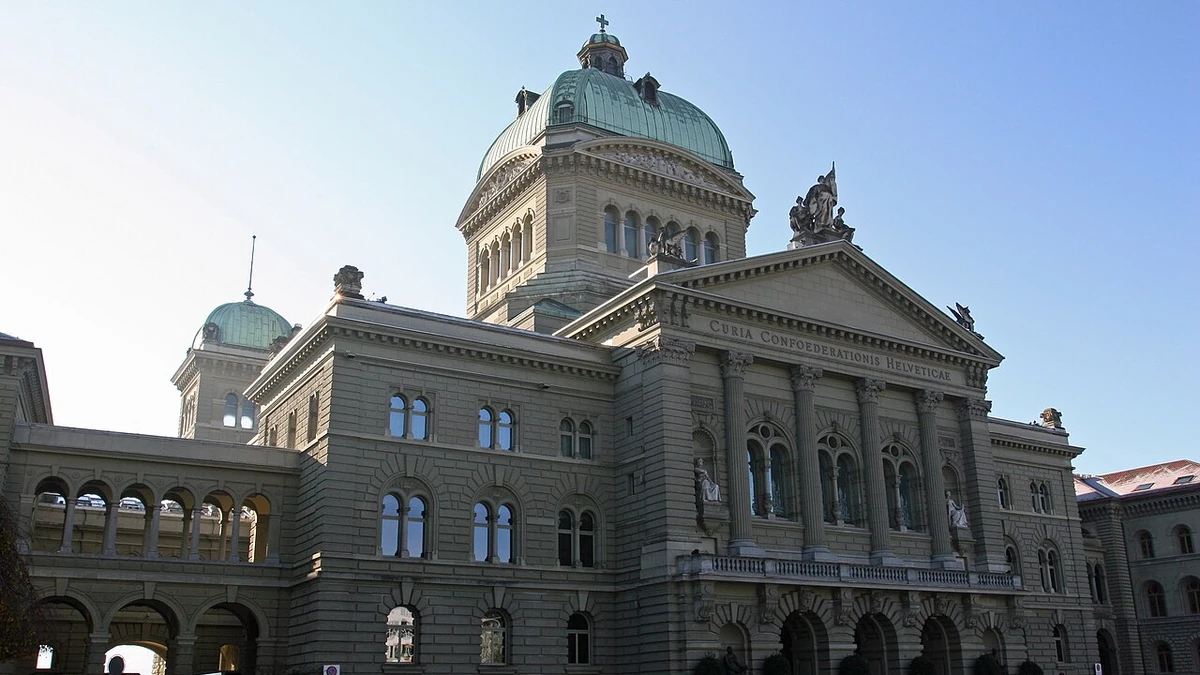
Switzerland’s Federal Council is asking Parliament to renew the country’s authority to provide up to CHF 10 billion in international monetary assistance, keeping the existing ceiling in place for another five-year period through April 2033. The government adopted its dispatch on October 2, 2026, ahead of the current authorization’s expiry in April 2028.
The CHF 10 billion figure is a maximum legal authorization, not an announcement that Switzerland will immediately spend or lend CHF 10 billion. The proposal would preserve the government’s capacity to support internationally coordinated measures if a serious disruption to the monetary or financial system requires Swiss participation.
In its announcement of the proposal, the Federal Council said the amount would remain unchanged from the existing Monetary Assistance Decree. It described the framework as a way for Switzerland to take part quickly in measures aimed at stabilizing the global financial system when the need arises.
CHF 10 billion ceiling would run through April 2033
Switzerland’s framework is built on the Monetary Assistance Act, adopted in 2004, and the Monetary Assistance Decree that puts the available authorization into practical terms. The current decree was most recently renewed in 2022 and runs until April 15, 2028. The new proposal would carry the same CHF 10 billion ceiling forward to April 2033 rather than increase it.
The distinction between an authorization ceiling and an actual payment matters. The State Secretariat for International Finance says the decree allows the Confederation to assume default guarantees for certain forms of monetary assistance under the law, up to the CHF 10 billion maximum. Those guarantees can support measures connected with serious disruptions to the international monetary system or internationally coordinated assistance involving individual countries.
The same Swiss government overview of international monetary cooperation shows that the framework sits alongside several other channels through which Switzerland participates in the global financial safety net. Switzerland’s IMF quota is SDR 5.77 billion, and its contribution to the IMF’s New Arrangements to Borrow is SDR 11.08 billion. Those resources are separate from the CHF 10 billion monetary-assistance ceiling and are not guaranteed by the Confederation.
One current commitment covered by the monetary-assistance framework is an SNB credit line to the IMF of CHF 3.66 billion, with commitments running through the end of 2027. Under that arrangement, the Confederation guarantees the Swiss National Bank timely repayment and interest on any loan tranches drawn by the IMF. The proposed renewal therefore keeps a legal backstop available beyond the end of the present decree rather than creating an entirely new form of support.
Switzerland ties the framework to financial stability
The government’s rationale is closely connected to Switzerland’s role in international finance. Swiss authorities describe the country as particularly exposed to the condition of the global monetary system because of its openness to trade and capital flows, its own currency and the size of its financial center. A mechanism that lets Switzerland respond to coordinated crisis measures is therefore presented as part of protecting conditions that matter directly to the domestic economy.
Switzerland has been an IMF member since 1992 and leads a constituency within the institution. As of September 26, 2026, IMF data put Switzerland’s quota share at 1.21% of the total and its voting share at 1.17%. Those figures help show that the country is a meaningful participant in the institution, even though the proposed CHF 10 billion authorization is a Swiss legal framework rather than a change to Switzerland’s IMF quota.
The current proposal also follows the same basic policy path Switzerland has used in earlier renewal cycles. In 2021, the Federal Council similarly asked Parliament to renew the Monetary Assistance Decree so the country could continue taking international monetary assistance measures when necessary. The 2026 decision is therefore primarily about continuity: the ceiling stays at CHF 10 billion, while the end date moves forward by five years.
Parliament still has to consider the new decree. Until then, the existing authorization remains in force through April 2028, so the Federal Council’s October decision does not create a near-term funding gap or an immediate call on the full amount.
About CHF 90 million can support IMF concessional lending
Alongside the five-year extension proposal, the Federal Council made a separate decision involving the IMF’s Poverty Reduction and Growth Trust, or PRGT. Switzerland’s share of IMF-generated funds earmarked for the trust, amounting to about CHF 90 million, may be transferred within the IMF and used to subsidize interest rates on loans to low-income countries.
The government said these funds were generated by the IMF and that the transfer would take place internally within the institution. It also said the move would have no impact on Switzerland’s federal finances. The transfer is not automatic, however, because IMF members must approve the approach by a large majority.
The PRGT is the IMF’s main vehicle for concessional lending to low-income countries. After reforms approved in 2024, the IMF introduced a tiered interest-rate structure that took effect in May 2025. The poorest eligible countries continue to receive zero-interest financing, while other eligible countries pay positive but still concessional rates. Subsidy resources help maintain that gap between PRGT borrowing costs and ordinary market-based financing.
The IMF has been trying to place the trust on a more durable financial footing after the pandemic and subsequent shocks increased demand for concessional lending. Its current framework is designed to support a long-term self-sustained PRGT lending capacity of SDR 2.7 billion a year, more than double the pre-pandemic level. The fund has also said that broad member participation is necessary for the distribution framework that generates additional subsidy resources to operate as intended.
For Switzerland, the roughly CHF 90 million decision is therefore different in both scale and mechanics from the CHF 10 billion monetary-assistance ceiling. The larger figure preserves legal room for potential crisis support through 2033 if Parliament approves the renewal. The smaller amount concerns Switzerland’s share of IMF-generated resources for concessional lending and, according to the Federal Council, does not require a new charge to the federal budget.
The next formal step on the CHF 10 billion framework is parliamentary consideration of the Federal Council’s proposed decree. The IMF-related transfer, meanwhile, depends on the required level of support among IMF members.
More News

Latest News
View all news- Tesla Delivers 486,532 Vehicles in Third Quarter, Produces 464,391
- South Korea Inflation Cools to 2.9% in September as Fuel Costs Stay High
- Scotiabank Gets Approval to Expand Share Buyback to 40 Million Shares
- Rivian Delivers Record 19,248 Vehicles in Third Quarter as R2 Production Ramps
- Rithm Capital Closes DRA Joint Venture for 1301 Avenue of the Americas
