
U.S. Treasury Sanctions Chinese Venture-Capital Funds Under Intellectual-Property Law
The October 19 action targets MiraclePlus, two affiliated venture funds and two other Chinese entities tied by U.S. authorities to an AI trade-secret theft case.
Our editorial standards
MarketReview publishes clear, independently produced financial information using reliable sources and transparent editorial standards.
Read our Editorial Policy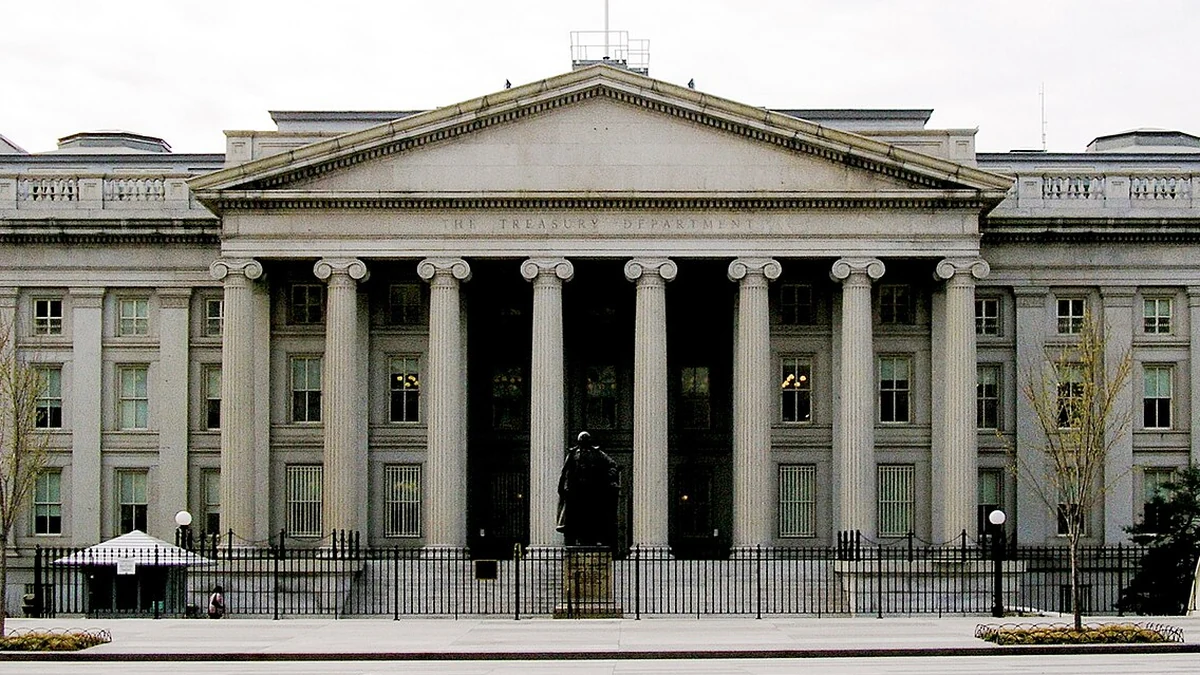
The U.S. Treasury Department imposed sanctions on five Chinese entities on October 19, including venture-capital firm MiraclePlus and two funds it manages, under a U.S. law targeting the theft of American trade secrets. The action extends financial restrictions to an investment network that U.S. authorities have linked to a former Google engineer convicted of stealing confidential artificial intelligence technology.
Treasury’s Office of Foreign Assets Control (OFAC) added the five organizations to its Non-SDN Menu-Based Sanctions List. The measures it selected include blocking property, restricting U.S. bank financing and certain payments, and prohibiting specified investments in the sanctioned entities’ debt or equity. These are substantive financial restrictions even though the entities were added to a list separate from OFAC’s main Specially Designated Nationals list.
The designations reach beyond the technology startup connected to the theft case. They also affect the venture firm that provided it with startup financing and affiliated investment partnerships. The action is a sanctions determination about those organizations, not a criminal conviction of their managers or investors.
MiraclePlus, its funds and a Shanghai technology startup
OFAC’s October 19 sanctions notice identifies Qiji Chuangtan Beijing Investment Management Co. Ltd., better known as MiraclePlus, alongside Beijing Qiji Chuangtan Phase I Venture Capital Center Limited Partnership and Beijing Qiji Chuangtan Phase II Venture Capital Center Limited Partnership. The two funds are also listed under the names Miracle Plus RMB Fund I and Miracle Plus RMB Fund II.
The other two entities are Beijing Qiji Chuangtan Zhiyuan Enterprise Management Center Limited Partnership, an affiliate of the venture-capital network, and Shanghai Zhisuan Technology Co. Ltd., the Chinese artificial intelligence startup associated with former Google engineer Linwei Ding. OFAC lists the three Beijing partnerships as linked to MiraclePlus, but Shanghai Zhisuan appears as a separate designated company.
According to a State Department account of the sanctions decision, MiraclePlus provided seed funding in exchange for an ownership interest in Zhisuan. The department describes the investment firm as a backer of Chinese technology startups that runs programs giving young companies opportunities to pitch investors. It says the two venture funds are managed by MiraclePlus and the Zhiyuan partnership is owned by the first fund.
Those relationships matter because the government did not use the same rationale for all five designations. The State Department determined that Zhisuan had knowingly engaged in or benefited from significant theft of U.S. trade secrets. It characterized MiraclePlus as having provided significant support for, or benefited significantly from, that theft. The remaining partnerships were identified through their ownership, control or representative relationships with the investment firm. These are the department’s sanctions findings; they should not be confused with separate criminal verdicts against the funds.
The Protecting American Intellectual Property Act of 2022, which became law on January 5, 2023, provides for sanctions against certain foreign persons involved in qualifying trade-secret theft and against specified supporters or associated entities. That makes the structure of a venture-capital network relevant to the sanctions decision even when the underlying criminal conduct is attributed to an individual.
The Google AI trade-secret case behind the sanctions
Ding, also known as Leon Ding, was convicted by a federal jury in California on January 29, 2026, of seven counts of economic espionage and seven counts of theft of trade secrets. The Justice Department’s account of the verdict says he took thousands of pages of confidential material related to Google’s artificial intelligence infrastructure while working as a software engineer for the company.
The stolen information concerned the architecture and operation of computing systems used to train and run large AI models. Prosecutors identified Google’s custom Tensor Processing Unit systems, graphics-processing-unit systems, the networking technology connecting computing equipment, and software that coordinates large numbers of chips. The significance of the material lay in how advanced chips and supporting software are made to function together inside a large data center, rather than in a consumer-facing AI application.
According to the evidence described by federal prosecutors, Ding copied confidential information to his personal cloud account between approximately May 2022 and April 2023. He also developed ties to Chinese technology companies without informing Google. The prosecution said he promoted plans to develop AI infrastructure in China using knowledge of Google’s systems and, in December 2023, downloaded stolen trade secrets to a personal computer shortly before leaving the company.
A March 2024 federal indictment separately described how Zhisuan sought a place in the MiraclePlus startup program in 2023. It alleged that a MiraclePlus-affiliated company agreed to invest in Zhisuan in exchange for an ownership stake, and that Ding pitched the startup at a venture-capital conference in Beijing. The indictment was a charging document, while the later jury verdict established Ding’s guilt on the specified criminal counts. The State Department’s sanctions account separately identifies seed financing from MiraclePlus as a link between the investor and Zhisuan.
This distinction between criminal evidence and sanctions findings is important for understanding the government’s action. Ding’s verdict concerns his conduct as an individual. The October 19 designations apply financial restrictions to separately named legal entities because of the roles and relationships the government determined were relevant under the intellectual-property law. The public sanctions notice does not put a dollar value on the funding at issue or quantify the American financial institutions’ exposure to the listed businesses.
Asset blocking and the limits of the wind-down license
The sanctions have several practical dimensions. Under the property-blocking measure, property and interests in property of the listed entities are blocked within the scope of U.S. jurisdiction, subject to applicable exceptions and authorizations. OFAC’s published entries specifically preserve an exception for the importation of goods. The listings also prohibit U.S. financial institutions from providing loans or credit totaling more than $10 million in a 12-month period, subject to the statute’s stated exception.
Other selected measures restrict foreign-exchange dealings and transfers or payments involving the entities when those activities fall under U.S. jurisdiction. U.S. persons are also barred from investing in or buying significant amounts of their equity or debt instruments. For a venture-capital firm and its investment funds, the financing and securities restrictions reach activities that are central to raising and deploying investment capital, although the notice does not establish that any specific financing arrangement was outstanding when the sanctions took effect.
OFAC issued two general licenses alongside the designations. General License 2 permits activities ordinarily necessary to wind down dealings involving MiraclePlus, the two named venture funds, the Zhiyuan partnership, and entities in which the covered organizations collectively own at least 50%. That temporary authorization runs through 12:01 a.m. Eastern Standard Time on January 19, 2027. Payments to persons subject to the blocking prohibitions under the license must go into blocked accounts located in the United States.
Shanghai Zhisuan is not included among the parties covered by that wind-down authorization. The exclusion is material: the license cannot be read as permission to wind down otherwise prohibited dealings with Zhisuan simply because the startup was sanctioned on the same day as MiraclePlus. Nor is General License 2 a blanket permission for new investment or unrestricted payments involving the covered firms; its wording is tied to the ordinary and necessary winding down of existing activity.
General License 1 addresses overlap with U.S. cyber-related sanctions rules. It permits activities prohibited under the intellectual-property law only to the extent they are otherwise authorized or exempt under the Cyber-Related Sanctions Regulations, including relevant general or specific licenses. OFAC states that neither license removes restrictions arising under other applicable sanctions programs without separate authorization.
For U.S. financial intermediaries and investors with links to these businesses, the immediate issue is which parties and holdings are covered by the October 19 action, and whether any activity fits an OFAC authorization. The January 19, 2027 deadline applies to the specific wind-down license, not to the sanctions themselves. Unless the government changes the designations or issues further authorization, the underlying restrictions remain in force after that temporary window closes.
More News


Latest News
View all news- Fifth Third Reports $1.13 Adjusted Third-Quarter EPS Following Comerica Conversion
- Cleveland-Cliffs Returns to Profit With $165 Million in Third-Quarter Net Income
- U.S. Sets Final Antidumping and Subsidy Rates on Canadian Softwood Lumber
- Commerce Sets Final Subsidy Rates for Chinese Truck Bed Cover Imports
- CFTC Rule Excluding Traditional Sportsbook Wagers From ‘Swaps’ Takes Effect
