
Worldpay Reports and Resolves U.S. Payment Authorization and Apple Pay Disruptions
Two Worldpay gateway incidents affecting Apple Pay and U.S. authorizations were resolved early Saturday, with no public explanation of their cause or scale.
Our editorial standards
MarketReview publishes clear, independently produced financial information using reliable sources and transparent editorial standards.
Read our Editorial Policy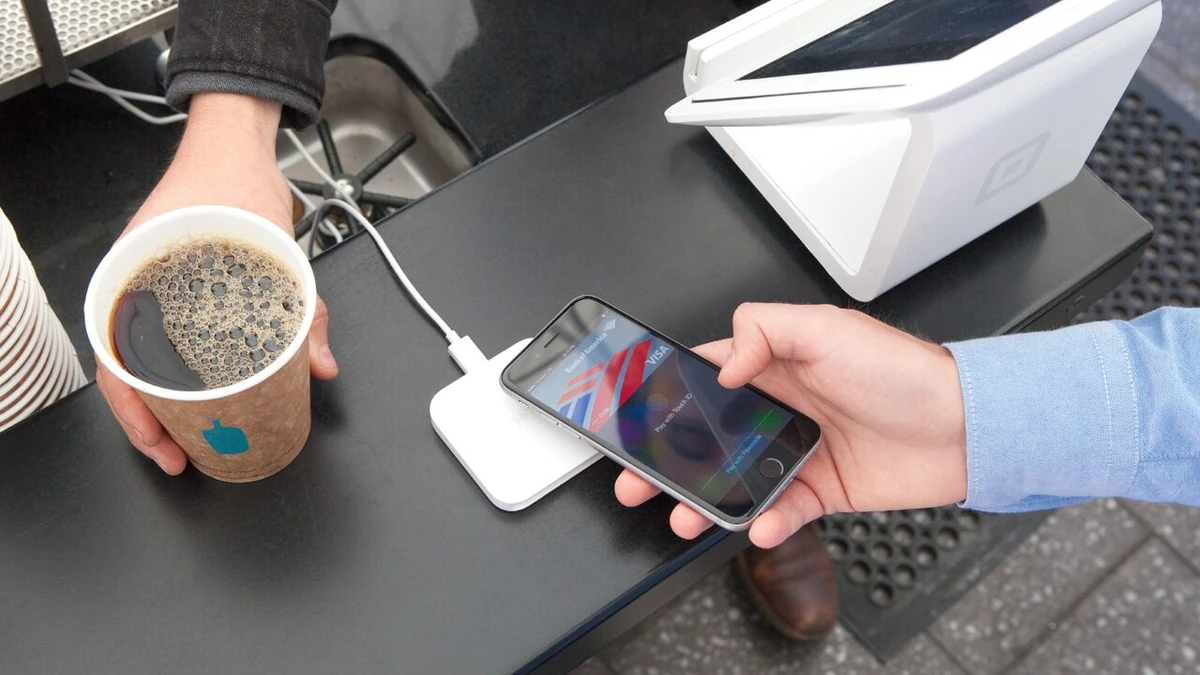
Worldpay said Saturday that it had restored Apple Pay processing and U.S. payment authorizations on its Worldwide Payment Gateway after separate service alerts early on October 17. The company marked its Apple Pay issue resolved at 05:30 UTC and the U.S. authorization problem resolved at 05:45 UTC, according to its official status records.
The two notices were published close together, but they do not establish that the problems shared a cause. Worldpay has not disclosed how many merchants or payment attempts were affected, and the records do not specify when either underlying disruption actually began. Both incidents were recorded against the company’s Worldwide Payment Gateway, or WPG, rather than its entire range of payment services.
For businesses accepting online payments, the distinction matters. A digital wallet can be available to a shopper even when a processor encounters difficulty completing the payment, and an authorization problem can interrupt checkout before a merchant receives confirmation that the sale was approved. Neither of Worldpay’s brief updates offered merchant-level details about what customers encountered during the incidents.
Apple Pay recovered before the U.S. authorization alert
The first notice, posted at 05:18 UTC on October 17 under incident INC0692822, said Worldpay was investigating a technical issue affecting Apple Pay payments. Its component record identifies the affected service as Apple Pay within the WPG wallet category. At 05:30 UTC, the company issued a resolution notice saying the service was again operating as expected.
One minute after that resolution update, at 05:31 UTC, a separate investigation notice appeared for authorization processing. The company said at 05:32 UTC that it had identified the problem and was continuing to work on a fix. Worldpay then reported the authorization service restored at 05:45 UTC. The incident, INC0692837, was specifically assigned to the Authorisations (United States) component.
These details appear in Worldpay’s public WPG service-status record, where Apple Pay and U.S. authorizations are tracked as different components. The Apple Pay notice was closed 12 minutes after its initial investigation post; the U.S. authorization notice was closed 14 minutes after its first post. Those intervals describe the published reporting windows, not necessarily the full length of either technical fault.
The timing leaves important questions unanswered. There is no published finding linking the two incidents, despite their proximity, and the notices do not identify a shared system, supplier or software change behind them. Nor does the sequence show that one malfunction caused the other. Their separate incident numbers and component assignments establish how Worldpay reported the events, not whether its engineers found a common technical origin.
Why the two affected payment functions are different
Worldpay’s WPG status site says it covers the Worldwide Payment Gateway APIs at secure.worldpay.com. It separately lists international, U.S. and Latin American authorization components, alongside digital wallets and other gateway services. An alert on that site should therefore not be treated as proof that every Worldpay platform was down, or that every retailer accepting Apple Pay experienced a failure.
Authorization is the stage at which a merchant’s payment request is routed for a decision about whether the issuing bank will approve it. As Worldpay explains in its payment-processing guide, the request passes through payment-industry participants before an approval or decline is returned to the merchant. A gateway difficulty at this point can prevent a business from obtaining a normal response, although the incident notice does not say which specific outcomes occurred on October 17.
Apple Pay serves a different purpose in the checkout flow: it lets customers present stored payment credentials through a supported device or website. The payment still needs to move through a processing and authorization path. A disruption in Worldpay’s Apple Pay service could therefore affect merchants relying on that particular connection without implying that Apple’s wallet stopped working generally, that issuing banks were unavailable, or that other processors encountered the same issue.
The U.S. authorization incident has a narrower geographic designation than the Apple Pay report. Worldpay explicitly names the United States for the former, but the latter is categorized simply as Apple Pay within WPG wallets. It would be misleading to describe both notices as exclusively U.S. outages or to assume that the Apple Pay alert affected every country where the wallet is offered. The published record does not give the geographic reach of that wallet incident.
A processing interruption also differs from a routine card refusal. A bank might decline an individual purchase for ordinary account or security reasons while the gateway is functioning correctly. Conversely, a technical problem can leave a merchant without a usable authorization result. Worldpay has not published error-code distributions for these incidents, so the public reports alone cannot tell readers how many shoppers saw a declined payment, a timeout or another checkout message.
Worldpay has not quantified the merchant impact
Both incident pages end with a resolution notice saying the relevant service was operating normally again. Neither includes a root-cause explanation, an affected-merchant count, an estimate of unsuccessful payments or a figure for lost sales. The records also provide no basis for calculating the financial impact on Worldpay or its customers. Calling the events major outages would add a severity judgment that the available evidence does not support.
For merchants, a restoration message answers an immediate service-availability question, but it does not by itself establish the outcome of every order attempted during the affected period. Payment authorization, subsequent capture and eventual settlement are distinct stages. Worldpay’s processing guide explains that approval of a payment does not mean the merchant has already received the funds, which is why unresolved orders need to be checked against their actual payment records rather than against the status page alone.
The practical question for a business that noticed failed checkouts is whether individual attempts were approved, refused, interrupted or later completed. That determination requires the merchant’s own order and processor records. The public notices contain no indication that specific purchases were automatically retried after restoration, and they do not claim that previously unsuccessful payments were recovered. Merchants therefore should not assume an order succeeded simply because the gateway returned to normal.
Likewise, there is no disclosed evidence in these two reports of delayed settlement, compromised payment information or a failure across the wider Apple Pay network. Those possibilities should not be inferred from the broad phrase “technical issue.” Worldpay reported limited service categories and times, with no detailed post-incident analysis attached to either notice.
The confirmed development is that two WPG components experienced reported trouble early Saturday and were subsequently marked resolved. Any fuller account of the underlying faults, the exact period of degraded processing or the number of affected merchants would require additional disclosure from Worldpay. Its official status page remains the direct public record for any further updates to these incidents.
More News

Latest News
View all news- NMI Resolves Payment Settlement Delays That Could Have Affected Merchant Funding
- Bank of Korea Governor Says International Won Payment Network Is Being Tested Ahead of January Launch
- Bank of Canada Signals Sharply Higher Inflation Forecast as Oil Prices Surge
- Bank of England’s Bailey Calls for Stronger AI Testing and Built-In Fraud Protection in Payments
- Switzerland Commits CHF 40 Million to IMF Capacity-Building Work Through 2030
