
Intel Upsizes Stock Offering to $20 Billion After 2026 Rally
Intel priced 210.5 million shares at $95, expanding its planned equity sale by $5 billion as the chipmaker funds a capital-heavy manufacturing turnaround.
Our editorial standards
MarketReview publishes clear, independently produced financial information using reliable sources and transparent editorial standards.
Read our Editorial Policy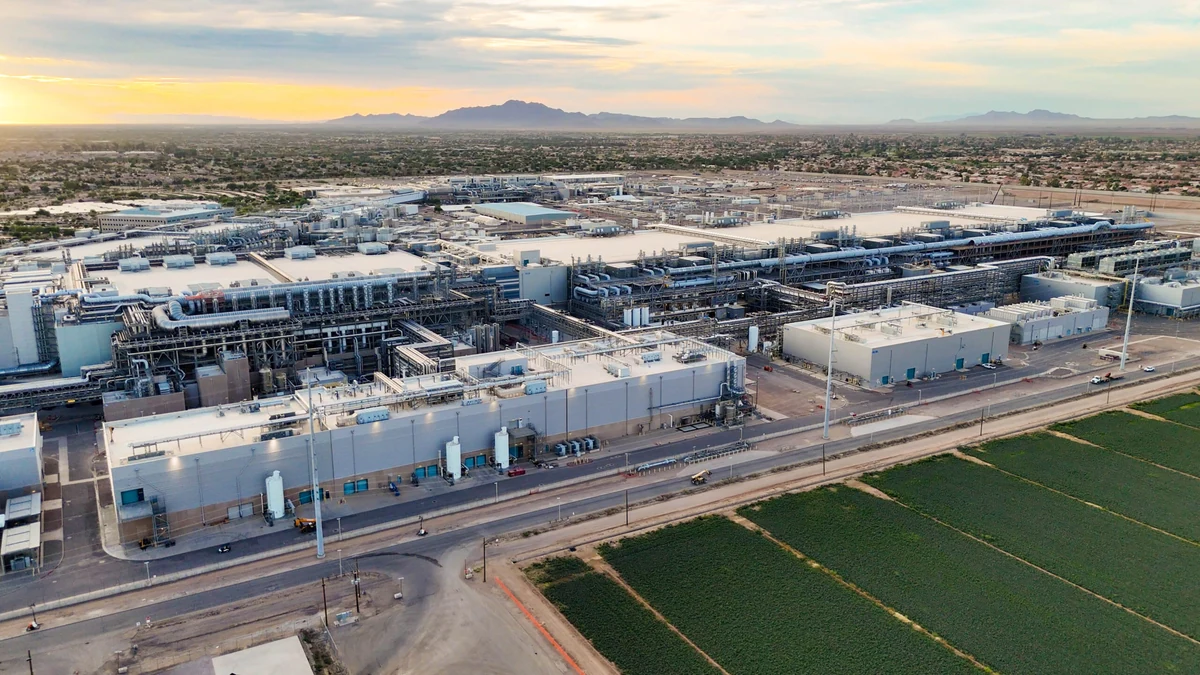
Intel has upsized its planned common-stock offering to $20 billion, pricing 210,526,315 shares at $95 each as the chipmaker raises fresh equity for a turnaround that is becoming increasingly capital intensive. The deal is $5 billion larger than the offering Intel announced a day earlier and is expected to close on August 12, subject to customary conditions. Intel said net proceeds should be about $19.7 billion before any exercise of the underwriters’ option.
Intel said the proceeds will be used for general corporate purposes, which may include capital expenditures and working capital. That wording gives Intel broad flexibility rather than earmarking the money for a single factory, manufacturing process or customer program. The underwriters also have a 30-day option to buy up to 31,578,947 additional shares at the $95 offering price, which could add roughly $3 billion to the gross size of the offering.
The timing is notable because Intel is raising equity after a powerful stock-market recovery. Reuters reported that the shares had nearly tripled in 2026 through Monday, far outpacing the Philadelphia Semiconductor Index, which was up nearly 75% over the same period. Intel shares fell more than 4% on Monday after the original $15 billion offering was announced, and the $95 sale price represented a 2.6% discount to Monday’s closing price.
The rally made a large equity raise less dilutive than it would have been a year ago
For existing shareholders, a stock offering creates dilution because the company is increasing the number of shares outstanding. Intel had about 5.044 billion shares outstanding as of July 17, according to its latest quarterly filing. The base offering therefore represents an increase of roughly 4.2% relative to that share count. If the underwriters exercise their option in full, the total number of new shares sold would rise to about 242.1 million, or roughly 4.8% of the July 17 share count.
That dilution is meaningful, but Intel’s rally has changed the arithmetic. A higher share price lets the company raise a given amount of cash by selling fewer shares. At $95, Intel can generate almost $20 billion of gross proceeds with about 210.5 million shares. The same amount raised at the much lower prices where Intel traded during parts of 2025 would have required several times as much new equity.
Intel has not said that the stock rally was the sole reason for choosing this moment to issue shares. Intel’s original announcement focused instead on strong customer demand tied to AI computing, opportunities in areas including advanced packaging and external wafer manufacturing, and the desire to pursue growth while maintaining a strong balance sheet and investment-grade credit profile. Still, market conditions clearly matter to the economics of an equity raise, and Reuters reported that several analysts had already viewed Intel’s rising share price as increasing the likelihood of a stock sale.
The cash arrives as Intel’s manufacturing ambitions absorb large amounts of capital
The financing also comes after a period of heavy cash use and balance-sheet reshaping. As of June 27, Intel reported $12.9 billion of cash and cash equivalents and $16.9 billion of short-term investments, for a combined $29.7 billion. Total debt stood at $50.5 billion, up from $46.6 billion at the end of 2025. The company said its short-term funding needs include manufacturing capital expenditures, process-technology investment, product-roadmap spending and working capital.
One major cash event this year was Intel’s repurchase of Apollo Global Management’s 49% minority interest in the company’s Ireland semiconductor manufacturing joint venture. Intel paid $14.2 billion, including transaction costs, to regain full ownership. It funded the purchase with a mix of cash, short-term investments and a $6.5 billion term loan, then repaid that loan with proceeds from $6.5 billion of newly issued senior notes. That purchase helps explain why a large equity raise can strengthen flexibility even though Intel already had substantial liquidity.
At the same time, operating momentum has improved. Intel reported second-quarter revenue of $16.1 billion, up 25% from a year earlier, while non-GAAP earnings were 42 cents per share. The company forecast third-quarter revenue of $15.8 billion to $16.8 billion. Chief Financial Officer David Zinsner told Reuters in July that Intel had raised its 2026 capital-expenditure forecast to $20 billion from $18 billion as demand for data-center processors strengthened.
The foundry strategy remains central to the investment case. Intel is trying to rebuild its manufacturing position and develop leading-edge process technology that can serve both its own products and external customers. The company has committed to high-volume production using its 14A process in 2028, a program whose commercial success depends on attracting enough outside demand to justify the cost of advanced manufacturing capacity.
Equity gives Intel funding capacity without adding another $20 billion of debt
The new offering changes Intel’s capital structure in a straightforward way. Instead of borrowing another $20 billion and increasing interest obligations, the company is issuing ownership stakes. Existing shareholders absorb dilution, but Intel receives capital that does not have a maturity date and does not require scheduled interest payments. For a business with large, long-dated manufacturing commitments, that can be a useful trade-off.
It also gives management more room to decide where the money is most useful. Intel’s stated use of proceeds includes capital expenditures and working capital, but the phrase “general corporate purposes” is broader than either category. Intel has not said that the proceeds are dedicated to 14A, a specific fabrication plant, debt repayment or any single expansion project. Treating the offering as financing for one named initiative would therefore go beyond what Intel has disclosed.
The scale nevertheless signals how aggressively Intel is financing the next phase of its turnaround. Intel has already relied on a mix of strategic equity investments, debt issuance, government support, divestitures and co-investment structures to fund its manufacturing plans. A $20 billion public stock sale adds another large source of permanent capital at a point when demand for data-center CPUs and optimism around Intel’s manufacturing roadmap have lifted the company’s valuation.
The trade-off for shareholders is now visible. The offering strengthens Intel’s ability to invest and gives the balance sheet more capacity, but it spreads future earnings and ownership across a larger share base. Whether that exchange proves favorable will depend on whether Intel can turn the capital into durable revenue growth, better foundry economics and competitive manufacturing technology rather than simply higher spending.
The next concrete milestone is the expected August 12 closing. After that, investors will be able to assess whether the underwriters exercise their additional-share option and how Intel deploys the proceeds alongside its higher 2026 capital-spending plan.
More from Investing


Latest News
View all news- FTC, USDA Launch Joint Inquiry Into Agricultural Equipment Market Practices
- VAALCO Completes Gabon Phase 3 Drilling as ETSEM-3H Starts at About 2,000 BOPD
- U.S. Crude Inventories Fall 3.2 Million Barrels in Latest EIA Report
- UK Trade Remedies Authority Proposes Five-Year Anti-Dumping Duty on Chinese Rutile Titanium Dioxide
- OCC Launches Direct Payments-Fraud Reporting Tool for Community Banks
