
Treasury’s $58 Billion 3-Year Auction Tests Demand as 30-Year Yield Nears 19-Year High
The 3-year sale opens a $125 billion refunding week, with 10- and 30-year auctions still ahead as long-term yields stay near two-decade highs.
Our editorial standards
MarketReview publishes clear, independently produced financial information using reliable sources and transparent editorial standards.
Read our Editorial Policy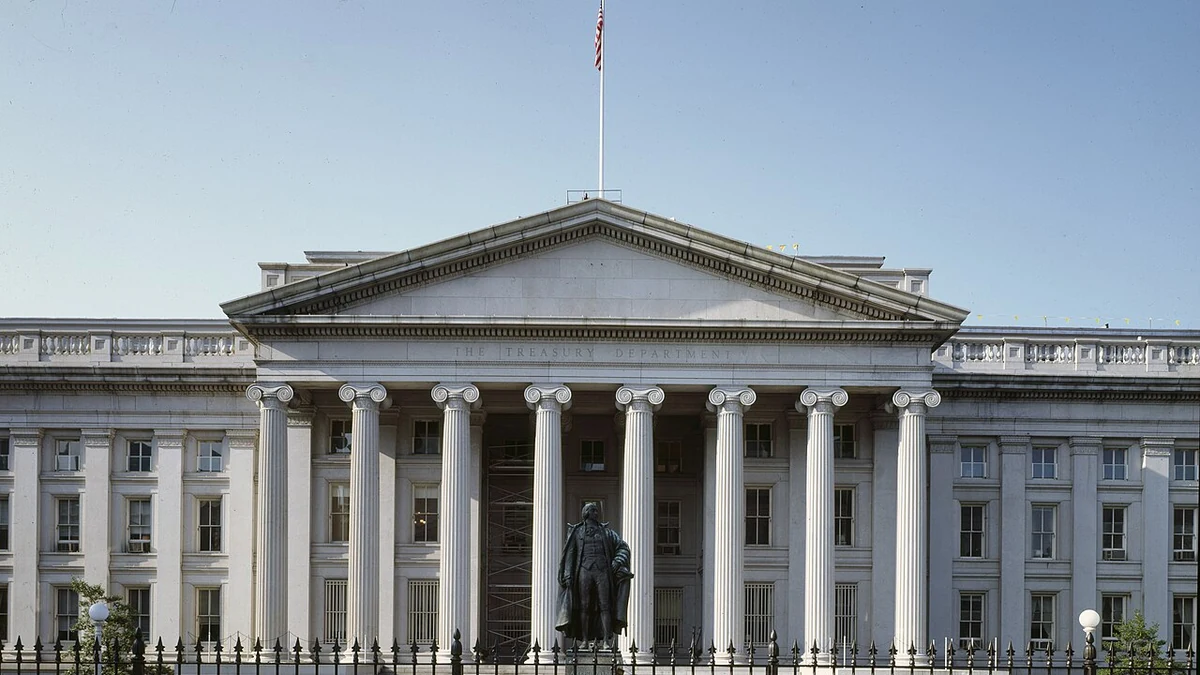
The U.S. Treasury is set to sell $58 billion of 3-year notes at 1 p.m. ET on Tuesday, opening a three-day refunding sequence as long-term government borrowing costs again sit near levels not seen in almost two decades. The sale is the first immediate test of demand before larger-duration supply reaches the market on Wednesday and Thursday.
The backdrop is unusually sensitive for a routine coupon auction. Reuters reported Tuesday morning that the 30-year Treasury yield was around 5.28%, close to its highest level in almost 20 years, while the 10-year yield was near 4.70%. The long end has come under renewed pressure as higher energy prices and uncertainty around inflation have pushed rate risk back toward the center of the market.
A $125 billion refunding begins with the 3-year note
In its quarterly refunding statement, Treasury said it is offering $125 billion of notes and bonds to refund about $96.3 billion of privately held securities maturing on August 15. The package is expected to raise about $28.7 billion of new cash from private investors.
The sequence starts with Tuesday’s $58 billion 3-year note, which matures in August 2029. Treasury will then sell $42 billion of 10-year notes at 1 p.m. ET Wednesday and $25 billion of 30-year bonds at 1 p.m. ET Thursday. All three auctions will be conducted on a yield basis and are scheduled to settle on Monday, August 17.
The 3-year size itself is not a surprise increase. Treasury’s refunding table shows the maturity at $58 billion in May, June and July as well as August. More broadly, the department said it expects to maintain nominal coupon and floating-rate note auction sizes for at least the next several quarters, while continuing to evaluate demand and the cost and risk of different issuance profiles.
That distinction matters because the market’s supply concern is less about a sudden change in Tuesday’s auction size than about the scale of federal financing needs over time. Treasury separately estimated on August 3 that it will borrow $739 billion in privately held net marketable debt during the July-to-September quarter, assuming a $950 billion cash balance at the end of September. That estimate was $68 billion above the projection Treasury published in May, mainly because of lower projected net cash flows.
The quarterly borrowing estimate and the gross size of individual auctions measure different things, so they should not be treated as interchangeable. Still, together they show why auction demand has become an important market signal. Investors are being asked to absorb large and recurring amounts of government debt even as yields are already elevated across the curve.
Long yields keep pressure on the auction backdrop
The 3-year note is not part of the long end of the Treasury curve, but its reception can set the tone for the heavier duration risk still to come. Reuters said the 30-year yield moved toward July’s 19-year highs above 5.28% on Tuesday, while the 10-year yield was roughly unchanged near 4.70%. The 2-year yield was around 4.23%, leaving the longer end under more visible pressure.
Part of that pressure reflects renewed inflation sensitivity. Brent crude was trading around $88 a barrel Tuesday after rising about 5% over two days, according to Reuters. The latest move in energy prices will not be fully reflected in the July consumer-price report due Wednesday, but it has complicated the broader debate over how quickly inflation can cool and how much room the Federal Reserve has to ease policy.
For Tuesday’s auction, traders will focus on more than the headline amount sold. Treasury auction results disclose the high yield, the amount tendered and accepted, and how the securities were distributed among primary dealers, direct bidders and indirect bidders. Those details help show whether investors were willing to absorb the issue at levels close to prevailing market prices or required a larger yield concession.
Primary dealers provide an important backstop to the process. The Federal Reserve Bank of New York says primary dealers are expected to bid for a pro-rata share of every Treasury auction at reasonably competitive prices. As a result, a sale can be completed even when end-investor demand is less aggressive, which is why the distribution of awards and the yield at which the auction clears can matter as much as the fact that the full amount was sold.
A weak 3-year result would not, by itself, prove that demand for 10- or 30-year debt is deteriorating. Different maturities attract different investors and carry very different sensitivity to inflation, fiscal policy and changes in long-term interest rates. But a poor opening auction could make the market more cautious ahead of Wednesday’s and Thursday’s sales, particularly with long yields already near recent extremes.
CPI lands before the 10-year auction
The next major test arrives before the Treasury reaches the longer maturities. The Bureau of Labor Statistics is scheduled to release July consumer-price data at 8:30 a.m. ET Wednesday, four and a half hours before the $42 billion 10-year note auction.
That timing gives the market a fresh inflation reading before investors commit to a new benchmark 10-year issue. A hotter-than-expected report could put upward pressure on yields and force the auction to clear at a higher rate, while a softer reading could ease some of the pressure that has built at the long end. The relationship is not mechanical, because auction demand also depends on positioning, relative value and the price investors are offered at the time of the sale.
Thursday’s $25 billion 30-year bond auction is the most direct test of the part of the curve that has been under the greatest strain. With the 30-year yield already near its highest level since the mid-2000s, the auction will show how much demand emerges when investors are offered those elevated yields on newly issued long-term government debt.
Tuesday’s 3-year result therefore serves as the first checkpoint rather than the final verdict on Treasury demand this week. The sequence becomes progressively more exposed to long-term rate risk, with July CPI at 8:30 a.m. ET Wednesday, the 10-year sale at 1 p.m. that day, and the 30-year auction at 1 p.m. ET Thursday.
More from Investing



Latest News
View all news- FTC, USDA Launch Joint Inquiry Into Agricultural Equipment Market Practices
- VAALCO Completes Gabon Phase 3 Drilling as ETSEM-3H Starts at About 2,000 BOPD
- U.S. Crude Inventories Fall 3.2 Million Barrels in Latest EIA Report
- UK Trade Remedies Authority Proposes Five-Year Anti-Dumping Duty on Chinese Rutile Titanium Dioxide
- OCC Launches Direct Payments-Fraud Reporting Tool for Community Banks
