
CoreWeave Revenue More Than Doubles as AI Backlog Hits $104 Billion
CoreWeave posted $2.58 billion in second-quarter revenue and a roughly $104 billion backlog, but its net loss widened to $626 million as interest costs and infrastructure spending surged.
Our editorial standards
MarketReview publishes clear, independently produced financial information using reliable sources and transparent editorial standards.
Read our Editorial Policy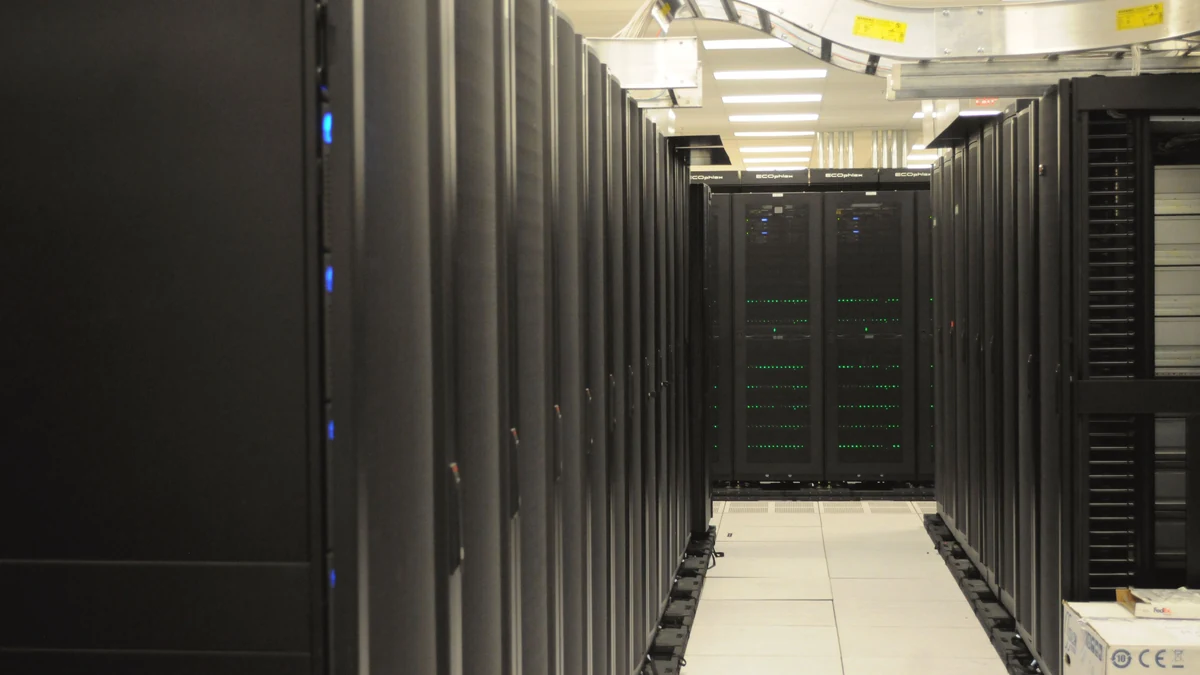
CoreWeave’s second-quarter revenue more than doubled as demand for artificial intelligence computing capacity continued to outrun the company’s ability to build it, pushing revenue backlog to about $104.2 billion. The scale of that demand is the strongest number in the quarter, but it came alongside a much heavier financing burden as CoreWeave kept spending aggressively on data-center infrastructure.
Revenue rose 112% from a year earlier to $2.575 billion from $1.212 billion. Net loss widened to $626 million from $290 million, while net interest expense increased to $640 million from $267 million. CoreWeave also swung to a $49 million operating loss from $19 million of operating income in the same period last year.
The results show both sides of CoreWeave’s rapid expansion. Customers are committing tens of billions of dollars to future compute capacity, giving the company unusually large forward revenue visibility. Turning those commitments into delivered capacity, however, requires data centers, GPUs, networking equipment and power infrastructure to be financed and installed well before all of the related revenue is collected.
A $104 Billion Backlog Offers Long-Term Revenue Visibility
CoreWeave said its revenue backlog stood at approximately $104.2 billion at June 30, up 246% from $30.1 billion a year earlier. The total consisted of about $103.7 billion of remaining performance obligations and another $500 million of estimated future revenue tied to committed contracts that are not included in that accounting measure.
The company also said the quarter-end figure excluded more than $25 billion of net new customer commitments added early in the third quarter. That suggests demand remained strong after the reporting period and gives CoreWeave a substantial base of contracted business as it continues to add capacity.
The backlog is spread over several years rather than concentrated in the next few quarters. CoreWeave’s investor presentation showed about 40% of backlog expected within 24 months, 39% between 25 and 48 months, and 21% beyond 48 months. That timing matters because backlog is not the same as cash already received. The company defines the figure using contractual commitments and estimates of future amounts, subject to its ability to deliver capacity and the availability of its services.
CoreWeave is expanding the physical infrastructure needed to support those commitments. Active power capacity reached about 1.5 gigawatts at the end of the second quarter, an increase of nearly 500 megawatts during the period, while contracted power was about 3.7 gigawatts. The gap between active and contracted power gives a sense of the amount of infrastructure still to be brought online as customer demand grows.
Losses and Interest Costs Are Rising With the Buildout
The revenue growth did not translate into stronger bottom-line profitability. Operating expenses increased to $2.624 billion from $1.193 billion a year earlier, slightly exceeding quarterly revenue. That pushed CoreWeave to a $49 million operating loss, compared with a $19 million operating profit in the second quarter of 2025.
Financing costs were an even larger drag. Net interest expense rose to $640 million, more than double the $267 million reported a year earlier. The increase helped push the quarterly net loss to $626 million, or $1.14 per diluted share, from a $290 million loss, or $0.60 per diluted share, in the year-earlier period.
CoreWeave’s adjusted figures tell a similar story about the tension between scale and profitability. Adjusted EBITDA doubled to $1.51 billion from $753 million, but the adjusted EBITDA margin slipped to 59% from 62%. Adjusted operating income fell to $128 million from $200 million, while its margin dropped to 5% from 16%. Adjusted net loss widened to $567 million from $130 million.
Those measures are especially important for a company whose expansion depends heavily on debt because EBITDA excludes interest and several other expenses. CoreWeave is generating substantial earnings before those costs, but the increase in net interest expense shows how much of the economics sit below the EBITDA line. The quarter therefore looks very different depending on whether the focus is on demand and adjusted cash-generation measures or on the cost of funding the infrastructure required to serve that demand.
Capital Spending Keeps Growth Dependent on Financing
CoreWeave’s capital expenditures were about $9.35 billion in the second quarter, up from $2.94 billion a year earlier, according to the company’s investor presentation. For the first six months of 2026, capital expenditures reached about $16.14 billion, compared with $4.80 billion in the same period last year. The company defines that measure to include purchases of property and equipment plus changes in property-and-equipment amounts recorded in accounts payable and accrued expenses.
The cash-flow statement shows the financing pressure more directly. Cash purchases of property and equipment totaled $6.42 billion during the quarter. Operating activities generated $679 million of cash, but investing activities used $7.17 billion. Financing activities supplied $10.07 billion, including $13.46 billion of proceeds from debt issuance before debt repayments of $3.88 billion.
CoreWeave ended June with $5.52 billion of cash and cash equivalents, up from $3.13 billion at the end of 2025. Net property and equipment had risen to $46.74 billion from $30.56 billion over the same six-month period, illustrating how quickly the balance sheet is being converted into computing infrastructure.
The company has continued to add new funding after the quarter. On Aug. 10, CoreWeave said it closed a $2.6 billion delayed-draw term loan facility to support AI infrastructure and customer deployments. The facility has an expected maturity of about five years and was priced at the Secured Overnight Financing Rate plus 5.50 percentage points. CoreWeave said the financing followed a $3.1 billion term loan completed earlier in the year and brought debt and equity capital secured year to date to more than $30 billion.
That access to capital is what allows CoreWeave to pursue a backlog measured in more than $100 billion, but it also explains why the cost of growth is central to the investment case. The company is adding capacity at a pace that requires large, recurring capital outlays, and the second quarter showed that interest costs can rise sharply even while revenue and adjusted EBITDA expand.
The next test is whether new capacity comes online fast enough to convert backlog into revenue while operating margins and financing costs improve. CoreWeave’s early third-quarter customer commitments indicate that demand has not been the immediate constraint. The harder question is how efficiently the company can fund and deploy the infrastructure needed to meet it.
More from Investing


Latest News
View all news- FTC, USDA Launch Joint Inquiry Into Agricultural Equipment Market Practices
- VAALCO Completes Gabon Phase 3 Drilling as ETSEM-3H Starts at About 2,000 BOPD
- U.S. Crude Inventories Fall 3.2 Million Barrels in Latest EIA Report
- UK Trade Remedies Authority Proposes Five-Year Anti-Dumping Duty on Chinese Rutile Titanium Dioxide
- OCC Launches Direct Payments-Fraud Reporting Tool for Community Banks
