Gulf Stocks Rise Even as U.S.-Iran Talks Stall and Hormuz Disruption Continues
Saudi and Qatari equities advanced Sunday as banks and Saudi Aramco gained, even with U.S.-Iran diplomacy stalled and tanker traffic through the Strait of Hormuz still severely constrained.
Our editorial standards
MarketReview publishes clear, independently produced financial information using reliable sources and transparent editorial standards.
Read our Editorial Policy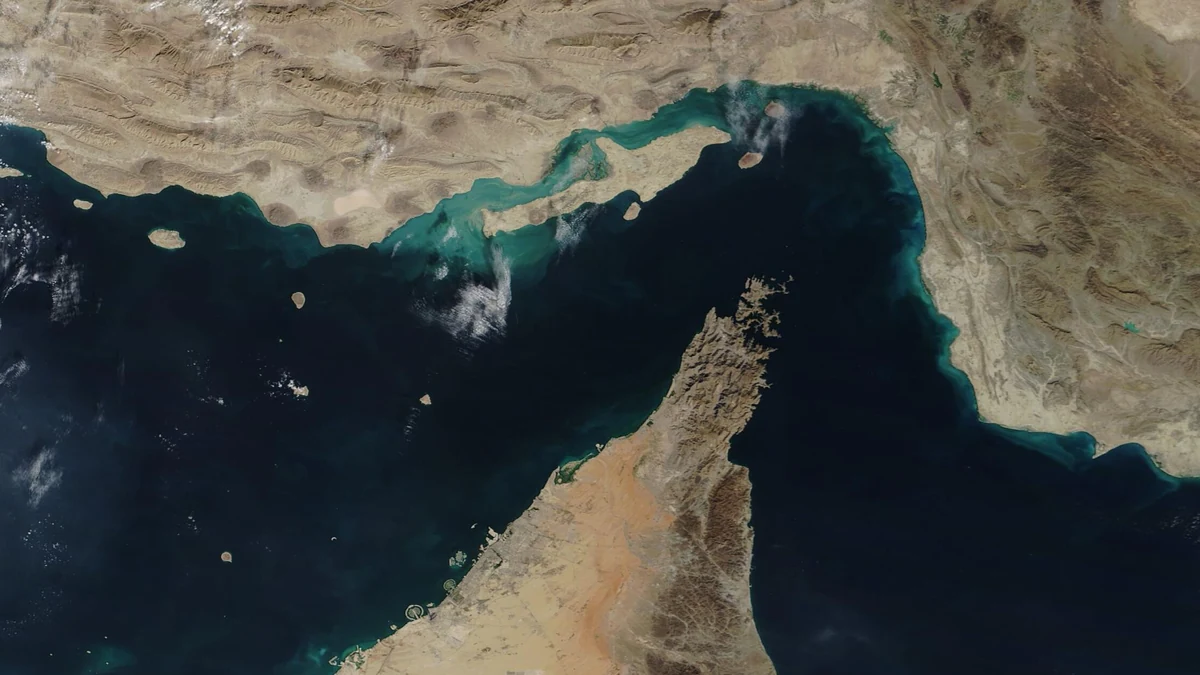
Saudi and Qatari equities rose on Sunday even as U.S.-Iran peace efforts remained stalled and commercial traffic through the Strait of Hormuz stayed far below normal levels, showing that Gulf stock indexes were not moving in lockstep with the region’s geopolitical risk. Saudi Arabia’s Tadawul All Share Index gained about 0.9%, while Qatar’s benchmark added about 0.2%.
The advances were led by heavyweight banks and Saudi Aramco rather than by evidence of a diplomatic breakthrough. Brent crude had settled Friday at $88.52 a barrel, up $1.45, or 1.67%, as oil markets continued to contend with disrupted shipping and uncertainty over how quickly export flows through Hormuz can recover.
Banks and Aramco lift the Sunday session
The Saudi Exchange’s official market summary showed the TASI closing at 10,919.68, up 96.08 points, or 0.89%, from the previous close of 10,823.60. The exchange recorded 186 gainers and 74 losers, indicating that the advance extended beyond a handful of large stocks even though index heavyweights made an important contribution.
Reuters reported that Al Rajhi Bank rose 1.5% and Saudi Aramco gained 1%. Those two moves matter for the benchmark because both companies carry substantial weight in the Saudi market. Tihama Advertising, Public Relations and Marketing also stood out, rising 7.3% after the company announced a change in chief executive, giving the session a company-specific catalyst alongside the broader market move.
In Qatar, the Qatar Stock Exchange market watch put the QE Index at 10,043.68, up 22.84 points, or 0.23%, from 10,020.84. Reuters said Qatar National Bank, the Gulf’s largest lender by assets, gained 1.5% and helped lift the index.
The composition of the gains is important. Sunday’s rise did not follow a clear improvement in the security picture, and the main diplomatic and shipping risks facing the region remained unresolved. Instead, the session showed how Gulf equities can advance when large banks, energy companies and individual corporate movers provide support, even while the oil and geopolitical backdrop remains unsettled.
U.S.-Iran peace track remains stalled as tanker traffic stays thin
The diplomatic picture was still difficult going into the session. Reuters reported on Saturday that progress toward U.S.-Iran peace talks remained halted and that Iranian Foreign Minister Abbas Araqchi said Tehran had not decided to resume talks with Washington. He also said the United States would have to meet Iran’s conditions concerning the strait before shipping could resume normally.
A separate Iran-Oman track focused on navigation through Hormuz is distinct from those talks. Iran’s foreign ministry said on August 5 that talks with Oman had been under way for two months with the aim of establishing a safe navigation corridor for commercial shipping. The ministry said technical, legal, security and environmental aspects had been reviewed, but it also cautioned that an Iran-Oman understanding by itself would not mean the strait had become safe for vessels.
Actual vessel traffic remained extremely limited. Reuters, citing ship-tracking firm Kpler, reported that only two vessels passed through the Strait of Hormuz on Friday and that no crude oil shipments were visible. Kpler’s figures may not capture ships moving with transponders switched off, but Reuters noted that the observed traffic was far below the more than 130 ships a day that traversed the strait before the war.
Shipping risk has also remained active rather than theoretical. The United Arab Emirates accused Iran of attacking an ADNOC-operated vessel transiting the strait on Friday, according to Reuters, following two other incidents involving ADNOC vessels the previous evening. The United Kingdom Maritime Trade Operations Centre separately reported that a bulk carrier had been struck in the hull by an unknown projectile. Reuters said it was not immediately clear whether that report referred to the same incident.
Those conditions help explain why a positive equity session should not be read as a market judgment that the regional conflict is close to resolution. Equity indexes can respond to company earnings, bank shares, oil producers and local positioning over a single session, while the shipping disruption can remain severe at the same time.
Hormuz remains the central oil-market constraint
The scale of the disruption is clearer in U.S. Energy Information Administration estimates. In its August Short-Term Energy Outlook, the EIA estimated that crude oil and petroleum liquids transported through the Strait of Hormuz averaged 4.9 million barrels a day in the second quarter of 2026. That was down from 21.6 million barrels a day in the fourth quarter of 2025, before the conflict began.
Saudi Arabia has been able to reroute some crude through its East-West pipeline to the Red Sea port of Yanbu, helping raise flows through the Bab el-Mandeb route. The EIA said alternative routes reduce the dependence on Hormuz but are more limited, more expensive or take longer. It assessed that oil production shut-ins averaged 5.5 million barrels a day in July.
The agency’s current outlook assumes shipments through Hormuz will remain severely constrained through August and begin increasing slowly in September. That is an assumption rather than a confirmed reopening schedule. If it holds, the EIA expects production and trade patterns to take until early 2027 to generally return to their pre-conflict state, with some Persian Gulf producers still unable to restore output to earlier averages during the forecast period.
That forecast also helps put Friday’s $88.52 Brent settlement in context. The EIA expects Brent spot prices to average about $85 a barrel in the third quarter and $78 in the fourth quarter, conditional on traffic through Hormuz gradually increasing and shut-in production restarting. The agency estimates that global oil inventories fell by an average of 4.2 million barrels a day in the second quarter and forecasts another average draw of 3.8 million barrels a day in the third quarter.
For Gulf equity investors, those numbers create a mixed backdrop rather than a simple relationship between higher oil prices and higher stocks. Elevated crude prices can support the revenue environment for producers such as Saudi Aramco and can improve the fiscal backdrop for oil-exporting governments. Prolonged disruption, however, raises transport costs, threatens export volumes and keeps a wider regional risk premium in place. Sunday’s gains in Saudi Arabia and Qatar occurred with both sides of that equation still present.
The EIA’s next Short-Term Energy Outlook is scheduled for September 9. That release will provide the next formal update on its assumption that Hormuz flows begin a gradual recovery in September and on how long production shut-ins and inventory draws are expected to persist.
More from Investing

Latest News
View all news- FTC, USDA Launch Joint Inquiry Into Agricultural Equipment Market Practices
- VAALCO Completes Gabon Phase 3 Drilling as ETSEM-3H Starts at About 2,000 BOPD
- U.S. Crude Inventories Fall 3.2 Million Barrels in Latest EIA Report
- UK Trade Remedies Authority Proposes Five-Year Anti-Dumping Duty on Chinese Rutile Titanium Dioxide
- OCC Launches Direct Payments-Fraud Reporting Tool for Community Banks