German Manufacturing PMI Hits 51-Month High as Services Remain in Contraction
Germany’s flash manufacturing PMI rose to 54.1 in August, its strongest reading in 51 months, while services fell deeper into contraction at 48.5.
Our editorial standards
MarketReview publishes clear, independently produced financial information using reliable sources and transparent editorial standards.
Read our Editorial Policy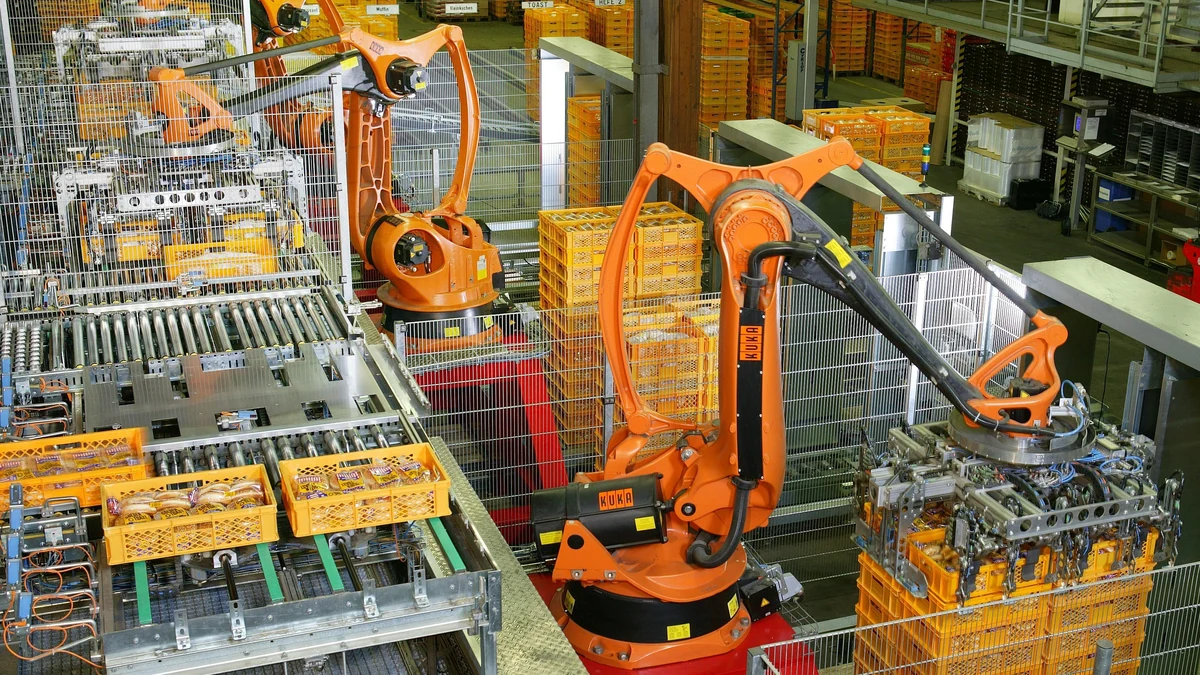
Germany’s manufacturing sector strengthened sharply in August, helping the country’s private economy remain in expansion even as services contracted for a fifth consecutive month. The flash manufacturing purchasing managers’ index rose to 54.1 from 52.2 in July, its highest reading in 51 months, while the services business activity index fell to 48.5 from 49.8.
The divergence left the composite output index at 51.0, down slightly from 51.3 in July but still above the 50 level that separates expansion from contraction. The August reading suggests that Germany’s near-term growth is being carried increasingly by factories rather than by service providers, a reversal from the pattern that dominated much of the country’s earlier post-pandemic recovery.
S&P Global’s flash Germany PMI survey also showed a stronger rise in factory output, with the manufacturing output index climbing to 56.7 from 54.7 and reaching a 55-month high. The survey is preliminary and is based on responses collected before the full monthly data are available, but it offers one of the earliest readings on business conditions in Europe’s largest economy.
Factory activity accelerates as manufacturing recovery regains momentum
The improvement in manufacturing was broad enough to lift both output and the headline factory PMI further into expansion territory. The 56.7 output index was the highest in 55 months, offering a second signal, alongside the 54.1 headline PMI, that factory conditions strengthened materially from July.
Those readings matter because Germany’s industrial recovery has been uneven for several years. The manufacturing PMI only returned decisively above 50 earlier in 2026 after an extended period of contraction, and the latest acceleration follows some loss of momentum during the second quarter. At 54.1, the August flash reading indicates that operating conditions improved at the fastest pace since the spring of 2022.
Official data released before the PMI had already shown signs of firmer industrial demand. German manufacturing orders rose 3.1% in June from the previous month on a seasonally and calendar-adjusted basis, although orders excluding large-scale contracts declined 0.5%. Industrial production increased 0.2% in June, and output over the April-to-June period was 0.7% higher than in the preceding three months.
The stronger survey reading therefore fits with a broader, if still incomplete, improvement in the goods-producing economy. It does not establish that every branch of German industry is expanding at the same pace. Large orders can distort monthly factory statistics, and industries exposed to energy costs, global trade or weak consumer demand continue to face different conditions.
Services remain the main drag, but hiring stops falling overall
Services moved in the opposite direction. The flash services PMI dropped to 48.5, its lowest level in three months, extending a run of contraction that began in April. The pace of decline was the fastest since May, showing that the improvement in the composite index over the summer has not yet developed into a balanced recovery across the private economy.
There were some less negative signals beneath the headline services number. New business increased slightly for a second consecutive month and service-sector employment rose again, suggesting that companies are not responding to weaker current activity with a renewed wave of job cuts. Across manufacturing and services combined, employment was unchanged in August after declining for 26 consecutive months.
The stabilization in staffing reflected two opposing trends. Service providers added workers modestly, while manufacturers continued to reduce headcount, but at the slowest pace in more than a year. That combination is important for Germany because prolonged weakness in employment has been one of the clearest signs that the recovery in output has yet to translate into a stronger labour market.
Business expectations also improved. The survey’s measure of confidence about activity over the coming year rose to its highest level since just before the escalation of the Middle East conflict in February and moved slightly above its long-run average. Optimism strengthened particularly in manufacturing, where companies have become more positive as orders and production have recovered.
Inflation remains a constraint around the recovery. Germany’s Federal Statistical Office said consumer prices were 2.8% higher in July than a year earlier, up from 2.3% in June, with energy prices an important driver of the acceleration. That keeps cost sensitivity high for manufacturers and service providers even as the activity indicators move in different directions.
Official data point to growth, but Germany’s recovery remains uneven
The August PMI arrives after Germany’s economy expanded 0.2% in the second quarter from the first three months of the year, following growth of 0.4% in the first quarter on revised data. Foreign trade provided an important contribution, while domestic consumption was subdued and investment declined.
Germany’s Federal Ministry for Economic Affairs said in its August assessment of the economy that recent development had been robust despite higher energy prices and the effects of conflict in the Middle East. The ministry also said demand had shifted toward European and German suppliers in some energy-intensive industries, while leading indicators for the third quarter had generally improved.
That official assessment also highlights why a strong manufacturing PMI should not be read as evidence that Germany has moved into a broad-based boom. Domestic demand remained sluggish in the second quarter, inflation accelerated in July, and the labour market was still weak. Low water levels on major inland waterways have also raised the risk of temporary supply bottlenecks and higher transport costs for industries including oil, chemicals, construction and steel.
For investors and companies, the August survey points to a clearer industrial upswing than Germany had at the start of the summer, but the composition of growth remains narrow. Manufacturing output is strengthening, while services are still shrinking and employment has only just stopped falling. The next confirmation will come from the final August PMI readings and subsequent official orders and production data, which will show whether the factory rebound is being sustained beyond the survey’s preliminary snapshot.
More News
Latest News
View all news- UK Trade Remedies Authority Proposes Five-Year Anti-Dumping Duty on Chinese Rutile Titanium Dioxide
- Safe Pro Expects Q3 Revenue Above $2.5 Million as U.S. Government Contract Work Accelerates
- OCC Launches Direct Payments-Fraud Reporting Tool for Community Banks
- Norway Proposes NOK 608.4 Billion in Wealth-Fund Spending and NOK 6.4 Billion Income-Tax Cut in 2027 Budget
- New York Fed Research Finds Most Firms Barely Change Investment After Rate Shocks, but a Small Minority React Sharply