Fed’s Kashkari Says Treasury Market Is Functioning Normally Despite Yield Surge
Minneapolis Fed President Neel Kashkari said Treasury trading and liquidity remain intact even as the 10-year and 30-year yields ended Friday at 4.74% and 5.27%.
Our editorial standards
MarketReview publishes clear, independently produced financial information using reliable sources and transparent editorial standards.
Read our Editorial Policy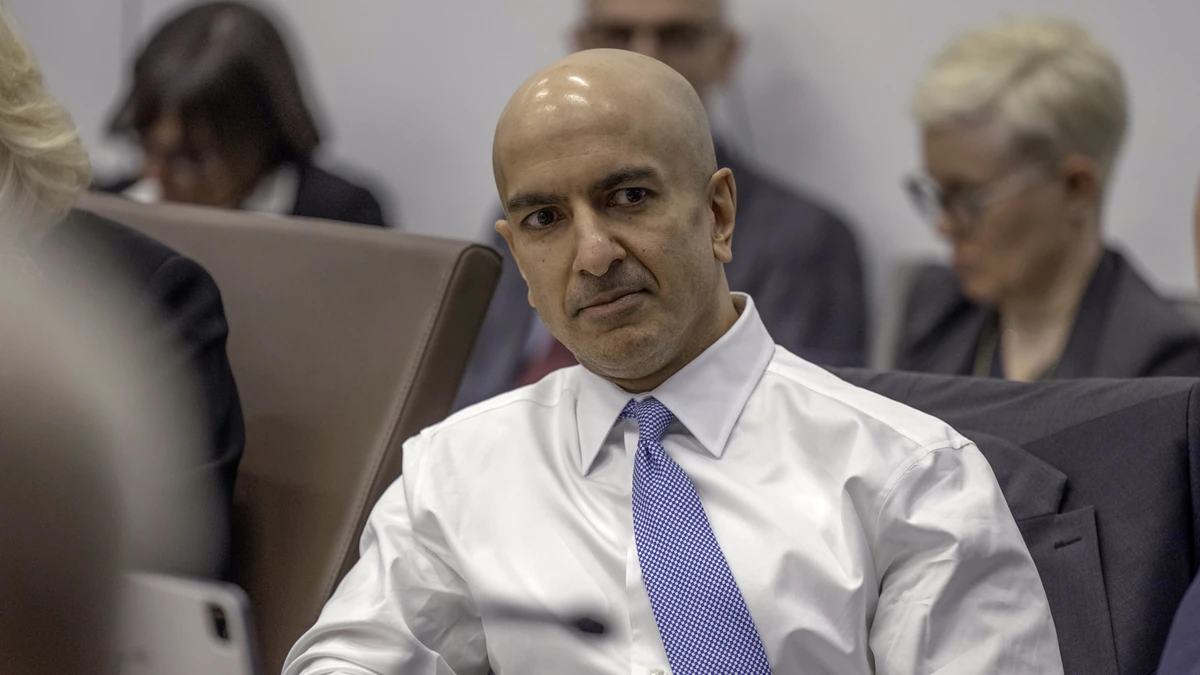
Minneapolis Federal Reserve President Neel Kashkari said Sunday that the sharp rise in U.S. Treasury yields does not appear to reflect a breakdown in the government bond market, drawing a line between higher borrowing costs and the market’s ability to function normally. Speaking on CBS’s “Face the Nation,” Kashkari said trades are taking place and liquidity is available, allowing the Federal Reserve to keep the federal funds rate as its primary monetary-policy tool as it works to bring inflation back toward 2%.
His comments followed a volatile stretch in long-dated government debt. The 10-year Treasury yield ended Friday at 4.74%, while the 30-year yield finished at 5.27% on the Treasury Department’s official par-yield curve. The 30-year yield had reached 5.31% on Monday. Kashkari acknowledged that yields are high compared with recent history, but he also noted that they were meaningfully higher during parts of the 1990s.
Higher Yields Are Not the Same as a Broken Market
Kashkari’s distinction is important because a bond selloff can be economically consequential without becoming a market-functioning crisis. Treasury’s daily yield data show the 10-year rate rising from 4.63% on Aug. 4 to 4.74% on Aug. 21. Over the same period, the 30-year rate moved from 5.18% to 5.27%. Those official rates are derived from closing market bid prices and provide a consistent measure of how the curve has repriced.
A higher yield means investors are demanding a greater return to hold Treasury debt, and the effect can spill into other borrowing costs that are priced off government securities. That is different from a market in which dealers cannot intermediate trades, buyers and sellers struggle to transact, or liquidity deteriorates enough to threaten the broader financial system. Kashkari’s message was that the current rise in yields has not crossed that line.
The Fed made a similar distinction in its July Monetary Policy Report. It said Treasury-market functioning had been orderly since the start of the year, although liquidity worsened during volatility following the Middle East conflict before recovering to near January levels. The report also said broker-dealer intermediation continued to support Treasury trading. That background helps explain why policymakers can be concerned about the economic impact of higher long-term rates without treating every sharp yield move as a malfunction in the market itself.
Treasury has also continued its standing buyback program, which is designed in part to support liquidity in older, less actively traded securities. In its Aug. 5 quarterly refunding statement, the department said it expected to buy up to $38 billion of off-the-run securities across maturity buckets for liquidity support during the quarter. The program is a routine debt-management tool, not evidence by itself that the market is under acute stress.
Kashkari’s Inflation Concerns Remain Firm
The reassurance on Treasury-market functioning should not be read as a softer view on monetary policy. At the July 28-29 Federal Open Market Committee meeting, policymakers voted 9-3 to keep the federal funds target range at 3.5% to 3.75%. Kashkari was one of three dissenters who preferred a quarter-point increase.
In his July dissent statement, Kashkari said inflation had remained above the Fed’s 2% target for more than five years and argued that a succession of supply shocks could increase the risk that higher inflation becomes entrenched. He said he would rather tighten policy incrementally while gathering more evidence than wait until a larger adjustment became necessary. He also left room to slow or pause if inflation fades durably.
That framework was still evident in Sunday’s interview. Kashkari did not commit to another rate increase at the September meeting, saying the Fed needs more data and that he did not want to prejudge the decision. At the same time, he indicated that he is not confident inflation is returning to target quickly. He also warned that continued back-and-forth in the tariff dispute with Canada could extend the inflationary effect of the trade conflict.
The July meeting minutes show that Kashkari’s concerns are part of a broader debate inside the Fed. Most participants supported holding rates steady, but several favored a 25-basis-point increase and many said tighter policy would likely be needed if inflation failed to decline. The minutes also recorded that nominal Treasury yields had risen 25 to 30 basis points over the intermeeting period, driven by increases in real rates, while market expectations had shifted toward a more restrictive policy path.
Those minutes reinforce another part of Kashkari’s argument: the level of long-term Treasury yields can tighten financial conditions, but it does not automatically replace an FOMC decision. Many participants reaffirmed that changes in the federal funds target range should remain the primary way the committee adjusts the stance of monetary policy. Market rates are an important part of the transmission mechanism, yet policymakers still have to decide whether their own policy setting is restrictive enough to bring inflation down.
September Decision Will Put the Split Back in Focus
The next scheduled FOMC meeting is Sept. 15-16 and will include a new Summary of Economic Projections. By then, policymakers will have additional inflation, labor-market and activity data to judge against the competing signals already in view: inflation remains above target, long-term yields have climbed, and the Treasury market is still trading normally by Kashkari’s assessment.
For investors, that separation matters. A continued rise in yields could tighten financing conditions and weigh on interest-sensitive parts of the economy even if market plumbing remains intact. A genuine deterioration in liquidity would raise a different set of questions about financial stability and market operations. Kashkari’s Sunday comments indicate that he does not currently see that second problem.
His policy focus therefore remains on the inflation outlook rather than on defending any particular level of the 10-year or 30-year yield. If incoming data show that price pressures are not easing sufficiently, his July dissent suggests he could again favor a higher policy rate. If inflation cools more convincingly, his incremental approach gives him room to pause. The Fed’s next formal rate decision is due Sept. 16.
More from Investing



Latest News
View all news- FTC, USDA Launch Joint Inquiry Into Agricultural Equipment Market Practices
- VAALCO Completes Gabon Phase 3 Drilling as ETSEM-3H Starts at About 2,000 BOPD
- U.S. Crude Inventories Fall 3.2 Million Barrels in Latest EIA Report
- UK Trade Remedies Authority Proposes Five-Year Anti-Dumping Duty on Chinese Rutile Titanium Dioxide
- OCC Launches Direct Payments-Fraud Reporting Tool for Community Banks