FDA Expands Mounjaro Label to Reduce Major Cardiovascular Event Risk in High-Risk Type 2 Diabetes
The FDA expanded Mounjaro's label to reduce major adverse cardiovascular event risk in adults with type 2 diabetes who are at high risk, adding a new clinical and commercial claim for Eli Lilly's blockbuster drug.
Our editorial standards
MarketReview publishes clear, independently produced financial information using reliable sources and transparent editorial standards.
Read our Editorial Policy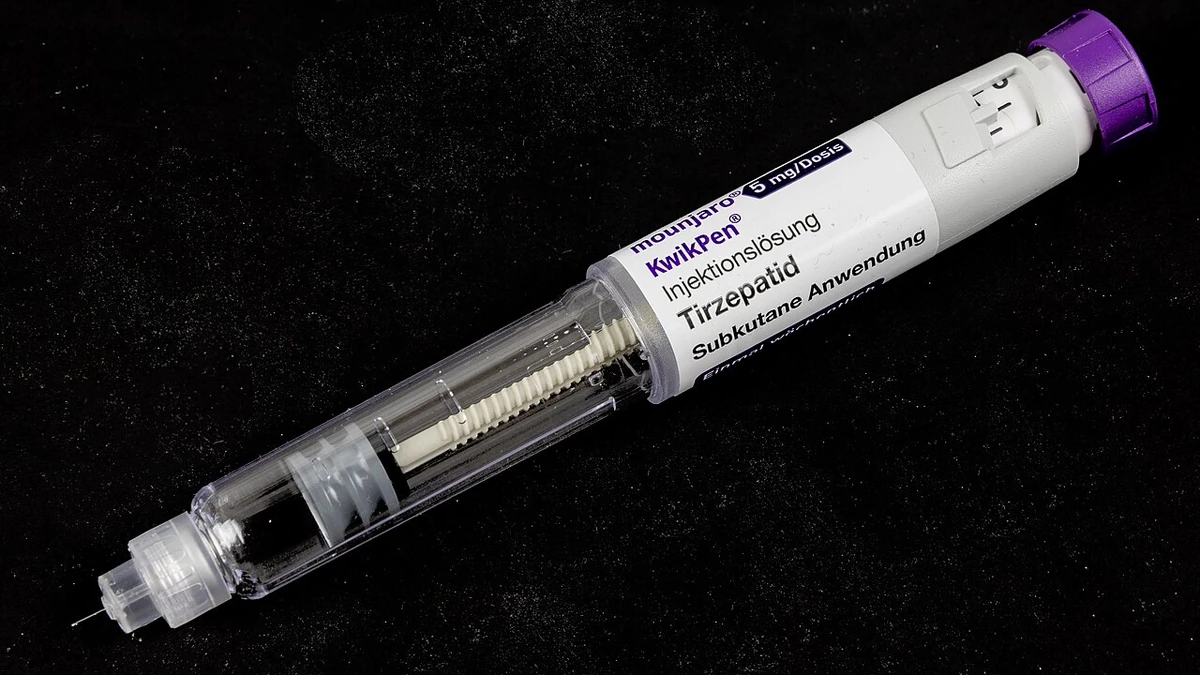
The U.S. Food and Drug Administration on Friday expanded Mounjaro’s label to include a cardiovascular risk-reduction claim, giving Eli Lilly a new selling point for one of the most important products in the drug industry. The approval broadens the case for tirzepatide in a part of diabetes care where heart outcomes matter alongside blood sugar control.
The new indication allows Mounjaro, the brand name for tirzepatide, to be used to lower the risk of major adverse cardiovascular events, including cardiovascular death, non-fatal heart attack and non-fatal stroke, in adults with type 2 diabetes who are at high risk for those events. The decision adds a new clinical role to a medicine that was already a cornerstone of Lilly’s diabetes business because of its blood sugar and weight effects.
The label expansion matters beyond the wording on a package insert. Cardiovascular disease remains the leading cause of death for people with type 2 diabetes, and outcome claims increasingly shape prescribing decisions, insurer discussions and product positioning across the fast-growing incretin market. For Lilly, the approval also deepens the moat around a franchise that is already driving a large share of company growth.
New indication broadens Mounjaro’s role in diabetes care
In its Aug. 28 announcement, Lilly said the FDA approved Mounjaro to lower the risk of major adverse cardiovascular events, often shortened to MACE, in adults with type 2 diabetes who are at high risk for those events. Mounjaro was already approved as an adjunct to diet and exercise to improve blood sugar in adults and in children 10 years of age and older with type 2 diabetes, so the updated label broadens how the product can be discussed with physicians and patients.
The company framed the move as an important step for a population with substantial unmet need. Heart disease is a major source of illness and death in type 2 diabetes, which means glucose lowering alone is often not the only question when doctors choose between therapies. A medicine that can now be presented as addressing glycemic control, weight and cardiovascular risk at the same time occupies a stronger place in treatment conversations.
Lilly also said the safety and tolerability findings in the cardiovascular outcomes trial were generally consistent with Mounjaro’s established profile. The most commonly reported adverse events were gastrointestinal, were usually mild to moderate in severity, and occurred primarily during the dose-escalation period. That matters because label expansions are most commercially useful when they do not come with a new safety burden that changes how doctors use the drug.
The approval does not turn Mounjaro into a blanket therapy for everyone with diabetes or cardiovascular risk. The new claim is tied to adults with type 2 diabetes who are at high risk for major cardiovascular events, and the product still carries the same broader prescribing framework and warnings already associated with tirzepatide. Even so, the addition gives Lilly language it did not previously have on one of its flagship medicines.
SURPASS-CVOT showed noninferiority, not superiority
The regulatory decision was based on SURPASS-CVOT, a large event-driven Phase 3 study that compared tirzepatide with Lilly’s Trulicity, or dulaglutide, in adults with type 2 diabetes and established atherosclerotic cardiovascular disease. The official ClinicalTrials.gov study record describes the trial as a randomized, double-blind, active-comparator study designed to assess cardiovascular outcomes in a high-risk population rather than simply compare blood sugar control.
Lilly said the trial enrolled more than 13,000 participants across 30 countries and followed them for more than four and a half years. Over a median follow-up of 210.1 weeks, Mounjaro met the study’s primary objective by demonstrating noninferiority to dulaglutide for the time to first major adverse cardiovascular event. Lilly described that result as an 8% lower rate of cardiovascular death, heart attack or stroke, corresponding to an estimated hazard ratio of 0.92 with a 95.3% confidence interval of 0.83 to 1.01.
That is an important result, but it has to be described carefully. The study established that Mounjaro was not worse than dulaglutide on the primary cardiovascular outcome within the pre-specified margin. It did not establish statistical superiority over dulaglutide, and Lilly says that explicitly in its discussion of the data. Investors and readers should not confuse the new label with proof that Mounjaro outperformed every other diabetes therapy or delivered a head-to-head cardiovascular victory over Trulicity.
The design of the study still gives the dataset significance. Many cardiovascular outcomes trials in diabetes have used placebo on top of standard of care, while SURPASS-CVOT used an active comparator that already had established cardiovascular benefit. Trulicity itself is approved to reduce major cardiovascular events in adults with type 2 diabetes who have established cardiovascular disease or multiple cardiovascular risk factors. Matching that benchmark while preserving Mounjaro’s broader metabolic appeal is a meaningful regulatory and commercial outcome, even without a superiority claim.
That nuance is likely to shape how the approval is used in practice. Some physicians may view the label expansion as confirmation that tirzepatide can now be chosen with greater confidence for patients where cardiovascular risk is part of the treatment decision. Others may still compare trial populations, endpoints and the absence of demonstrated superiority before drawing stronger conclusions about relative benefit across the GLP-1 and dual-agonist landscape.
Approval strengthens an already crucial product for Lilly
The timing is notable because Mounjaro was already one of Lilly’s largest growth engines before the label expansion. In Lilly’s second-quarter 2026 results, the company said worldwide Mounjaro revenue rose 91% year over year to $9.9 billion, including $4.8 billion in U.S. revenue and $5.2 billion outside the U.S. Lilly’s overall quarterly revenue increased 48% to nearly $23.0 billion, with management saying that growth was driven primarily by Mounjaro and Zepbound volume.
Those figures help explain why an additional indication matters so much. In large pharmaceutical companies, regulatory wins on established blockbusters can sometimes be as important as approvals for entirely new products because they support broader use, reinforce payer discussions and extend the strategic life of a franchise. For Lilly, Mounjaro sits at the center of a cardiometabolic portfolio that already dominates investor attention, and any incremental clinical differentiation can influence valuation thinking as well as prescribing behavior.
The new claim could also sharpen Lilly’s competitive messaging in a market where cardiovascular outcomes have become a major dividing line. Novo Nordisk’s Ozempic already has an established type 2 diabetes cardiovascular risk-reduction claim, and Wegovy has its own cardiovascular label in overweight or obesity patients with cardiovascular disease. Lilly can now argue that Mounjaro belongs in the cardiovascular-benefit conversation within diabetes rather than being seen mainly as a powerful glucose and weight drug.
Still, the approval does not erase competitive questions. Payers and clinicians will continue to weigh efficacy, tolerability, population differences, access and price across therapies, and the SURPASS-CVOT result leaves room for debate about how much incremental cardiovascular advantage tirzepatide has relative to other options. What changed on Friday is that Mounjaro no longer lacks an FDA-recognized cardiovascular outcomes claim for high-risk adults with type 2 diabetes.
Lilly said data from SURPASS-CVOT have already been included in Mounjaro’s product information in the European Union, and regulatory submissions based on the study remain under review in additional markets. That gives the Aug. 28 FDA decision significance beyond the United States, especially for a product that is already producing multibillion-dollar quarterly sales and remains central to Lilly’s long-term growth story.
More from Investing


Latest News
View all news- U.S. Producer Prices Surge 1.3% in September, Biggest Monthly Increase Since 2022
- U.S. Retail Sales Rise 0.8% in September to $745 Billion
- U.S. Weekly Jobless Claims Edge Up to 199,000 as Layoffs Remain Low
- U.S. Natural Gas Storage Rises 67 Bcf to 3,567 Bcf, EIA Reports
- U.S. Business Inventories Increase 0.4% in August as Sales Climb 1.1%