
U.S. Retail Sales Rise 0.8% in September to $745 Billion
Retail and food services sales grew 0.8% in September, but a 6.4% jump in gasoline-station receipts accounted for much of the gain. Excluding gasoline, sales rose 0.2%.
Our editorial standards
MarketReview publishes clear, independently produced financial information using reliable sources and transparent editorial standards.
Read our Editorial Policy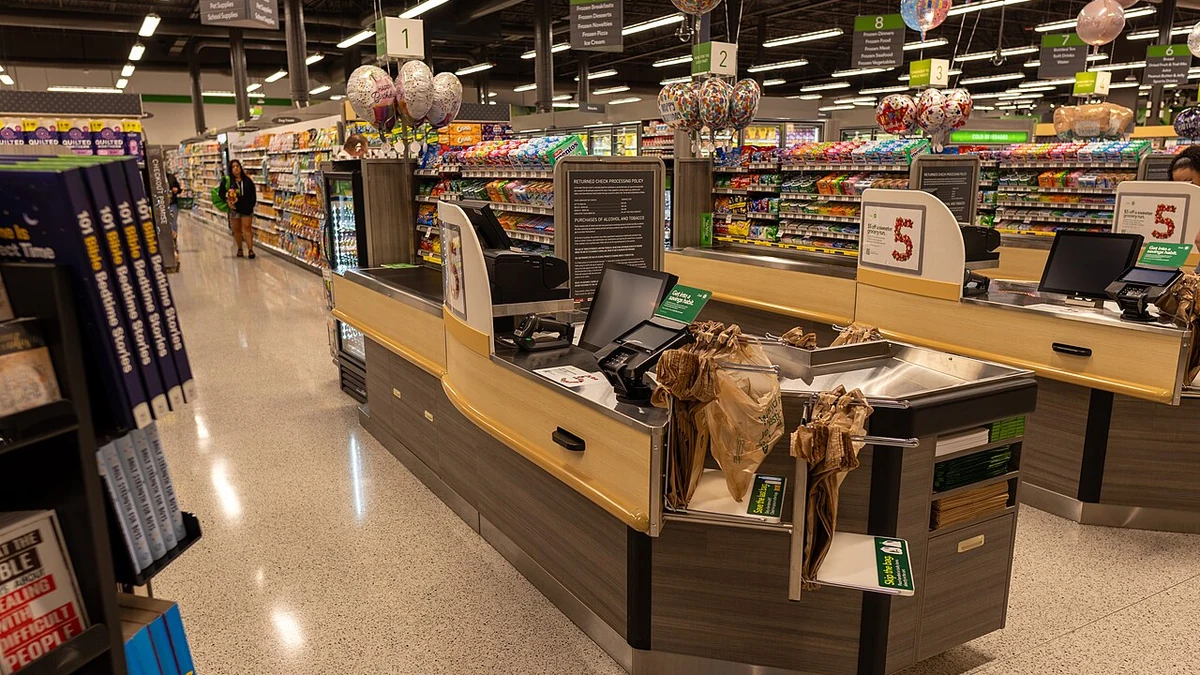
U.S. retail and food services sales rose 0.8% in September to a seasonally adjusted $745.0 billion, according to figures released Thursday by the Census Bureau. Sales were 6.3% higher than a year earlier, extending a stretch of gains in spending measured at stores, restaurants and other retail outlets.
The increase was concentrated in gasoline-station receipts, which climbed 6.4% from August. Once gasoline stations are excluded, retail and food services sales increased only 0.2%. The difference puts the headline advance in perspective: businesses took in more dollars overall, but the strength was not shared evenly across shopping categories.
August sales were revised to $739.3 billion and a 1.3% monthly increase, up from an earlier estimate of 1.1%. September therefore marked another month of growth, though at a slower reported pace. The figures are adjusted for seasonal patterns and differences in the calendar, but not for changes in prices.
Gasoline stations generated most of the monthly gain
Gasoline-station sales reached about $68.0 billion in September, up from $64.0 billion in August. The increase of roughly $4.1 billion accounted for about 71% of the $5.7 billion rise in total retail and food services sales, based on the seasonally adjusted dollar figures in the Census Bureau’s September release and its accompanying industry tables.
This does not establish that Americans bought substantially more fuel. Gasoline-station receipts can rise because prices are higher, customers purchase more gallons, or both. The retail sales report does not separate those effects. It measures the dollar value of sales rather than the inflation-adjusted quantity of goods and services purchased.
The contrast is visible in the measures excluding particular businesses. Sales excluding gasoline stations were $677.0 billion, barely above August’s $675.4 billion. Removing both gasoline stations and motor vehicle and parts dealers leaves a $537.2 billion total, also up just 0.2% on the month. Sales excluding auto dealers alone, a figure that still includes gasoline, rose 0.9%.
The year-over-year comparison offers a related caution. Total retail and food services receipts increased 6.3% from September 2025, but the gain excluding gasoline was 4.5%. Gasoline-station sales were 28.1% higher than a year earlier. Those figures do not identify the cause of higher fuel receipts, but they help show how much one category affected the overall growth rate.
Motor vehicle and parts dealers posted a more subdued September increase of 0.2%, with sales of $139.8 billion. Their small monthly rise contrasts with gasoline stations and limits how much the automotive sector, apart from fuel, contributed to the headline result. That matters because the published total covers several very different types of spending rather than a single measure of household demand.
Restaurants gained as other shopping categories were mixed
Sales at retail businesses, excluding food services and drinking places, increased 0.7% to $652.1 billion. Restaurants and drinking places registered a 1.1% rise to $92.9 billion. Their receipts were up 7.0% from a year earlier, compared with a 6.2% annual rise for retail trade alone. The figures suggest food-service activity helped support the monthly total even though the gasoline category provided most of the dollar increase.
Furniture and home furnishings stores reported a 1.3% increase from August, and department-store receipts rose 1.6%. Electronics and appliance stores gained 0.6%. These were positive monthly moves, although the dollar amounts in smaller categories were modest beside the much larger gasoline and auto segments.
Grocery stores recorded a 0.5% sales increase, while the broader food and beverage store group was up 0.4%. Health and personal care store sales grew 0.7%. The advance in these more routine spending categories was far smaller than the rise at gasoline stations, another reason to avoid reading the overall 0.8% figure as evidence of an equally strong increase at every store.
Some categories moved in the other direction. Building-material and garden-equipment stores saw receipts decline 0.6%. Sporting goods, hobby, music and book retailers fell 0.5%, and miscellaneous store retailers were down 3.0%. General merchandise stores slipped 0.1%, while clothing and accessories stores were essentially flat. The report’s industry figures are sample-based estimates, and month-to-month changes in narrow categories can be less reliable than the overall sales measure.
Nonstore retailers, a group that includes online sellers and other merchants without traditional storefronts, recorded a 0.3% increase to $124.3 billion. Their receipts were 8.2% above September 2025. The annual increase provides useful context, but the latest monthly gain was relatively small, so the release does not point to an exceptional September surge in that category.
Revisions and price changes complicate the spending signal
The Census Bureau revised historical monthly retail sales estimates on September 28 using corrections and results from the 2023 and 2024 Annual Integrated Economic Survey. The newly reported 1.3% August gain replaces the previously published 1.1% reading. Such changes matter when comparing one month’s growth with the previous month’s because the underlying estimates can shift after new information is incorporated.
September is an advance estimate rather than a final count of receipts from every store. Census draws on a sample of approximately 4,800 retail and food services firms, weighting their responses to represent a broader universe of more than three million firms. The estimate provides an early view of the month, but it remains subject to sampling error, nonsampling error and later revisions.
The headline 0.8% month-to-month increase came with a reported margin of sampling error of 0.4 percentage points at the 90% confidence level. By contrast, the agency marks the 0.2% measure excluding both auto dealers and gasoline stations as not statistically distinguishable from zero at that level. The weaker underlying measure should therefore be described cautiously rather than treated as proof of a meaningful rise in sales volumes.
The Census figures are not inflation-adjusted, an especially important limitation in a month when gasoline-station receipts were so prominent. Higher nominal sales can reflect increased prices even if the quantity purchased does not rise by the same amount. The report also does not establish whether changes were caused by consumer confidence, income growth or any other individual factor.
For the three months from July through September, total retail and food services sales were 5.5% above the same period in 2025. That comparison gives a broader view than a single month’s figure, but it too measures sales in current dollars. The next advance retail sales report, covering October, is scheduled for November 17 at 8:30 a.m. Eastern time, when the agency will also have another opportunity to revise its September estimate.
More News

Latest News
View all news- Prologis Q3 Core FFO Rises to $1.60 a Share as Leasing Demand Holds Firm
- U.S. Business Inventories Increase 0.4% in August as Sales Climb 1.1%
- Philadelphia Fed Manufacturing Index Falls to 20.9 as Factory Growth Moderates
- New York Manufacturing Index Jumps to 25.5, Highest Since December 2021
- ManpowerGroup Q3 Earnings Rise as Revenue Reaches $4.8 Billion
