


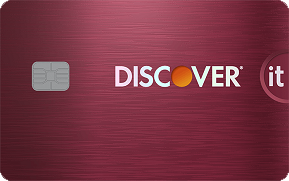
Discover it Cash Back rewards attention, not autopilot
The easiest way to understand Discover it Cash Back is to compare it with a flat-rate card. A 2% flat-rate card asks almost nothing from you: use it, pay it and earn the same percentage on nearly every qualifying purchase. Discover it Cash Back takes the opposite approach. Its ordinary rate is only 1%, but it opens a much higher 5% rate in different categories each quarter when you activate, subject to a $1,500 combined quarterly spending cap.
That trade can be excellent when the categories line up with spending you already planned. It can also be disappointing when they do not. A quarter featuring grocery stores is valuable to a household that buys most of its food at eligible supermarkets. A quarter featuring home improvement stores may be more valuable during a renovation. The card’s annual result therefore depends less on one permanent rewards formula and more on how often the calendar intersects with your real budget.
Activation is mandatory. Discover says the 5% rate begins on the date you activate for the quarter, not retroactively for purchases made before activation. Forgetting to activate means giving up the bonus rate on spending that otherwise would have qualified. For someone who dislikes recurring account maintenance, that is a genuine downside rather than a minor administrative detail.
The $0 annual fee makes the structure easier to tolerate. There is no annual charge demanding a certain amount of bonus-category spending before the account becomes worthwhile. If one quarter is weak for you, you can simply use another card more often without feeling that you are wasting a fee.
That is why our 4.6/5 MarketReview rating is strong but not at the very top of the cash-back category. Discover it Cash Back can outperform simpler cards in useful quarters, particularly during the first-year Cashback Match period, but its 1% floor and rotating calendar make the product less dependable as a one-card solution.
The $1,500 quarterly cap sets the real ceiling on 5% earning
Discover currently allows 5% cash back on up to $1,500 in combined purchases across the activated categories each quarter. If you fully use that cap, the 5% rate produces $75 of cash back for the quarter. Any qualifying category purchases above the cap earn the standard 1% rate.
If a cardholder managed to use the full $1,500 cap in all four quarters of a year, the 5% categories would generate $300 of cash back before considering ordinary 1% purchases or Cashback Match. That is a useful theoretical ceiling for the rotating program, but it should not be treated as a target. Spending money simply to fill a category cap destroys the point of cash back.
The better question is how much of the $1,500 cap you can reach with spending you would have made anyway. If a quarter includes gas and drugstores and your normal combined spending in those categories is $600, earning 5% on $600 is still useful. You do not need to force another $900 of purchases just because the remaining cap exists.
Against a 2% flat-rate card, the incremental advantage inside the bonus categories is 3 percentage points. On $1,500 of quarterly bonus spending, Discover would produce $75 while a 2% card would produce $30, a $45 difference before first-year Cashback Match. Outside the categories, the comparison reverses: Discover earns 1% while the 2% card continues at 2%.
This is why Discover it Cash Back works well in a multi-card wallet. Use Discover when the active 5% categories are relevant, and use a stronger flat-rate card for purchases that would otherwise earn 1%. Someone committed to using only one card may prefer a product with a stronger permanent base rate even if its bonus ceiling is lower.
The July through September 2026 categories are broad, but the definitions matter
Discover’s current July through September 2026 calendar lists Gas Stations, Transportation and Drug Stores. After activation, combined purchases in those categories earn 5% on up to $1,500 through September 30, 2026. The categories sound broad, but Discover’s detailed merchant definitions determine what actually qualifies.
Gas Station purchases include merchants classified as places that sell automotive gasoline at the pump or inside the station, and public electric-vehicle charging stations are included. Discover warns that gas stations or EV charging affiliated with supermarkets, supercenters and wholesale clubs may not be eligible. Certain parking garages that include EV charging may also fail to qualify.
The Transportation category is more selective than the name suggests. Discover currently includes airlines and local commuter passenger transport such as bus, rail and ferry services, plus certain long-range passenger land rail and bus charters. Car rentals, cruise lines, taxis, rideshare services, shared bikes and scooters, limousines, parking garages and toll-related purchases are excluded from this quarter’s Transportation category.
Drug Stores include stand-alone drug stores, pharmacies and online pharmacies. Pharmacies located inside other retail stores may not qualify. A prescription purchased at a stand-alone pharmacy can therefore fit the category while a pharmacy counter inside a superstore may not.
Merchant category codes control the final result. Discover does not assign those codes, and a business that appears to fit a category can be classified differently by the payment network or merchant processor. Certain third-party payment accounts and digital wallets may also fail to transmit enough information for the 5% rate. The practical lesson is to check how a merchant has posted before assuming every future purchase will qualify.
The rest of the 2026 calendar shows why rotating rewards can be useful
Discover’s first-quarter 2026 categories were Grocery Stores, Wholesale Clubs and Select Streaming Services. The second quarter covered Restaurants and Home Improvement Stores. The third quarter moved to Gas Stations, Transportation and Drug Stores. As of our review, Discover’s public calendar still labels the October through December categories as coming soon.
That sequence illustrates both the appeal and the frustration of rotating rewards. Across a full year, the card can touch several large household categories. Grocery stores, restaurants, gas, home improvement and drugstores are all areas where many households spend meaningful amounts. When the categories arrive at the right time, 5% is a strong return for a no-annual-fee card.
But the calendar is not under your control. A renter with no renovation plans may get little value from home improvement. A household that buys gas at a warehouse-club fuel station may find that the merchant does not qualify. A person who rarely travels may not care about an airline-heavy transportation quarter. You cannot choose your own 5% category.
This is different from fixed-category cash-back cards. Blue Cash Preferred, for example, permanently targets eligible U.S. supermarkets and streaming, while Citi Double Cash provides a broad flat-rate structure. Discover’s approach is more opportunistic. It can win individual quarters without being the best permanent card for any one spending category.
Readers comparing these structures should focus on how much complexity they are willing to manage rather than chasing the highest advertised percentage. Our best cash back credit cards guide places Discover it Cash Back in the rotating-category role for exactly that reason.
Cashback Match can make the first year exceptional
Discover’s Cashback Match is different from a fixed signup bonus. New cardmembers currently receive an automatic dollar-for-dollar match of all eligible cash back earned during the match period. Discover says there is no limit to how much it will match and no purchase minimum required to qualify.
The match period runs from the day the account is approved through the first 365 days or 12 consecutive billing periods, whichever is longer under Discover’s current program description. Discover then adds the match to the rewards account within two billing periods after the period ends.
This creates unusual first-year economics. If you earn $250 of eligible cash back during the match period, Discover adds another $250, for $500 total. If you earn $500, the match would add another $500. The offer is uncapped under the current terms, so the amount depends entirely on how much eligible cash back you earn.
The rotating categories become especially powerful during that period. A purchase earning 5% still posts as 5% at the time, but the later match effectively doubles that eligible reward contribution. At the same time, ordinary 1% spending is effectively doubled to 2% after the match. It is reasonable to think about the first-year outcome that way when comparing cards, as long as you remember the matching amount arrives later rather than with each transaction.
Redeeming cash back before the match does not reduce the eventual matching award. Discover explicitly says cardholders can redeem rewards during the year and still receive the match on eligible cash back earned during the match period. The match is based on eligible rewards earned, not on how much remains unredeemed in the account.
There are restrictions. Rewards processed after the match period ends are not matched, even if the underlying transaction occurred earlier. Statement credits, rewards transfers from Discover or Capital One deposit accounts and rewards from closed accounts are also excluded under the current terms. The account must remain eligible for the offer.
Most importantly, Cashback Match is temporary. The card does not permanently earn 10% in rotating categories or 2% everywhere else. After the first-year feature ends, the normal 5% and 1% structure remains. A long-term review should therefore separate the excellent first-year boost from the more ordinary economics in year two and beyond.
The 1% base rate is the card’s biggest long-term weakness
Outside activated 5% categories, Discover it Cash Back earns unlimited 1% cash back. That rate is easy to beat. Several no-annual-fee cards can earn 1.5% or 2% on broad everyday spending, and some fixed-category cards pair a stronger base rate with permanent bonus categories.
Imagine $15,000 of annual spending that falls outside Discover’s 5% categories. At 1%, that produces $150. A 2% flat-rate card would produce $300 on the same hypothetical spending, a $150 annual gap. In the first year, Cashback Match could effectively bring Discover’s eligible $150 to $300 after the match, temporarily eliminating that difference. In later years, the gap returns.
This is the strongest argument against using Discover as a sole everyday card after year one. If you consistently max out useful 5% categories, the bonus rewards can compensate for some weak base-rate spending. If you rarely use the quarterly categories, the 1% return is difficult to defend against simpler alternatives.
A two-card strategy avoids the problem. Discover handles activated 5% purchases, while a 2% flat-rate card handles everything else. That requires more management, but someone already willing to activate quarterly categories may find the extra card manageable.
The card’s no-annual-fee structure helps here again. You can keep Discover available for useful quarters without needing to force non-bonus spending onto it merely to justify owning the account.
The 15-month 0% APR gives the card a separate financing role
Discover currently offers 0% intro APR for 15 months on purchases and balance transfers, followed by a 17.49% to 26.49% variable APR. This gives the card a financing feature that is independent of the rewards program.
For a planned purchase, 15 months can provide useful repayment time. A $4,500 necessary expense divided evenly across 15 months would require an illustrative $300 monthly payment to eliminate the balance before the introductory APR ends. Building the payment plan at the beginning is much safer than making minimum payments and hoping to catch up near month 15.
Balance transfers currently carry a 3% introductory fee under the acquisition terms. A $6,000 transfer at 3% would add $180 of cost. If the fee is added to the transferred balance, a simplified payoff target across 15 months would be about $412 per month. The transfer can still save money against high-interest debt, but the fee needs to be included in the comparison.
Discover also says a 5% fee can apply to certain future balance transfers posted at a promotional APR. Applicants should therefore use the fee shown in the specific offer attached to their transfer rather than assuming every transfer on the account will cost 3% forever.
The financing feature is useful but not class-leading in duration. Someone who needs the longest possible debt-payoff period may find 18-, 20- or 21-cycle offers elsewhere. Rewards should not persuade a borrower to accept a repayment window that is too short. A longer 0% period can be worth more than several quarters of cash back when debt payoff is the primary objective.
No foreign transaction fee is valuable, but acceptance still deserves thought
Discover does not charge a foreign transaction fee, which is a meaningful advantage over several cash-back competitors. A card charging 3% would add $60 of fees to $2,000 in foreign purchases. Discover avoids that issuer-level surcharge.
The practical limitation is merchant acceptance. Discover states that its cards are accepted at millions of merchants around the world and cites broad U.S. acceptance, but acceptance can vary more internationally than with Visa or Mastercard. A traveler should not rely on one Discover card as the only payment method abroad.
This makes Discover it Cash Back a useful secondary international card rather than an ideal sole travel card. There is no foreign transaction fee, and the card can earn cash back, but carrying a broadly accepted backup payment method reduces the risk of being unable to pay at a merchant that does not take Discover.
The 5% quarterly categories are also U.S.-focused under the current program details. Discover says purchases must be made with merchants in the U.S. to qualify for the quarterly 5% categories. International purchases should therefore be evaluated mainly at the card’s ordinary rewards rate rather than assuming an overseas merchant fits a current bonus category.
Rewards redemption is refreshingly simple
Discover says cash-back rewards do not expire for the life of the account under current program terms. Cardholders can redeem cash back in any amount for cash-related options, and Discover also offers gift cards and other redemption choices through the account.
Statement-credit redemption is straightforward because it reduces the account balance, but a rewards credit is not a substitute for making the required payment. Cardholders should still follow the account’s minimum-payment rules and due date even after redeeming rewards.
Gift cards can sometimes have different redemption terms or minimums, so the cleanest benchmark is the cash value you can obtain directly. Unlike travel-points programs, Discover does not require award-space searches or transfer-partner calculations to understand the basic value of the rewards.
The combination of uncomplicated cash redemption and a complex earning calendar is an interesting balance. Earning requires attention, but redeeming does not. For the right user, that is a good trade: do the work once each quarter when activating categories, then treat the rewards as ordinary cash value.
The security features are practical rather than flashy
Discover it Cash Back includes several account-security and monitoring tools. Discover currently provides a card-freeze feature that can stop new purchases, cash advances and balance transfers if the card is misplaced. Some transactions can continue even while the account is frozen, including certain recurring charges and account adjustments, so the feature should not be confused with permanently closing the account.
Discover also provides $0 Fraud Liability for unauthorized purchases, subject to investigation, verification and reasonable-care requirements. This is an important baseline protection but not a unique reason to choose the card, since federal law and many issuers provide strong unauthorized-transaction protections.
Following the Capital One merger, eligible users can access CreditWise monitoring features that include a TransUnion credit report, FICO® Score 8, selected credit-report alerts and dark-web monitoring after enrollment. Discover’s pages now note that some benefits and account-management features may differ depending on whether a Discover account has moved to Capital One-branded systems.
Those merger-related notes are worth watching because Discover is in a transition period. A benefit or app experience described on an older Discover page may not apply identically to every account as systems are combined. Product pricing, rewards and application terms should always be checked on the current offer shown to the applicant.
Who should consider Discover it Cash Back?
The ideal cardholder enjoys optimizing without wanting to pay an annual fee. If you already check offers, track category promotions and do not mind activating four times a year, the 5% calendar can be genuinely rewarding. The card is especially useful when you can shift purchases that were already planned into a quarter where they earn 5%.
A new cardmember can get even more value because Cashback Match rewards the entire first-year earning pattern rather than only a fixed spending threshold. Someone who consistently uses the quarterly categories can create a large match without being forced to hit a single large purchase requirement in the first three months.
The card can also suit a borrower who wants a 15-month introductory APR while still earning rewards. A planned purchase or balance transfer can benefit from the financing period, although the repayment plan should remain the priority.
Discover is also attractive to someone who wants no annual fee and no foreign transaction fee in the same account. Those cost features make the card inexpensive to keep, even if it later becomes a secondary card used mainly during attractive bonus quarters.
Finally, it fits well as part of a two-card cash-back setup. Pairing Discover’s 5% categories with a stronger flat-rate card for everything else can address the 1% base-rate weakness without giving up the quarterly upside.
Who should skip it?
Skip Discover it Cash Back if you know you will forget to activate categories. The difference between 5% and 1% is too large to ignore, and the card’s core advantage disappears when activation is missed.
A one-card minimalist may also be happier with a 2% flat-rate product. Discover can outperform that card in individual quarters, but its 1% ordinary rate leaves a large amount of spending under-rewarded after the first-year Cashback Match ends.
The card is a weak fit if you dislike variable categories. You cannot choose the quarterly calendar, and there will be periods when the featured merchants do not match your budget. A fixed grocery, dining or gas card provides more predictable rewards for someone with stable spending priorities.
Travelers who need one universally accepted international card should carry another network as backup. Discover’s no-foreign-transaction-fee policy is attractive, but merchant acceptance can be less consistent outside the United States.
And someone focused primarily on debt payoff should compare longer intro-APR offers. Fifteen months is useful, but it may not be enough for a large balance. The 5% rewards program should not distract from choosing the repayment window that gives you a realistic monthly target.
Does Discover it Cash Back deserve a place in your wallet?
Discover it Cash Back is at its best when treated as a specialist rather than a universal default. Activate the categories, use it when the 5% calendar overlaps with spending you already planned, and do not be afraid to put ordinary 1% purchases on a stronger flat-rate card. That approach captures what the product does unusually well without letting its weakest rate dominate your annual return.
The first year is the standout period. Unlimited Cashback Match can make a well-managed rotating-category strategy exceptionally rewarding, and the 15-month 0% intro APR adds flexibility without an annual fee. The value becomes more ordinary after the match is paid, which is when category discipline matters most.
There is little reason to force the card into situations where it does not fit. A bad quarter can be ignored, an international merchant that does not accept Discover can be paid another way, and non-bonus purchases can move to a better base-rate card. Because the account costs $0 per year to keep, that selective use is perfectly reasonable.
For a cardholder who likes that style of rewards management, Discover it Cash Back remains a strong rotating-category option. For someone who wants every purchase to earn a good rate automatically, the very feature that makes Discover interesting is also the reason to choose something simpler.