


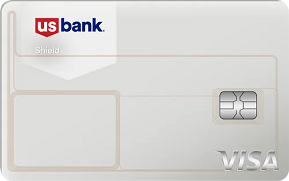
Shield is more than a stripped-down 0% APR card
Most long-intro-APR cards are easy to describe because they do almost nothing beyond financing. U.S. Bank Shield takes a slightly different approach. It offers 0% intro APR for the first 21 billing cycles on purchases and qualifying balance transfers, but it also adds a small collection of ongoing benefits: 4% cash back on eligible prepaid air, hotel and car reservations through the U.S. Bank Travel Center, a $20 annual statement credit after a qualifying stretch of purchase activity, cell-phone protection and an annual $0-fee ExtendPay opportunity after the introductory purchase APR expires.
None of those extras is large enough to turn Shield into a rewards card. The product still makes the most sense when you have a financing need. The point is that the account has some utility after the 0% period ends, which can make it easier to keep as a no-annual-fee backup rather than abandoning it once the promotional window is over.
The introductory offer itself is competitive. Twenty-one billing cycles gives more breathing room than a 12- or 15-month offer. For a borrower financing a large necessary purchase, that can materially reduce the monthly payment needed to finish before interest begins. For someone moving high-rate debt, the long runway can make an otherwise unrealistic payoff plan manageable.
The complication is the 5% balance-transfer fee. U.S. Bank is effectively asking borrowers to pay more upfront in exchange for a long 0% period. That can be a good trade for a large balance that would otherwise accrue high interest for well over a year, but it can be a poor trade when a lower-fee card provides enough time to repay the debt.
Our 4.5/5 rating reflects that tension. Shield is a strong financing product with better-than-usual extras, but the card’s value depends heavily on whether the 21-cycle window is worth paying a 5% transfer fee for.
The purchase offer is the cleanest part of the card
The best use of Shield may be financing a planned purchase rather than transferring existing debt. Purchases currently receive 0% introductory APR for the first 21 billing cycles, and there is no transfer fee involved. If you have a large necessary expense and a reliable repayment plan, that long period can create real flexibility.
Suppose you finance a $6,300 purchase and want to eliminate the balance evenly over 21 billing cycles. A simplified target would be $300 per cycle. A $10,500 purchase would require about $500 per cycle under the same illustration. These examples ignore timing differences within individual billing periods, but they show why a long promotional period can matter.
The exact calendar length should not be treated as a guaranteed 21 months to the day. U.S. Bank defines the promotion by billing cycles, and the timing of the first statement can affect the practical length. A borrower should aim to finish early rather than designing a repayment plan that requires using every last day of the offer.
After the intro period, the current variable purchase APR is 16.99% to 27.99%. That range makes the payoff deadline important. A large balance that survives into the regular APR period can begin generating interest quickly, especially near the top of the range.
Shield’s $0 annual fee strengthens the purchase-financing use case. You are not paying an annual charge for access to the 0% period. That makes the economics straightforward: the benefit is the interest you avoid, and the main risk is failing to eliminate the balance before the promotion ends.
The balance-transfer window is long, but 5% is a steep entry price
Qualifying balance transfers made within 60 days of account opening receive 0% intro APR for the first 21 billing cycles. The transfer fee is currently the greater of 5% of the amount transferred or $5. For most meaningful balances, the percentage drives the cost.
A $5,000 transfer creates a $250 fee. A $10,000 transfer creates a $500 fee. If those fees are added to the transferred balances, the amounts needing repayment become $5,250 and $10,500. Spread evenly across 21 billing cycles, the simplified monthly-equivalent targets are $250 and $500 respectively.
The 5% fee makes Shield less attractive for borrowers who can repay quickly. Imagine a $4,000 balance that you could realistically eliminate in four months. A 5% transfer fee would cost $200 immediately. If the interest you would otherwise pay over those four months is less than $200, transferring the debt would not save money even though the new APR is 0%.
The long promotional period matters more when the original balance has a high APR and you need most of the 21-cycle window. A borrower facing 20% or more on a large balance for 18 to 21 months can potentially avoid far more interest than the 5% transfer fee. That is where Shield’s trade-off starts to make sense.
The important comparison is not simply 0% versus a regular APR. It is total transfer fee versus expected interest avoided, combined with the monthly payment required to finish on time. Our best balance transfer credit cards guide is useful here because some alternatives trade a shorter promotional period for a lower transfer fee.
The 60-day transfer deadline makes planning important
U.S. Bank currently requires balance transfers to be made within 60 days of account opening to qualify for the 0% intro APR. That is a real deadline, not a flexible suggestion. Someone opening Shield for debt consolidation should know which balances need to move before applying.
Do not stop paying the old creditor simply because a transfer request has been submitted. Balance transfers can take time to process. Continue following the original account’s payment schedule until the transferred amount appears as a credit and you can confirm the old balance has been reduced.
Shield also cannot be used to transfer a balance from another U.S. Bank National Association account. If your existing debt is already with U.S. Bank, this card is not a way to move that balance into a new promotional account.
The 60-day rule also limits Shield as a speculative account. Opening the card today and deciding six months later that you want to move a balance will not preserve the original promotional transfer terms. The product is strongest when the financing need already exists and the transfer can be completed early.
No penalty APR reduces one risk, but late payments can still hurt
U.S. Bank’s current Shield disclosure lists no penalty APR. That means a late payment does not automatically move the account to a special higher penalty interest rate. For a card centered on long-term repayment, that is a meaningful feature.
No penalty APR should not be confused with no consequences. Late fees can still apply, and a seriously late payment can create credit-report issues. A borrower trying to protect a 0% payoff plan should use automatic payments or calendar reminders so the minimum due is never missed.
The main benefit is resilience. A one-time mistake is less likely to turn the account into a much more expensive debt because of a penalty rate. That does not make late payment harmless, but it removes one layer of risk that some credit cards still carry.
The current regular APR range of 16.99% to 27.99% remains the more important long-term consideration. If the promotional balance is not cleared before the intro period ends, normal interest begins. No penalty APR does not protect a remaining balance from the regular purchase or transfer APR.
The $20 annual credit is small, but unusually easy to understand
Shield includes an automatic $20 statement credit after 11 consecutive calendar months with purchases, provided the account is in good standing. U.S. Bank describes the benefit on a 12-month cycle.
Twenty dollars is not enough to justify opening the card by itself. Its value is that there is no annual fee competing against it. A cardholder who keeps the account active with ordinary purchases can receive a small recurring credit without needing to offset a yearly charge.
The requirement for 11 consecutive calendar months of purchases matters. Someone who leaves Shield completely unused for several months may not qualify for the credit. A tiny recurring bill could theoretically keep activity consistent, but there is no reason to create unnecessary spending purely for a $20 benefit.
The credit works best as a secondary reason to keep Shield after the intro period. Once the financing job is finished, the account still has no annual fee and can provide a modest recurring benefit if it remains part of your normal payment routine.
The 4% Travel Center earning is a side benefit, not a travel-card strategy
Shield currently earns 4% cash back on eligible prepaid air, hotel and car reservations booked directly through the U.S. Bank Travel Center. That is a respectable rate, particularly for a card whose main purpose is introductory financing.
The limitation is channel dependence. The 4% rate does not apply to every travel purchase everywhere. You need to book qualifying travel through the U.S. Bank Travel Center. A direct airline purchase, direct hotel booking or unrelated travel transaction does not automatically receive 4%.
Portal bookings should be evaluated on total value rather than rewards alone. A hotel booked directly may provide elite-status credit, loyalty points or more flexible changes. A rental-car rate elsewhere may be lower. Four percent cash back is useful when the Travel Center price and terms are competitive, but it should not force a worse booking decision.
Shield does not advertise a broad everyday cash-back rate outside the Travel Center category. That means using the card as a general rewards card after the intro period is hard to justify. A 2% flat-rate card can be better for ordinary purchases, while Shield handles only the specific situations where its benefits matter.
The 4% category is best viewed as an extra feature on a financing card, not as evidence that Shield should replace a dedicated travel rewards product.
Cell-phone protection gives the card a practical post-intro use
U.S. Bank currently provides up to $600 in eligible cell-phone protection when the monthly cellular bill is paid with Shield, subject to the applicable Guide to Benefits. Coverage can apply to qualifying theft or damage.
This benefit can give the card a reason to stay in a wallet after the 0% APR period ends. Paying a recurring phone bill is simple, and the protection may replace the need for some other coverage depending on the terms and the cardholder’s situation.
The $600 limit should not be mistaken for guaranteed full replacement of any phone. Deductibles, claim limits, exclusions and documentation requirements can apply. A cardholder with an expensive device should read the current benefit guide before deciding whether the protection is sufficient.
Still, this is more useful than a decorative perk on a financing card. If the protection fits your needs, Shield can continue serving a concrete role after the original purchase or balance-transfer balance is gone.
The annual $0-fee ExtendPay offer is unusual and potentially useful
After Shield’s introductory purchase APR expires, eligible accounts can receive one three-month $0-fee U.S. Bank ExtendPay® Plan offer each calendar year. U.S. Bank determines eligibility monthly, and the offer can cover up to 50% of the account’s credit line in eligible purchases.
This is different from another permanent 0% APR. ExtendPay divides eligible purchases into fixed monthly payments, and the terms depend on the offer available to the account. Shield’s special feature is that one qualifying three-month plan can have a $0 plan fee each calendar year.
The benefit can be useful for a planned expense after the original intro period is gone, but it should not encourage carrying unnecessary debt. A three-month repayment period is short, so the monthly payment can be high for a large purchase.
Because eligibility is determined by U.S. Bank, cardholders should not treat the $0-fee ExtendPay plan as guaranteed financing on demand. It is better viewed as an occasional flexibility tool that can extend the card’s usefulness beyond the first 21 billing cycles.
The 3% foreign transaction fee keeps Shield out of an international wallet
Shield currently charges a 3% foreign transaction fee. That makes it a poor choice for purchases abroad, even though the card has a travel-related cash-back category through the U.S. Bank Travel Center.
A $2,000 equivalent of foreign purchases would create about $60 in foreign transaction fees. Shield does not offer a broad everyday rewards rate that could offset that cost. A no-foreign-transaction-fee card is the cleaner choice for international spending.
This limitation reinforces the difference between travel booking benefits and travel-card suitability. Shield can reward certain Travel Center reservations, but it is not designed to be the card you use everywhere during an international trip.
Who should consider U.S. Bank Shield?
The strongest candidate is someone who needs a long 0% purchase APR period and prefers a card with no annual fee. Twenty-one billing cycles gives substantial time to repay a large planned expense without paying interest during the promotion.
Shield can also suit a borrower moving high-interest debt when the long transfer window matters more than the 5% fee. A large balance that genuinely requires close to 21 cycles can create enough avoided interest to justify the upfront cost.
The card is more appealing than a bare-bones financing product for someone who can use the cell-phone protection, $20 annual credit or occasional Travel Center rewards after the intro period. Those benefits give the account a purpose once the original financing need is gone.
No penalty APR can also matter to a borrower who values protection from a punitive interest-rate increase after a mistake. Late payments should still be avoided, but the feature removes one possible source of additional cost.
Finally, Shield fits someone who prefers a focused card rather than a complex rewards ecosystem. There are no transfer partners, travel-points valuations or annual-fee credits to optimize. The value is mainly interest avoided, plus a handful of practical extras.
Who should look elsewhere?
A borrower who can repay a transferred balance quickly should compare lower-fee offers. Five percent is a meaningful upfront charge, and a shorter 0% period with a 3% fee can be cheaper when you do not need the full 21 billing cycles.
Rewards seekers should also look elsewhere. Four percent through the U.S. Bank Travel Center is useful, but Shield does not provide a broad cash-back structure for everyday spending. Once the financing period is over, a dedicated cash-back card will usually earn more on ordinary purchases.
International travelers should avoid using Shield abroad because of the 3% foreign transaction fee. The card is also unsuitable for transferring debt from another U.S. Bank account.
Someone who needs a permanent installment-payment feature may find the annual three-month $0-fee ExtendPay offer too limited. Eligibility is not guaranteed, and the offer covers only a short period.
Most importantly, anyone without a clear repayment plan should be cautious. A long 0% period can make debt feel less urgent, but the balance still needs to be eliminated before the regular APR begins. The promotional window is a tool, not a solution by itself.
Shield works best when the long runway is the point
U.S. Bank Shield is not the cheapest balance-transfer card and not the best rewards card. Its argument is different: it gives borrowers 21 billing cycles of 0% financing, charges no annual fee, avoids a penalty APR and keeps a few practical benefits around after the promotional period is over.
The purchase side is especially compelling because there is no transfer fee. If you need time for a large planned expense and can map the balance to a realistic payment target, Shield provides a long interest-free runway without an annual ownership cost.
The balance-transfer side demands more scrutiny. Five percent is expensive, and the fee can erase much of the benefit on a smaller balance or a debt you could repay quickly. The longer the payoff horizon and the higher the old APR, the stronger Shield’s case becomes.
What makes the card more interesting than a one-purpose financing product is what remains after the intro offer. Cell-phone protection, a small annual statement credit, Travel Center cash back and the annual ExtendPay opportunity are modest individually, but together they give a $0-fee account some reason to stay active.
If 21 billing cycles is the amount of time you genuinely need, Shield is a strong tool. If you can finish sooner, the right question is whether paying 5% upfront is worth buying time you may never use.