Saab Wins SEK 2.9 Billion Swedish Order for Future Fighter-System Development
The 2026-2028 FMV contract funds flying and ground demonstrators, advanced studies and concepts spanning crewed and uncrewed combat-air systems, with options for 2029 and 2030.
Our editorial standards
MarketReview publishes clear, independently produced financial information using reliable sources and transparent editorial standards.
Read our Editorial Policy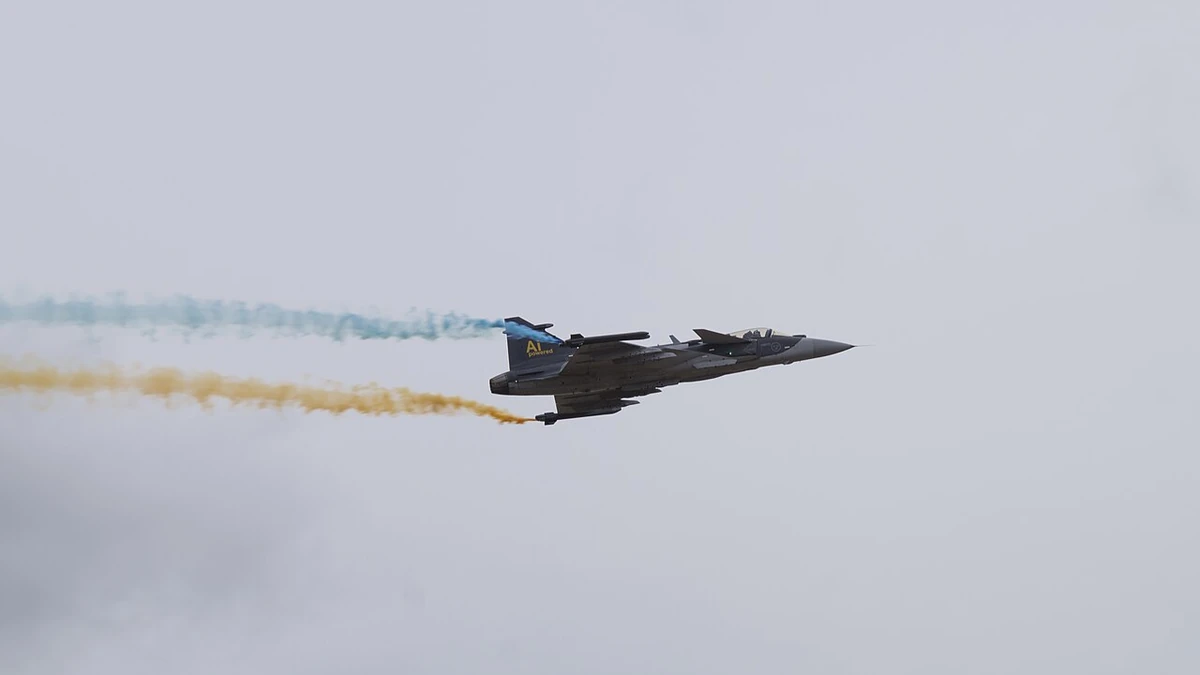
Saab has received an order worth approximately SEK 2.9 billion from the Swedish Defence Materiel Administration, or FMV, for continued work on a future fighter system, extending a national effort to develop and test technologies that could shape Swedish combat-air capability beyond the current Gripen generation. The contract covers 2026 through 2028 and includes options for 2029 and 2030.
Flying and ground-based demonstrators, advanced studies and future system concepts for both crewed and uncrewed systems are all within the scope. That makes the award a technology-development and concept contract rather than a production order for a new operational fighter. Sweden is still building the technical and decision-making basis for later choices about how its combat-air capability should be supplied.
In its September 9 announcement, Saab said the work is intended to further develop and demonstrate new technologies while strengthening Swedish capabilities in systems integration, autonomy, signature adaptation, propulsion, digital development and future production. The company also said the program is designed to build competence and reduce technical risk before Sweden makes future air-combat decisions.
The new order pushes demonstrator work forward
This SEK 2.9 billion award is the latest stage in a program that has moved from studies and preparatory work toward physical demonstrators. Saab’s first contract in the current sequence was signed in 2024 and covered conceptual studies of crewed and uncrewed solutions, technology development and demonstrations. Saab said the new order builds on contracts signed in both 2024 and 2025.
A 2025 extension materially expanded that work. FMV said when it extended the program in October 2025 that the additional Saab contract was worth SEK 2.676 billion and covered concept studies, technology development and work on a flying demonstrator. Concept and technology-development work was scheduled through the third quarter of 2026, while demonstrator work was to continue through 2027 and include initial flights.
FMV described the flying demonstrator as a way to test and validate intended characteristics of technologies under development. That distinction matters because a demonstrator can generate evidence for future decisions without locking Sweden into the configuration of a production aircraft. The latest contract broadens the stated demonstrator scope to include both flying and ground-based work and extends the contracted period through 2028 before any options are exercised.
Sweden began the current Vägval stridsflyg phase under contracts with Saab and GKN Aerospace covering 2024 and 2025, following a Swedish government decision in July 2023 on future fighter work in the concept phase. FMV said at the outset that the program would combine studies, technology development and preparations for demonstrators while building the knowledge needed inside Sweden’s defence authorities. The goal was to clarify technical choices and commercial alternatives well before a procurement decision becomes necessary.
Sweden is building options for combat air after 2040
FMV has described Vägval stridsflyg as work intended to produce the basis for decisions on how Sweden should provide its fighter capability after 2040. The agency has said that long development cycles make it necessary to build knowledge, test technology and prepare alternatives well before a final choice is needed. The work is conducted across FMV, the Swedish Armed Forces and the Swedish Defence Research Agency, with Swedish industry participating in concept and demonstrator activity.
That long-term timetable is important because Sweden’s existing Gripen force is not being replaced by this order. Under the government’s 2025-2030 defence plan, serial deliveries of JAS 39E are taking place during the period and the new model is expected to become operational, while upgrades to JAS 39C/D continue. The future-fighter effort therefore runs alongside the introduction and continued development of today’s combat-air fleet rather than displacing it in the near term.
For Sweden, the program also has a national industrial-capability dimension without yet determining the final aircraft or system. Saab said the new work is intended to strengthen domestic capability in areas such as autonomy, propulsion, signature adaptation, digital development and future production, as well as systems integration. FMV has separately framed the program as a way to preserve the technical base needed for future development while producing evidence for later choices about Sweden’s combat-air materiel.
Since 2024, the contracts have followed a staged approach rather than a single jump from Gripen to a named successor. The 2024 work established studies and demonstrator preparations, the 2025 extension funded further technology work and a flying demonstrator, and the new order carries development through 2028 with two additional option years available. Public statements from Saab and FMV still leave the eventual mix of crewed aircraft, uncrewed aircraft and supporting systems open.
Crewed and uncrewed concepts are being developed in parallel
Both crewed and uncrewed paths remain in scope under the new order. That is consistent with the program’s direction since 2024, when Saab and FMV described the studies as covering both types of solution in a broader system-of-systems approach. It also fits Saab’s more recent public work on uncrewed combat-air concepts.
At the Swedish Armed Forces Jubilee Air Show in Linköping on August 22, Saab displayed a full-scale concept model called A3-001. Saab described it as a possible uncrewed component that could operate with crewed platforms and said the concept was aimed at high-risk missions including electronic warfare, suppression of enemy air defences and precision strike. The company also said A3-001 is its own separate concept for what could follow in the mid-2030s if Sweden chooses to build on the current work, rather than presenting it as a selected Swedish production design.
Saab has said it intends to fly uncrewed demonstrators with fighter-like characteristics before 2030. The newly announced FMV order does not by itself establish which crewed or uncrewed architecture Sweden will eventually adopt, but it gives the development program funding and time to move more technology into demonstrator form. The next concrete milestones disclosed publicly include demonstrator activity running into 2027 under the earlier contract and Saab’s stated plan for fighter-like uncrewed demonstrator flights before 2030.
More from Investing


Latest News
View all news- FTC, USDA Launch Joint Inquiry Into Agricultural Equipment Market Practices
- VAALCO Completes Gabon Phase 3 Drilling as ETSEM-3H Starts at About 2,000 BOPD
- U.S. Crude Inventories Fall 3.2 Million Barrels in Latest EIA Report
- UK Trade Remedies Authority Proposes Five-Year Anti-Dumping Duty on Chinese Rutile Titanium Dioxide
- OCC Launches Direct Payments-Fraud Reporting Tool for Community Banks