Google Commits at Least €13 Billion to Finland AI and Data-Center Infrastructure
Google’s 2027-2028 program will expand Hamina and add data centers in Kajaani, Vaala and Muhos, alongside nuclear, wind and battery agreements to support the added power demand.
Our editorial standards
MarketReview publishes clear, independently produced financial information using reliable sources and transparent editorial standards.
Read our Editorial Policy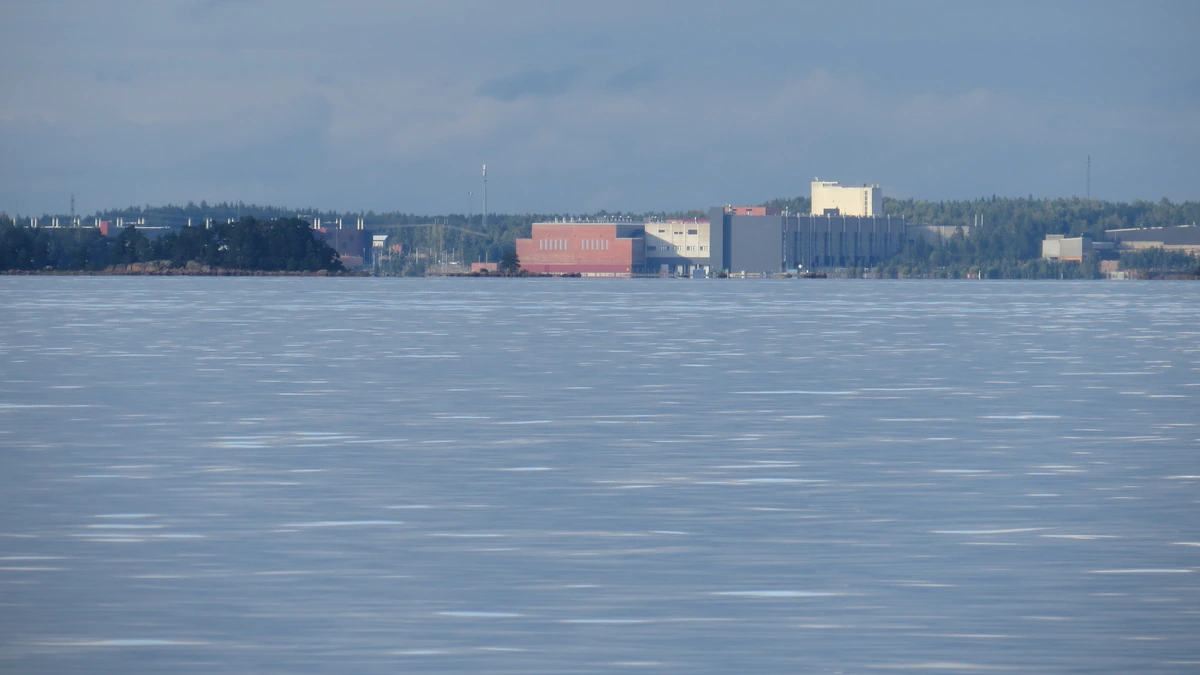
Google plans to invest at least €13 billion in digital infrastructure in Finland during 2027 and 2028, a two-year buildout centered on data centers and the energy systems needed to support growing demand for artificial-intelligence services. The spending covers projects and partnerships in Hamina, Kajaani, Muhos and Vaala, extending a Finnish presence that began with the company’s Hamina data center more than 15 years ago.
Business Finland said the program includes an expansion of the existing Hamina data center and three new data centers in Kajaani, Vaala and Muhos. Google called the program its largest single investment in Europe. The company is also pairing the construction program with long-term electricity procurement, new wind capacity, battery storage, workforce programs and nature-restoration funding, making the power strategy a central part of the infrastructure plan rather than a separate initiative.
Four Finnish sites anchor the expansion
Google said the investment will run through 2027 and 2028 and support infrastructure in all four municipalities. Hamina is the established base: Google bought a former paper mill there in 2009 and converted the site into a data center. The new northern and central Finnish locations broaden that footprint and are intended to add capacity for services including Gemini, Search, Maps and YouTube.
The economic figures attached to the announcement are company estimates, not realized results. Google projects that the initial construction phase will support more than 37,000 jobs nationwide and contribute an average €3.6 billion a year to Finland’s gross domestic product during 2027 and 2028. About 16,000 of those jobs are estimated to be in construction, with €911 million in average annual labor income across that sector. After the facilities are operating, Google projects that they will support about 7,000 jobs a year across on-site roles, suppliers and local businesses.
Those forecasts build on an existing Finnish supplier base. Google said its Hamina operations supported more than 600 Finnish suppliers from 2023 through 2025 across construction, operations and network infrastructure. The company also plans €31 million of community investment over four years in Hamina, Kajaani, Muhos and Vaala, including €10 million earmarked for research and innovation. Separate workforce programs are intended to provide AI training to more than 4,400 workers and data-center career training for up to 100 Finnish students.
Power agreements are central to the buildout
Large data centers add substantial, continuous electricity demand, and Google’s Finland plan is tied to several measures intended to add or preserve power supply and make demand more flexible. The most consequential agreement is with Fortum, which owns the Loviisa nuclear power plant in southeastern Finland. Google has signed a 22-year power purchase agreement linked to extending the operating life of Loviisa through 2050.
Fortum said the agreement will begin in 2028 at a smaller capacity and reach 50% of the plant’s capacity for 2030 through 2049. Loviisa has two 507-megawatt reactors and produces about 8 terawatt-hours of electricity annually, according to Fortum. The plant currently accounts for about 10% of Finland’s electricity supply. Fortum said the long-term contract provides revenue certainty for the roughly €1 billion investment program associated with extending the plant’s operating life, of which about €700 million of required capital expenditure was still pending investment decisions.
The power agreement also has a direct financial implication for Fortum. The utility expects its group comparable return on net assets to increase by about 1.4 percentage points over time once 50% of Loviisa’s generation capacity is contracted under the agreement. Fortum also said the arrangement is expected to enable an additional 10-megawatt power increase at Loviisa on top of a previously planned 38-megawatt uprate expected in 2028.
Nuclear power is only one part of the electricity plan. Google said new onshore wind agreements with Valorem and Suomen Hyötytuuli will bring the total amount of new-to-the-grid onshore wind capacity it has contracted in Finland to 629 megawatts. A 94-megawatt battery system near the planned Kajaani site is expected to enter service in late 2027, giving the grid a flexible resource that can respond when wind generation is low. Google and Fortum also signed a memorandum of understanding to examine additional nuclear, renewable and flexibility capacity, including possible business models for new reactors at Loviisa.
Finland is using grid geography as an investment advantage
The location of the new sites is part of the energy strategy. Google said it worked with Fingrid, Business Finland and local municipalities to identify areas in northern and central Finland with existing grid infrastructure and access to carbon-free generation. Placing large electricity users closer to generation and strong transmission points can reduce the need for additional long-distance grid construction and can make it easier to connect new demand without concentrating it in southern Finland.
Business Finland said the search for expansion locations began in 2023 after more than a decade of operations in Hamina. The process examined large contiguous sites near Fingrid substations, land ownership and municipal boundaries before moving into site visits and property negotiations in Muhos, Kajaani and Vaala. That work helps explain why the €13 billion announcement is spread across four municipalities rather than being concentrated only at Google’s established Hamina campus.
Hamina also provides a model for some of the environmental measures Google says it intends to carry into the broader expansion. The existing data center uses seawater cooling, and Google has developed an off-site heat-recovery project designed to cover about 80% of the annual heat needs of Hamina’s district-heating network. For the new sites, the company said it is designing heat-recovery readiness into its European data centers and funding restoration of forests, peatlands and wetlands near the Finnish locations.
The next milestones are concrete. The main construction phase is scheduled for 2027 and 2028, the Kajaani battery is expected to begin operating in late 2027, and the Loviisa power purchase agreement starts in 2028 before scaling to 50% of the plant’s capacity from 2030. Those dates will determine how quickly Google’s announced spending turns into operating data-center capacity and how closely the new electricity arrangements track the added load.
More News

Latest News
View all news- Independence Realty Trust and Centerspace Agree to $8.1 Billion Multifamily REIT Merger
- Analog Devices to Buy Alif Semiconductor for $1.35 Billion Upfront in Edge-AI Expansion
- U.S. Treasury Sets Long-Bond Buyback at Up to $6 Billion, Triple Previous Operation
- Amazon Raises £4.25 Billion in Its First-Ever Sterling Bond Sale
- Baker Hughes Raises 2026 Revenue and EBITDA Forecasts After Chart Acquisition