
U.S. Exchanges Run Full Three-Level Market-Wide Circuit-Breaker Test
The dedicated Saturday exercise covered the 7%, 13% and 20% S&P 500 decline scenarios, including the Level 3 full-day halt and next-day reopening sequence.
Our editorial standards
MarketReview publishes clear, independently produced financial information using reliable sources and transparent editorial standards.
Read our Editorial Policy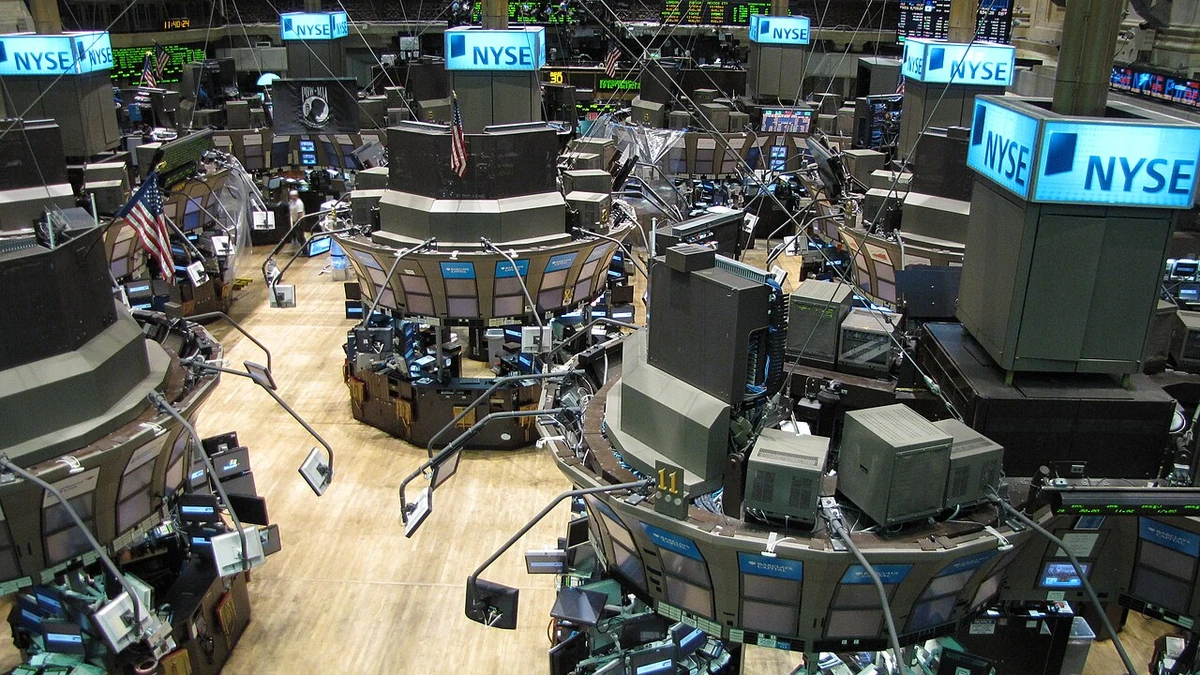
U.S. stock exchanges and the securities information processors that knit the equity market together conducted their scheduled Saturday exercise for all three market-wide circuit-breaker levels on September 12. The dedicated test was designed to simulate the sequence of market-wide halts that would follow progressively deeper drops in the S&P 500, including the Level 3 event that would shut the market for the rest of a trading day. Official pre-test notices set the exercise to end around noon Eastern Time, although a public post-test report confirming the results was not immediately available in the official materials reviewed.
The September session is the most comprehensive circuit-breaker rehearsal in the 2026 testing calendar. Routine failover weekends generally test Level 1 and Level 2 behavior, but the dedicated annual exercise adds Level 3 and a start-of-day scenario intended to test how markets would reopen on the next business day after a full-day shutdown. The point is not to predict a crash. It is to verify that exchanges, consolidated market-data systems and participating trading firms can process the same halt and resumption signals in the right order when the mechanism is needed.
Nasdaq said in its September 8 testing notice that its production systems would be open from 9 a.m. to noon ET on Saturday, with the securities information processors conducting industry testing of Levels 1, 2 and 3 between 8:30 a.m. and noon. The notice covered the Nasdaq Stock Market, Nasdaq Texas and Nasdaq PSX, and encouraged members to test their ability to receive the messages associated with market-wide circuit breakers.
What the three-level exercise was designed to test
A market-wide circuit breaker is more than a switch at a single exchange. The mechanism depends on a coordinated chain of messages and actions across the national market system. The SIPs disseminate the applicable decline levels and status messages, listing exchanges halt securities, trading venues process those halts, and firms consuming market data must recognize the status changes and adjust their order activity. When a Level 1 or Level 2 halt ends, the market must also coordinate the reopening process.
Cboe’s published 2026 test plan shows how operational that rehearsal becomes. Designated participants on its BYX, BZX, EDGA and EDGX equities exchanges are expected to receive and process halt messages, receive resume messages after Level 1 and Level 2 halts, process market data relevant to the halts, and complete executions after trading resumes. Cboe’s schedule also provides for listing exchanges to perform reopening auctions after simulated Level 1 and Level 2 breaches. Nasdaq’s separate regulatory alert sets similar obligations for designated members, including sending orders after a Level 1 or Level 2 halt and submitting a testing checklist after the exercise.
Level 3 is different because there is no same-day reopening to test. In a real Level 3 event, trading stops for the remainder of the day. The UTP testing schedule says the dedicated annual exercise therefore includes a start-of-day test that simulates the following business day’s reopening after a Level 3 breach. That extra step is what makes the September session a full test of the circuit-breaker chain rather than another Level 1 and Level 2 weekend drill.
How the 7%, 13% and 20% circuit breakers work
The current framework measures a market decline against the previous trading day’s closing level of the S&P 500. Under the SEC’s market-wide circuit-breaker framework, Level 1 is triggered by a 7% decline, Level 2 by a 13% decline and Level 3 by a 20% decline. The trigger points are recalculated from the prior S&P 500 close, so the numerical index levels change from one trading day to the next even though the percentages stay fixed.
If a Level 1 or Level 2 decline occurs before 3:25 p.m. ET during a normal trading day, trading across the market is halted for 15 minutes. A Level 1 or Level 2 move at or after 3:25 p.m. does not produce the same market-wide pause. A Level 3 decline is the hard stop: if the S&P 500 falls 20% from its prior close at any point during the trading day, market-wide trading is halted for the rest of that day.
Saturday’s exercise used those rules as a test script rather than responding to an actual market decline. The distinction matters because the test can force the market infrastructure through scenarios that are rare in live trading, especially a Level 3 shutdown. Market-wide circuit breakers have been activated in modern trading, but the recent real-world examples have been Level 1 events. U.S. equity markets triggered four Level 1 halts on March 9, March 12, March 16 and March 18, 2020, during the extreme volatility at the start of the COVID-19 shock. In each case, trading resumed after the 15-minute pause.
The present structure dates to reforms adopted after the May 6, 2010 Flash Crash exposed weaknesses in the older framework. Regulators and exchanges moved the reference index from the Dow Jones Industrial Average to the broader S&P 500, lowered the trigger percentages to 7%, 13% and 20%, shortened the temporary halts to 15 minutes, and shifted to daily calculation of the threshold points. Those changes were intended to make the mechanism more responsive to a severe market-wide decline without stopping trading for longer than necessary at the first two levels.
Repeated testing is part of the market’s resilience rules
The annual circuit-breaker program is a resilience exercise for a market that is distributed across many venues and technology systems. A real market-wide halt only works if the same status reaches exchanges, broker-dealers and market-data users quickly enough for each system to stop, remain stopped and then resume in a coordinated way. A failure at any point can create inconsistent trading states or confusion over whether a security should be open, halted or reopening.
That is why exchange rules require certain members to take part in industry-wide testing rather than leaving the exercise entirely voluntary. Nasdaq requires members designated under its Regulation SCI-related standards to participate in at least one scheduled market-wide circuit-breaker test each year. Cboe imposes annual participation requirements on designated members of its equities exchanges as well. Other firms can participate voluntarily, giving them a controlled window to validate how their own order-routing and market-data systems handle the same messages.
The September 12 test was therefore aimed at the plumbing behind an emergency market rule, not at producing an investable signal about current volatility. The immediate follow-up is administrative and technical: designated participants must document whether they received and processed the expected halt, resume and market-data messages, with Nasdaq and Cboe requiring their respective post-test attestations or checklists within one business day. Any public findings or exchange notices that emerge from those reports would provide the clearest confirmation of how the full three-level rehearsal performed.
More News



Latest News
View all news- Cabaletta Bio’s $2.50 Warrants Reach Expiry With Shares Above Exercise Price
- Federal Reserve Opens Fedwire Production Environment for September Customer Testing
- Yorkshire Building Society Reaches Redemption Date on £300 Million Senior Non-Preferred Notes
- Texas Stock Exchange Runs Final Auction Test Ahead of Sept. 16 Primary-Listings Launch
- Kroger Cuts 2026 Identical Sales Outlook After Q2 Growth Slows to 0.2%
