
Trump Says Iran Probably Behind Saudi Pipeline Attack as Energy-Route Risk Deepens
Saudi Arabia shut the East-West Pipeline as a precaution after multiple attacks, saying drones came from Iraq and caused injuries and damage.
Our editorial standards
MarketReview publishes clear, independently produced financial information using reliable sources and transparent editorial standards.
Read our Editorial Policy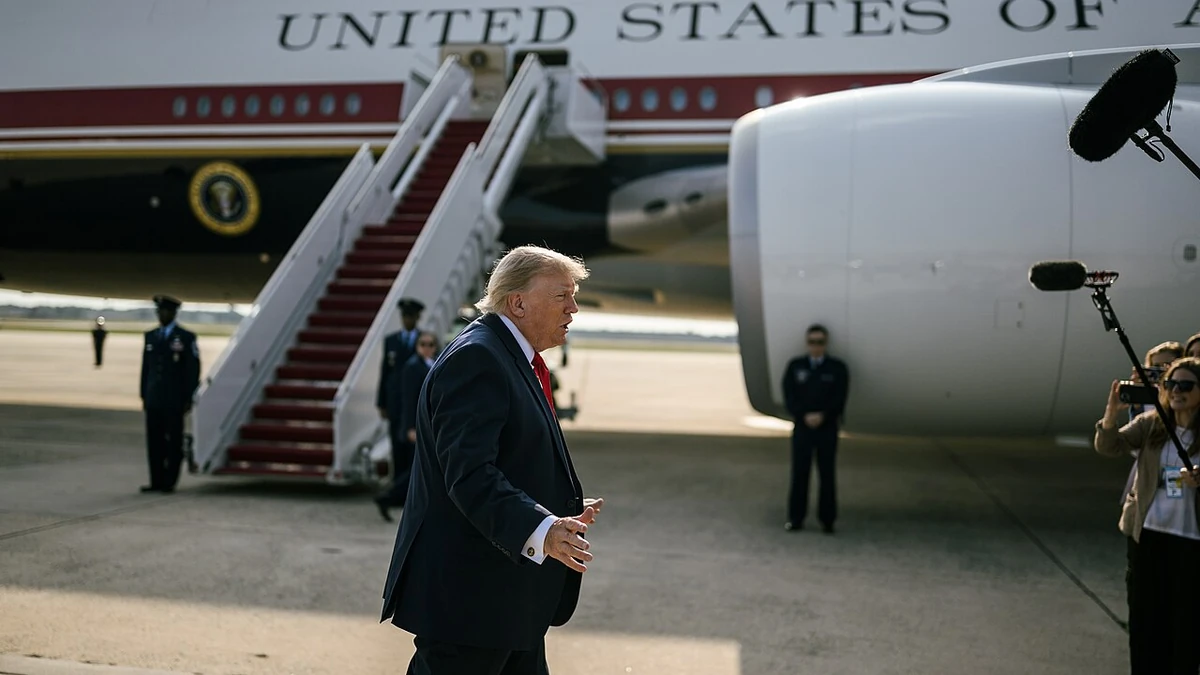
President Donald Trump said Iran was probably responsible for the attacks that forced Saudi Arabia to shut its East-West oil pipeline, adding a new U.S. accusation to an incident that has exposed the vulnerability of one of the kingdom’s most important crude-export alternatives. Trump made the assessment while speaking to reporters in Dublin on Saturday, but Saudi Arabia has not publicly said that Iran directed the attacks.
The distinction matters because the facts established so far are narrower than Trump’s conclusion. Saudi authorities say the pipeline was hit in the Riyadh and Madinah regions, that the attacks caused injuries, and that drones involved came from Iraq. The kingdom has not announced a restart time, and it has not publicly identified the group that launched or directed the strikes.
Trump points to Iran, but responsibility remains unproven
Asked in Dublin whether Iran was responsible, Trump replied, “I think they are, probably they are.” He also said he had spoken with Saudi Crown Prince Mohammed bin Salman and described him as a friend. Trump separately said Yemen’s Houthis had contacted his administration and did not want the United States to become directly involved, remarks that placed the pipeline attack inside a broader regional security crisis without establishing who ordered the strikes.
Saudi Arabia’s Foreign Ministry said several drones came from Iraq and caused injuries and some damage. The ministry said Riyadh had chosen not to respond “at this stage” after a request from Iraq’s prime minister to allow Baghdad time to take measures against attacks launched from Iraqi territory. Saudi Arabia also said it reserved the right to take whatever measures it considers necessary to protect its sovereignty, security, facilities, citizens and residents.
That Saudi statement establishes the direction from which the drones arrived, not responsibility in Tehran. Neither Saudi statement identifies Iran as the organizer of the attack. Trump’s comment therefore remains an attributed U.S. presidential assessment rather than a confirmed finding about who planned or authorized the strikes.
The shutdown hits a route built to bypass Hormuz
The immediate operational fact is the shutdown itself. In an official statement carried by the Saudi Press Agency, the Energy Ministry said the East-West Pipeline was subjected to multiple attacks on the morning of September 10 in the Riyadh and Madinah regions and was shut as a precaution. Emergency and technical teams moved to secure the line and assess its safety, while the ministry said further developments would be announced when available.
The pipeline’s importance has increased because it gives Saudi Arabia a way to move crude from the eastern side of the country to Yanbu on the Red Sea without sending those barrels through the Strait of Hormuz. The U.S. Energy Information Administration said in June that the East-West system had 7 million barrels per day of capacity, with about 5 million barrels per day available for exports. That is capacity, not a measure of how much crude was flowing through the line at the moment it was attacked.
The latest EIA Short-Term Energy Outlook, released September 9, said Middle East oil production was expected to recover as flows through Hormuz gradually increased and alternative routes continued to be used. Even before the Saudi pipeline attacks, however, the agency expected some constraints on oil exports from the region to persist through the end of 2026. A prolonged interruption of the East-West route would reduce some of the flexibility behind that recovery assumption, although Saudi Arabia has not said that the current shutdown will be prolonged.
Recent trade patterns show why the line matters. In its August outlook, the EIA estimated that crude oil and petroleum liquids moving through Hormuz averaged 4.9 million barrels per day in the second quarter, down sharply from 21.6 million barrels per day in the fourth quarter of 2025. Over the same comparison, volumes through the Bab el-Mandeb rose to 8.1 million barrels per day from 5.4 million as Saudi Arabia rerouted crude through the East-West Pipeline to Yanbu. The shift made the land route more important, but it also moved more export dependence toward the Red Sea corridor.
Damage, duration and attribution are now the key questions
The attack does not automatically mean 5 million or 7 million barrels per day of Saudi supply has been removed from the market. Those figures describe pipeline capacity, and Riyadh has not disclosed the line’s exact throughput immediately before the shutdown or quantified any resulting loss of exports. Saudi storage, terminal operations, routing choices and the speed of repairs will determine how much physical supply is affected.
For energy markets, the larger concern is redundancy. A bypass route has value precisely because it gives an exporter another path when a maritime chokepoint is constrained. When that bypass is itself attacked, the number of dependable options narrows, even if the physical damage is repaired quickly. The risk is greater when shipping through Hormuz is still recovering and when Red Sea routes remain exposed to regional security pressures.
There are also two separate questions that should not be collapsed into one. The first is where the drones came from, which Saudi Arabia says was Iraq. The second is who ordered or controlled the attack, which remains publicly unresolved. Trump has pointed to Iran, but neither the Saudi Energy Ministry statement nor the Saudi Foreign Ministry statement provides public evidence establishing direct Iranian responsibility.
The next concrete signal will be operational rather than rhetorical. Saudi Arabia’s Energy Ministry has said it will announce further developments, so confirmation of the pipeline’s safety, repair status and restart timing will show whether the shutdown becomes a short disruption or a more serious constraint on the kingdom’s ability to route crude around the Gulf.
More News


Latest News
View all news- Cabaletta Bio’s $2.50 Warrants Reach Expiry With Shares Above Exercise Price
- Federal Reserve Opens Fedwire Production Environment for September Customer Testing
- Yorkshire Building Society Reaches Redemption Date on £300 Million Senior Non-Preferred Notes
- Texas Stock Exchange Runs Final Auction Test Ahead of Sept. 16 Primary-Listings Launch
- Kroger Cuts 2026 Identical Sales Outlook After Q2 Growth Slows to 0.2%
