
Revolut Applies for Swiss Banking Licence, Plans CHF150 Million Investment
The fintech says a FINMA-approved Swiss bank would bring local IBANs, salary accounts and Swiss deposit protection to more than 1.3 million customers.
Our editorial standards
MarketReview publishes clear, independently produced financial information using reliable sources and transparent editorial standards.
Read our Editorial Policy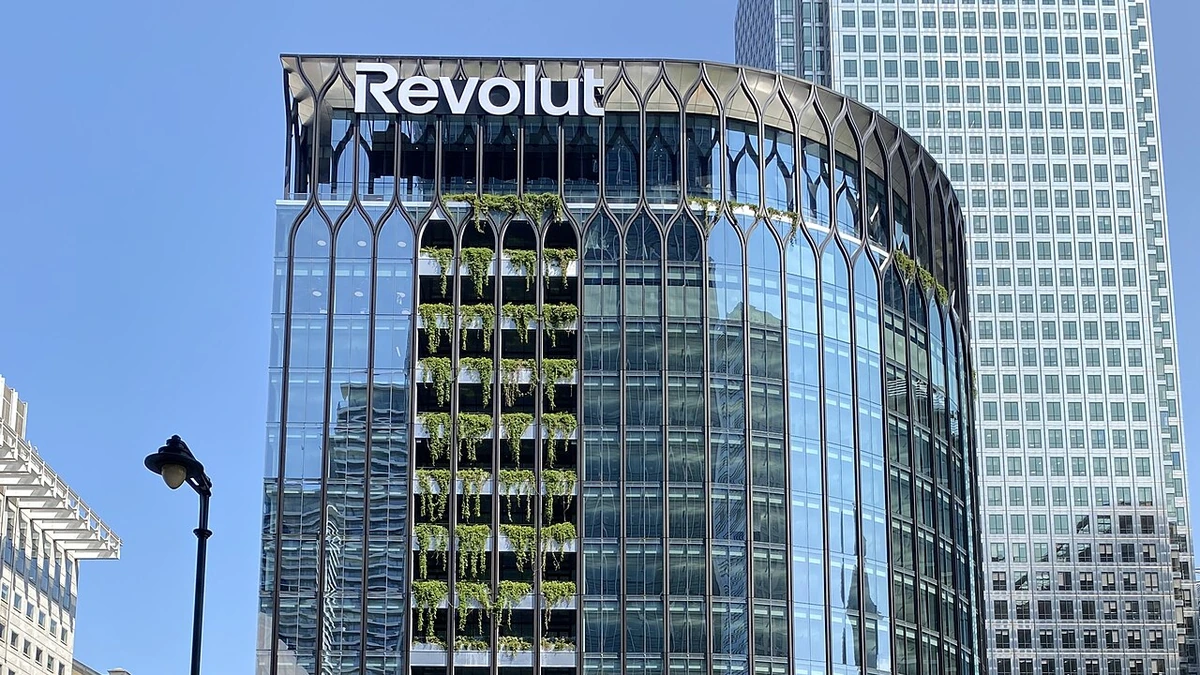
Revolut has applied to the Swiss Financial Market Supervisory Authority for a Swiss banking licence and says it plans to invest more than CHF150 million in Switzerland over the next five years. The application would move the fintech toward operating a locally licensed bank rather than relying on its existing Lithuanian banking entity to serve Swiss customers.
The outcome is not assured. Revolut said the FINMA review is pending and described the result as open. The company says it already has more than 1.3 million customers in Switzerland, where customers are currently served by Revolut Bank UAB, the group’s Lithuania-licensed bank. Revolut also maintains a representative office in Switzerland through Revolut (Switzerland) AG.
In its September 16 announcement, Revolut said a Swiss banking licence would support a more localized product set and an independent Swiss banking entity. The plan includes Swiss IBANs, salary accounts, eBill, merchant acquiring and access to the Swiss deposit guarantee scheme if the licence is granted. Revolut also said Pillar 3a retirement products and TWINT support are under consideration rather than confirmed launch features.
Swiss licence would shift customers to a local bank
The biggest practical change would be the legal and operational structure behind Revolut’s Swiss business. Today, the company’s Swiss customers are served by Revolut Bank UAB, which is licensed in Lithuania. FINMA’s register of authorized representative offices also lists Revolut Bank UAB as represented in Zurich by Revolut (Switzerland) AG. A Swiss banking licence would instead allow the group to build a locally licensed banking entity subject to Swiss prudential supervision.
Revolut said existing customers would move to the Swiss entity through a migration process if approval is granted. It expects local IBANs to be available from the outset, while additional local products would follow over time. For customers who currently use Revolut mainly as a payments, foreign-exchange or investing app, the planned structure would broaden the company’s ability to position itself as a primary banking relationship in Switzerland.
Salary accounts are an important part of that ambition. A local IBAN and salary-account setup would make it easier for customers to route regular income directly into Revolut, rather than treating the service as a secondary account funded from another bank. eBill support would also connect the platform more closely with routine Swiss household payments. Merchant acquiring, meanwhile, would extend the local buildout beyond consumers and into payment acceptance for businesses.
Revolut is being more cautious about products that are not yet part of the initial plan. It said a future Pillar 3a offering, which would place the company in a tax-advantaged Swiss retirement-savings market, is under consideration. TWINT, a widely used Swiss mobile-payment service, is also being considered. Revolut has not given launch dates for either product.
CHF150 million plan backs a larger local buildout
Revolut said it will invest more than CHF150 million in Switzerland over five years, with the spending intended to support product development and local hiring. The company also plans appointments to its executive board and senior leadership as it develops the proposed Swiss bank. It did not provide a breakdown showing how much of the investment would go to technology, staffing, regulatory infrastructure or other costs.
The spending commitment is therefore best read as a multi-year local expansion budget rather than a single capital injection into the proposed bank. A banking licence carries separate regulatory requirements, including capital, governance, risk management and supervisory obligations. Revolut has not disclosed in its announcement how the CHF150 million plan will be divided between those requirements and broader commercial expansion.
The Swiss application also fits a wider push by Revolut to establish locally licensed banking operations in more markets. The company received a French banking licence in August and announced a Colombian banking licence on September 15. Earlier this month, the U.S. Office of the Comptroller of the Currency approved Revolut’s application to charter Revolut Bank US, N.A., subject to the conditions and further steps required before the proposed bank can open. Revolut says it now serves more than 80 million customers globally.
Switzerland is a different regulatory and competitive setting from those markets, and the Swiss application does not become more likely to succeed simply because licences have been obtained elsewhere. Still, the sequence shows that Revolut is increasingly using local bank charters as part of its expansion model rather than relying only on cross-border services from existing entities.
FINMA review keeps timing and outcome open
A licence application is only the start of the Swiss authorization process. FINMA’s published requirements for banks include fully paid-up minimum capital of at least CHF10 million, a business plan capable of meeting capital, liquidity and risk-diversification rules, management from Switzerland, effective risk management and internal controls, and recognized audit arrangements. Foreign-controlled applicants also face requirements tied to reciprocal rights and, where relevant, consolidated supervision of the financial group.
Those rules do not indicate whether Revolut’s application will be approved. FINMA says the duration of a bank-licensing process depends on the quality and complexity of the application and, for cases involving foreign authorities, the time required to obtain responses from the relevant supervisors. Revolut has not announced a target date for a decision or for the launch of the proposed Swiss bank.
For now, Swiss customers remain under the existing Revolut Bank UAB structure. The company’s promised local IBANs, salary accounts, eBill access and Swiss deposit protection depend on the licence being granted and the new entity becoming operational. The next concrete milestone is therefore FINMA’s decision on the application, after which Revolut would still have to execute the customer migration and product rollout it has outlined.
More from Banking


Latest News
View all news- U.S. Retail Sales Jump 1.2% in August, Rebounding From July Decline
- Reliance Worldwide Signs Binding Brookfield Scheme Deed, Implied at A$4.75 a Share
- Xenetic Agrees to Acquire Santersus in All-Stock Share Exchange
- Apollo Funds Close €3 Billion Bayer Capital Solution as KKR Joins Investment
- U.S. Import Prices Rise 0.7% in August as Annual Increase Reaches 7%
