Ives Ultra AI Opportunities Prices $200 Million IPO for NYSE Debut
Ives Ultra AI Opportunities priced 20 million shares at $10 each and plans to invest primarily in private late-stage AI companies, with a first-year tender policy built into the fund's launch structure.
Our editorial standards
MarketReview publishes clear, independently produced financial information using reliable sources and transparent editorial standards.
Read our Editorial Policy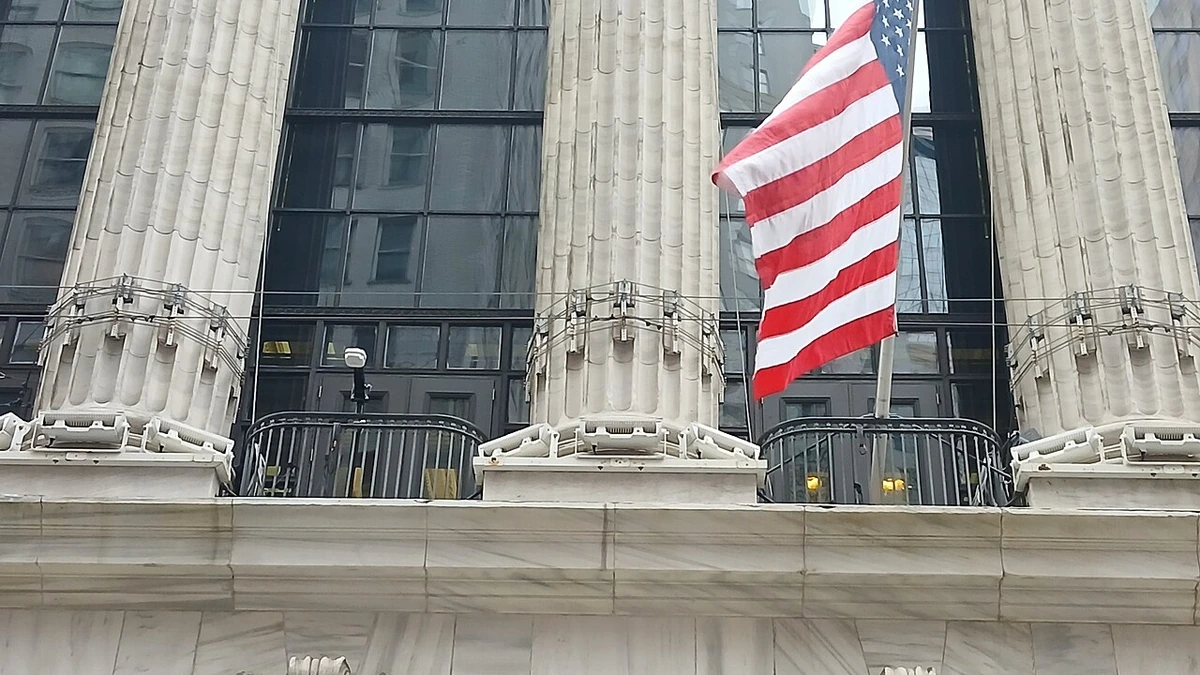
Ives Ultra AI Opportunities Inc. priced its initial public offering at $200 million, creating a new publicly traded vehicle designed to give investors exposure to private artificial-intelligence companies. The closed-end fund priced 20 million common shares at $10 each and said the shares were expected to begin trading on the New York Stock Exchange on Sept. 30 under the ticker IVAI.
The issuer said it is the first publicly listed closed-end investment fund dedicated to giving public-market investors access to private AI companies. MarketReview is treating that “first” description as an issuer claim rather than an independently established market-wide ranking. The more concrete distinction is spelled out in the fund’s registration materials: it intends to put most of its assets into AI and AI-infrastructure businesses, with an emphasis on private late-stage companies rather than a portfolio made up mainly of listed technology stocks.
The IPO is expected to close Oct. 1, subject to customary closing conditions. Ives Ultra also granted the underwriter an option to buy as many as 3 million additional shares to cover overallotments. Cohen & Company Capital Markets, a division of Cohen & Company Securities, is the sole bookrunner.
The fund is built around private late-stage AI exposure
According to the fund’s SEC registration filing, Ives Ultra intends under normal circumstances to invest at least 80% of its net assets, plus any borrowings for investment purposes, in companies whose primary business involves AI or AI infrastructure. The filing says the portfolio will focus primarily on equity and equity-related securities of private late-stage AI companies in the United States, with a smaller potential allocation to non-U.S. companies.
The mandate is broader than simply buying common shares in private startups. The prospectus allows the fund to use preferred shares, convertible securities, warrants and other equity-linked instruments, as well as certain vehicles that provide economic exposure to private companies. It also permits opportunistic investments in selected U.S. publicly traded stocks that meet the fund’s criteria. That flexibility may help the manager reach companies that are difficult for individual investors to access directly, but it also means the economic exposure can be more complicated than owning ordinary shares in a public company.
The fund’s stated objective is to maximize total return, principally through capital gains. It is a recently formed, non-diversified closed-end management investment company with no operating history. The prospectus warns that late-stage private companies can have limited publicly available information, complex capital structures and substantial liquidity risk. It also says all or a substantial portion of the portfolio may be invested in illiquid securities at times.
That risk profile is central to the product. Private AI companies have attracted large amounts of capital and investor attention, but access has generally been limited to venture funds, private-equity vehicles, institutions and accredited investors. IVAI is designed to package that exposure inside a listed closed-end fund whose shares can trade on an exchange, even though the underlying holdings may themselves be difficult to sell or value.
A tender policy is meant to address the closed-end fund discount problem
Ives Ultra’s structure includes an unusual first-year mechanism intended to address a familiar closed-end fund issue: shares can trade below the value of the assets they represent. The SEC filing says the fund has adopted a Tender Offer Policy under which it must complete a tender offer within the first 12 months after the IPO, offering to repurchase shares held by unaffiliated investors at a defined redemption value.
The fund plans to keep the IPO proceeds in an interest-bearing trust account maintained by U.S. Bank until a qualifying tender offer is completed. The registration statement says the proceeds and interest generated from cash and cash equivalents are to be released only after that tender process meets the policy’s requirements. The issuer’s pricing announcement similarly said the fund has up to 12 months to propose its initial private AI investments and give investors the opportunity to tender their shares.
The mechanism does not remove market risk. The prospectus cautions that the redemption value could be less than the IPO purchase price, and closed-end fund shares can trade at discounts to net asset value. It also warns that an active and orderly trading market may not develop or persist. Investors therefore have two separate exposures to consider: the value and liquidity of the private AI investments, and the market price of IVAI shares themselves.
The advisory arrangement adds another cost consideration. The filing states that Ives Ultra Capital Management is entitled to a management fee equal to 2.00% of average gross assets, measured as described in the advisory agreement. Payment of that fee is deferred until after completion of a tender offer that satisfies the Tender Offer Policy, according to the registration statement.
Dan Ives provides the name, but Edward Leathers runs the portfolio
The Ives name gives the launch a recognizable technology-market brand, but the filing draws a clear line between governance and portfolio decisions. Dan Ives serves on the board of managers of Ives Ultra Capital Management, the fund’s investment adviser. He is not a member of the Investment Committee and is not expected to participate in the fund’s investment decision-making process.
Edward Leathers is the portfolio manager primarily responsible for day-to-day management and is the current member of the Investment Committee. The SEC filing says he previously worked on private investments at Endurance Companies, invested in public equities at Dodge & Cox and began his career in technology investment banking at Wells Fargo Securities. Ives Ultra Capital Management is registered with the SEC as an investment adviser, but the filing notes that the adviser has no operating history as a registered investment adviser.
That distinction matters because the public profile around the launch can easily focus on Dan Ives, while the prospectus assigns investment authority elsewhere. The fund’s investment case ultimately depends on the adviser’s ability to source private AI opportunities, negotiate access and terms, value difficult-to-price holdings and manage liquidity within a publicly traded structure.
The $200 million IPO gives Ives Ultra a meaningful pool of capital if the offering closes as planned, with further proceeds possible if the overallotment option is exercised. What happens next will be more important than the headline size of the offering. The fund now has to move from a listed shell with cash in trust toward a portfolio of private AI investments, while operating within the tender policy and the risk controls described in its prospectus.
More from Investing



Latest News
View all news- U.S. Private Employers Add 90,000 Jobs in September, ADP Says
- U.S. Core PCE Inflation Holds at 3.0% as Consumer Spending Jumps 0.9%
- UK Economy Grew 0.5% in Second Quarter, Revised Up From 0.4%
- Skyworks Secures All Regulatory Clearances for Qorvo Merger, Targets Oct. 5 Close
- Japan Reports No FX Intervention as 2-Year JGB Auction Draws Strong Demand