McCormick Sales Jump 17% in Q3 as Company Reaffirms 2026 Outlook
Reported sales rose 17.4%, but most of the increase came from the McCormick de Mexico acquisition; organic sales grew 1.9% as pricing offset a slight decline in volume and mix.
Our editorial standards
MarketReview publishes clear, independently produced financial information using reliable sources and transparent editorial standards.
Read our Editorial Policy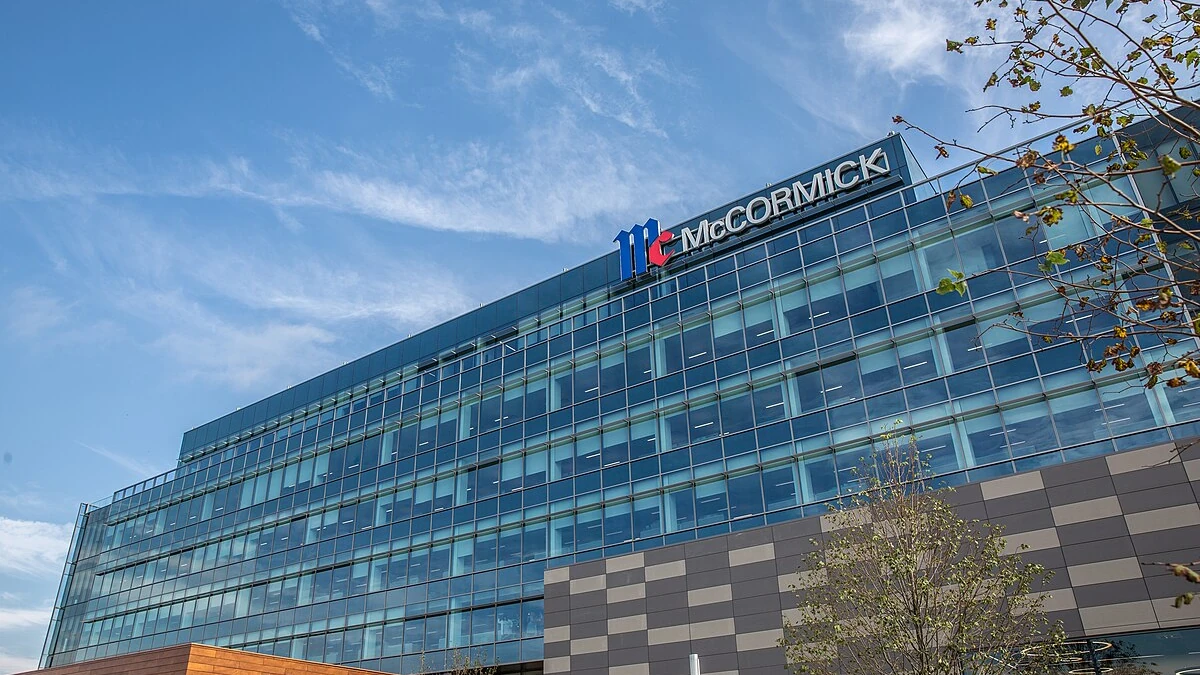
McCormick & Company reported a 17.4% increase in fiscal third-quarter net sales and reaffirmed its 2026 outlook, with the newly consolidated McCormick de Mexico business accounting for most of the reported growth.
Organic sales, which exclude acquisitions and currency effects, rose 1.9%. Pricing contributed 2.2 percentage points, while volume and product mix declined 0.3%. Foreign exchange added another 0.9 percentage point to reported sales growth.
The quarter ended Aug. 31 produced roughly $2.02 billion of sales across McCormick’s Consumer and Flavor Solutions segments. In its third-quarter earnings release, the company said McCormick de Mexico contributed 14.6 percentage points to the overall increase, underscoring how much of the headline growth came from the acquisition rather than the existing business.
McCormick de Mexico drives most of the reported growth
Consumer segment sales increased 24.9% to $1.215 billion. McCormick de Mexico contributed 23.2 percentage points to that increase, while favorable currency added about 1 percentage point. Organic Consumer sales rose 1.1%, with 2.2% higher pricing partly offset by a 1.1% decline in volume and product mix.
The Americas showed the clearest contrast between reported and underlying trends. Consumer Americas sales rose 31.7% because the Mexico acquisition added 32.1 percentage points, but organic sales slipped 0.3%. Volume and product mix declined 2.5%, more than offsetting a 2.2% pricing benefit. Consumer EMEA organic sales increased 5.0%, while Consumer APAC organic sales rose 4.4%.
Flavor Solutions, McCormick’s business serving food manufacturers and food-service customers, posted a smaller acquisition effect. Segment sales increased 7.7% to $809 million, including a 3.4-percentage-point contribution from McCormick de Mexico and roughly 1 percentage point from currency. Organic Flavor Solutions sales rose 3.0%, with both price and volume contributing.
The mix matters because McCormick’s full-year outlook still assumes organic sales growth of 1% to 3%, far below the double-digit reported growth produced by adding McCormick de Mexico. The quarter therefore showed two stories at once: a large step-up in consolidated scale from the acquisition and more modest growth in the underlying business.
Margins improve even as reported profit falls
Gross profit increased by about $150 million from a year earlier, and gross margin expanded 190 basis points to 39.3%. McCormick attributed the improvement to the Mexico acquisition, higher sales and cost savings led by its Comprehensive Continuous Improvement program, partly offset by higher commodity and freight costs.
Adjusted operating income rose 22.1% to $358.5 million, while adjusted operating margin increased 70 basis points to 17.7%. Both Consumer and Flavor Solutions delivered higher adjusted operating profit, although McCormick also spent more on brand marketing, technology and other selling, general and administrative items.
Reported earnings moved in the opposite direction because of special charges. Operating income fell 24.8% to $217 million, and net income attributable to McCormick dropped 56.7% to $97.6 million. Diluted earnings per share declined to $0.36 from $0.84 a year earlier.
McCormick said special charges reduced diluted EPS by $0.50. Those items included costs associated with acquisitions and a noncash impairment tied to a development-stage pepper sourcing project in Malaysia that the company decided to shut down. Excluding special charges, adjusted EPS was $0.86 compared with $0.85 in the prior-year quarter.
The margin improvement came despite continued pressure from commodity and freight costs. McCormick said productivity savings helped absorb some of that inflation while allowing continued investment in marketing and technology. Management expects the same cost-savings program to remain an important offset through the rest of the fiscal year.
McCormick keeps its 2026 guidance unchanged
For fiscal 2026, McCormick continues to expect reported net sales growth of 13% to 17%, or 12% to 16% in constant currency. The company expects the McCormick de Mexico acquisition to contribute 11 to 13 percentage points of reported growth, while organic sales are still projected to rise 1% to 3%.
Adjusted operating income is expected to increase 16% to 20% on a reported basis and 15% to 19% in constant currency. McCormick also maintained its adjusted diluted EPS range of $3.05 to $3.13, representing growth of 2% to 5% from fiscal 2025, or 1% to 4% excluding currency effects.
The outlook assumes total volumes remain stable for the year while pricing provides a larger benefit than in 2025. McCormick expects adjusted gross margin to expand by 100 to 120 basis points, supported by organic sales growth, the contribution from McCormick de Mexico and productivity savings.
Cost pressure has not disappeared. The company said benefits from an IEEPA tariff refund recognized primarily in the second quarter are expected to be offset by higher inflationary costs, including costs related to the Middle East conflict, as well as continued investment in the business. McCormick also expects a tax rate of about 24.0%, up from 21.5% in 2025, and higher net interest expense primarily associated with the Mexico acquisition.
Foreign exchange is expected to add about 1 percentage point to net sales, adjusted operating income and adjusted EPS for the full year. McCormick also continues to expect strong cash flow from profit and working-capital initiatives and plans to return a significant portion of that cash to shareholders through dividends.
The reaffirmed guidance leaves the main operating question for the final quarter centered on the organic business. The third quarter showed that pricing can still offset modest volume softness at the company level, but Consumer Americas volumes remained under pressure. Against that backdrop, McCormick’s 1% to 3% organic sales range and its expectation for stable full-year volumes remain the clearest benchmarks for the rest of fiscal 2026.
More from Investing


Latest News
View all news- U.S. Manufacturing Expands for Ninth Month as ISM PMI Holds at 54.5
- U.S. Initial Jobless Claims Slip to 197,000 as Continuing Claims Fall to 1.701 Million
- U.S. Construction Spending Rises 0.9% in August to $2.20 Trillion Annual Rate
- UK House-Price Growth Halves to 0.8% in September, Nationwide Says
- Italy’s Unemployment Rate Rises to 6.2% as Jobless Count Increases by 48,000