Tesla Delivers 486,532 Vehicles in Third Quarter, Produces 464,391
Tesla delivered 486,532 vehicles and produced 464,391 in the third quarter, with Model 3 and Model Y accounting for nearly all deliveries as the total rose from Q2.
Our editorial standards
MarketReview publishes clear, independently produced financial information using reliable sources and transparent editorial standards.
Read our Editorial Policy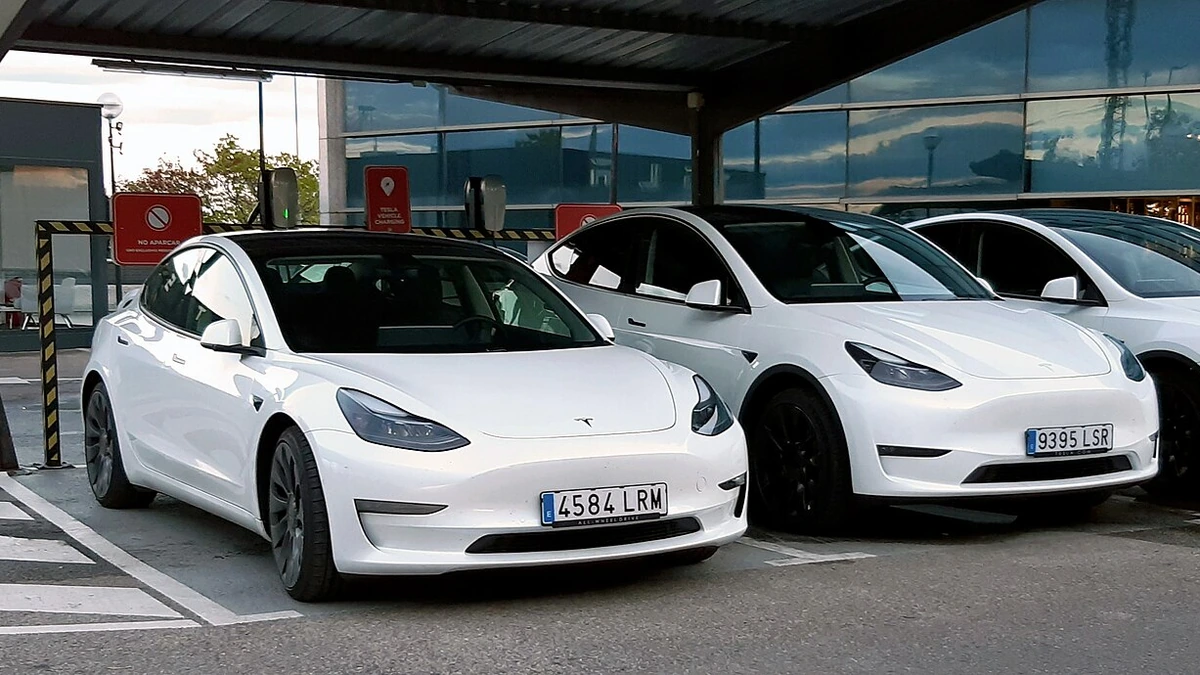
Tesla delivered 486,532 vehicles in the third quarter of 2026 and produced 464,391, lifting both measures from the prior quarter even as deliveries remained below the record set a year earlier. The quarter was again dominated by Model 3 and Model Y, which accounted for 478,237 deliveries and 457,387 vehicles produced.
Total deliveries increased 1.3% from 480,126 in the second quarter, while production rose 2.8% from 451,758. Compared with the third quarter of 2025, deliveries were down 2.1% from 497,099, while production was 3.8% higher than the 447,450 vehicles Tesla built a year ago.
Tesla also deployed 13.7 GWh of energy storage products during the quarter. The company’s official third-quarter production and delivery release said financial results for the period will be posted after the market closes on October 21, when management is scheduled to discuss the company’s results and outlook.
Model 3 and Model Y account for almost all deliveries
Model 3 and Model Y remained the center of Tesla’s vehicle business in the quarter. Their 478,237 deliveries represented about 98% of the companywide total, while the 8,295 deliveries reported under “Other Models” made up the balance. Tesla does not break out each vehicle within that second category in its quarterly production and delivery release.
At 478,237, Model 3/Y deliveries rose 2.2% from 467,762 in the second quarter but were 0.6% below the 481,166 reported in the third quarter of 2025. Production of those two models increased more clearly, reaching 457,387, up 3.3% sequentially and 4.9% from a year earlier.
Other Models moved in the opposite direction. Tesla produced 7,004 vehicles in that category, down from 8,822 in the second quarter and 11,624 a year earlier. Deliveries totaled 8,295, compared with 12,364 in Q2 and 15,933 in Q3 2025. The company’s reporting format does not provide enough detail to attribute that decline to any one vehicle.
Across the full lineup, deliveries exceeded production by 22,141 vehicles in the quarter. That spread is smaller than the 28,368 difference in Q2 and far below the 49,649 gap in the third quarter of 2025. It should not be treated as a direct inventory figure because production and delivery timing, vehicle mix and vehicles in transit can affect the relationship between the two measures.
Deliveries come in above Tesla’s company-compiled consensus
Three days before the release, Tesla published a company-compiled consensus of sell-side estimates for the third quarter. The compilation showed average expected deliveries of 461,974 and a median estimate of 463,406. Tesla explicitly said it does not endorse the information, recommendations or conclusions provided by the analysts.
Actual deliveries were about 24,600 above the compiled average and roughly 23,100 above the median. That works out to about 5.3% above the average estimate and 5.0% above the median. The comparison is useful for understanding how the operating result lined up with the expectations Tesla chose to publish, but it is not company guidance and should not be read as such.
Two stronger quarters after Q1 have also changed the year-to-date picture. Tesla delivered 358,023 vehicles in Q1, 480,126 in Q2 and 486,532 in Q3, bringing the first nine months of 2026 to 1,324,681 deliveries. Over the same three quarters of 2025, the company delivered 1,217,902 vehicles, so the current year-to-date total is about 8.8% higher.
Production shows a similar pattern. Tesla built 1,324,535 vehicles through the first three quarters of 2026, compared with 1,220,309 during the same period in 2025, an increase of about 8.5%. Those cumulative figures put the company above last year’s nine-month pace even though the latest quarter did not exceed Q3 2025 deliveries.
Tesla’s September 29 consensus compilation put the average full-year 2026 delivery estimate at 1,767,255 and the median at 1,774,590. After the first nine months, reaching those figures would require roughly 442,600 to 449,900 deliveries in the fourth quarter. That is simply the arithmetic implied by the published estimates and the reported year-to-date total, not a forecast from Tesla.
Energy storage rises, with October 21 earnings next
Energy storage deployments reached 13.7 GWh in Q3, up from 13.5 GWh in the second quarter and 12.5 GWh a year earlier. Through the first nine months of 2026, Tesla deployed 36.0 GWh of storage products, compared with 32.5 GWh in the first three quarters of 2025.
That 13.7 GWh result was lower than the company-compiled Q3 consensus published before the release, which showed an average estimate of 15.9 GWh and a median of 16.2 GWh. The comparison with expectations is therefore mixed: vehicle deliveries came in above the compiled estimates, while storage deployments came in below them.
Q3’s operating release does not provide revenue, margins, net income or cash flow, and Tesla cautions that deliveries and storage deployments are only two measures of financial performance. Average selling prices, cost of sales, foreign-exchange movements and other factors can affect the quarter’s financial results independently of the vehicle count.
Those details are due on October 21 after the market closes. Until then, the Q3 release establishes the operating baseline: 486,532 vehicle deliveries, 464,391 vehicles produced and 13.7 GWh of energy storage deployments, with the financial consequences still to be reported in Tesla’s quarterly results.
More News


Latest News
View all news- Switzerland Backs CHF 10 Billion Extension of International Monetary Assistance
- South Korea Inflation Cools to 2.9% in September as Fuel Costs Stay High
- Scotiabank Gets Approval to Expand Share Buyback to 40 Million Shares
- Rivian Delivers Record 19,248 Vehicles in Third Quarter as R2 Production Ramps
- Rithm Capital Closes DRA Joint Venture for 1301 Avenue of the Americas