
CSL Signs Alentis Drug Partnership With $355 Million Upfront Payment
CSL will also fund Phase 2 and planned Phase 3 development of lixudebart, while Alentis can earn up to $1.2 billion in commercial milestones and 45% of global profits.
Our editorial standards
MarketReview publishes clear, independently produced financial information using reliable sources and transparent editorial standards.
Read our Editorial Policy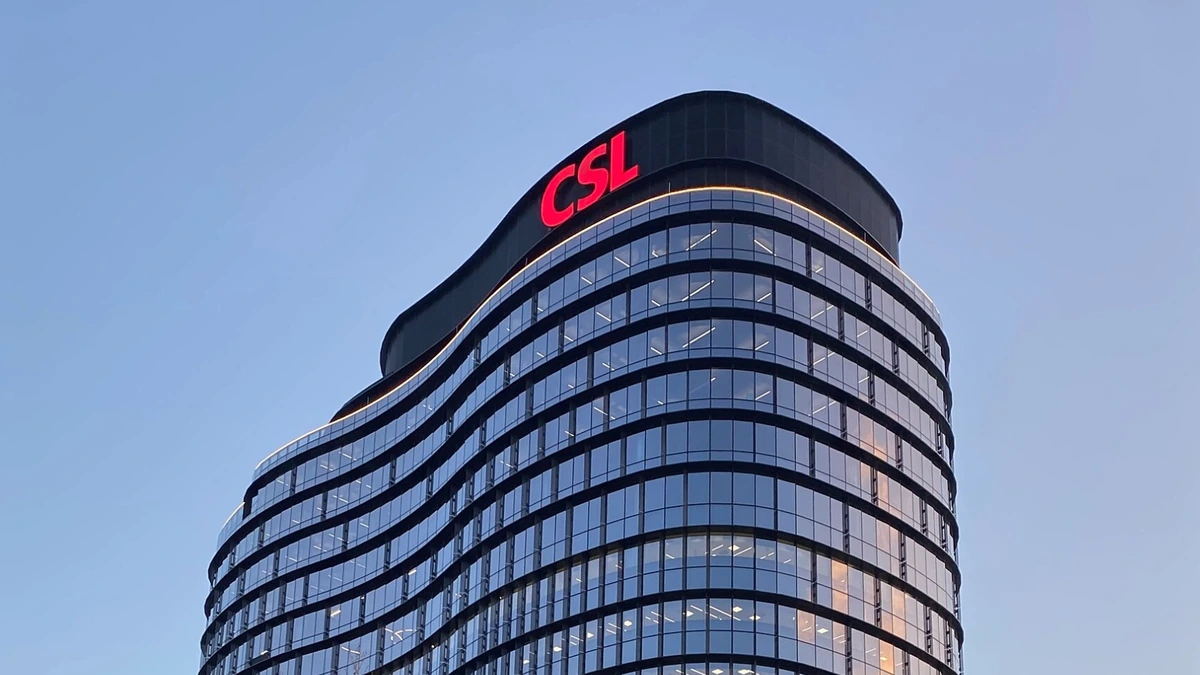
CSL has agreed to pay Alentis Therapeutics US$355 million upfront under an exclusive global partnership to co-develop and co-promote lixudebart, an experimental antibody aimed at rare kidney and liver diseases. The agreement gives CSL a major role in the next stages of the program while leaving Alentis with a substantial share of the drug’s economics if development succeeds.
Alentis is also eligible for up to US$1.2 billion in commercial milestone payments. Beyond those payments, CSL will fund the completion of the ongoing Phase 2 RENAL study in ANCA-associated vasculitis with rapidly progressive glomerulonephritis, or AAV-RPGN, a planned Phase 3 study in the same disease, and Phase 2 studies in focal segmental glomerulosclerosis and primary sclerosing cholangitis. If lixudebart reaches the market, global profits will be split 55% to CSL and 45% to Alentis.
CSL said in its joint announcement with Alentis that the companies will develop and promote the medicine together. The structure is important because the US$355 million payment is only the immediate financial commitment disclosed. CSL is also taking responsibility for specified clinical-development costs, while the US$1.2 billion of potential milestones depends on future commercial achievements.
CSL takes on clinical funding and 55% of future profits
The partnership gives CSL exposure to lixudebart without acquiring Alentis. The Basel-based biotechnology company remains the developer behind the antibody and keeps 45% of global profits, while CSL contributes its development, regulatory and commercial capabilities in kidney disease. That profit-sharing arrangement also means the economics differ from a conventional licensing structure built mainly around royalties.
For CSL, the largest near-term obligation is broader than the upfront payment. The company has committed to fully fund completion of the current AAV-RPGN Phase 2 program, the planned Phase 3 study and new Phase 2 studies in FSGS and PSC, as well as supporting development work. Neither company disclosed the expected cost of those programs, so the full amount CSL may spend on lixudebart cannot be determined from the announcement.
The potential milestone package is tied to commercial outcomes rather than being presented as guaranteed consideration. That distinction matters for investors because lixudebart is still investigational and must progress through additional clinical testing and regulatory review before it could generate product sales. CSL and Alentis did not announce a filing date, launch timetable or projected revenue for the medicine.
Lixudebart is being tested in severe kidney disease
Lixudebart, formerly known as ALE.F02, is a monoclonal antibody designed to target exposed claudin-1, a protein Alentis links to inflammatory and fibrotic signaling in damaged tissue. The companies are initially focusing on diseases in which inflammation and fibrosis can contribute to progressive organ injury. Their lead program is AAV-RPGN, a severe form of ANCA-associated vasculitis that can cause a rapid decline in kidney function.
The public ClinicalTrials.gov record for the RENAL-F02 study describes a randomized, placebo-controlled Phase 2 trial testing ALE.F02 on top of standard treatment. The study’s primary outcome focuses on safety and tolerability, while a key secondary measure evaluates change in estimated glomerular filtration rate, or eGFR, through week 24. The trial also tracks proteinuria and other measures associated with kidney damage and function.
CSL and Alentis said an interim analysis involving 26 AAV-RPGN patients showed encouraging changes in kidney function measured by eGFR and proteinuria at 24 weeks. Those observations remain preliminary because the study is ongoing. In a separate Phase 1b study involving 41 patients with advanced liver fibrosis, Alentis reported improved liver-function measures after six weeks. The companies also said lixudebart showed dose-dependent claudin-1 target engagement and a favorable safety and tolerability profile in the studies reported so far.
Those early findings help explain why CSL is willing to fund a larger development program, but they do not establish that the drug is effective or that regulators will approve it. The planned work is intended to test the antibody across several diseases rather than relying on a single kidney indication. FSGS is a progressive kidney disorder that can lead to loss of renal function, while PSC is a chronic liver disease involving inflammation and scarring of the bile ducts.
The deal extends CSL’s nephrology strategy
The agreement fits CSL’s broader effort to expand in rare kidney disease. In its 2026 annual report, CSL identified cardiovascular and renal medicine as a focus area and said it is looking for disease-modifying approaches that can preserve kidney function or delay progression toward dialysis or transplantation. Its existing nephrology business includes products such as FILSPARI, and the company has continued to use external partnerships to add programs aligned with that strategy.
Lixudebart gives CSL another potential asset that could sit earlier in the disease course if the clinical program confirms a meaningful effect on kidney function. It also broadens the scientific approach in CSL’s renal pipeline by targeting claudin-1 rather than using the same mechanism as its existing commercial medicines. The company described the partnership as part of its ambition to build a leading global nephrology franchise.
For Alentis, the agreement supplies funding and commercial infrastructure while preserving a large share of the product’s upside. The privately held company focuses on therapies targeting claudin-1 across fibrosis and oncology, with lixudebart as its lead fibrosis program. Alentis has said its work grew out of research at the University of Strasbourg and France’s Inserm research institute.
The next material tests are clinical rather than financial. CSL has committed to carry the AAV-RPGN program through the current Phase 2 study and, if development supports it, into the planned Phase 3 trial, while the companies prepare Phase 2 work in FSGS and PSC. Until those studies produce stronger evidence, the US$355 million upfront payment represents a sizable bet on a drug that still has significant development and regulatory risk.
More from Investing
Latest News
View all news- Zscaler Reaffirms Q1 and FY2027 Financial Guidance at Investor Day
- U.S. Trade Deficit Widens 13.7% to $105.6 Billion in August as Imports Surge
- MIAX Hits Record 17.1% YTD U.S. Options Share as ADV Rises 22%
- Lamb Weston Raises FY2027 Outlook After First-Quarter Results
- Japan’s 10-Year Government Bond Auction Clears Near 3.10% With a 3.1% Coupon
