Type One Energy Raises $200 Million Series B to Advance Tennessee Fusion Project
The round, co-led by Breakthrough Energy Ventures and Clutterbuck Capital, will fund Type One’s stellarator program and Project Infinity at TVA’s Bull Run site.
Our editorial standards
MarketReview publishes clear, independently produced financial information using reliable sources and transparent editorial standards.
Read our Editorial Policy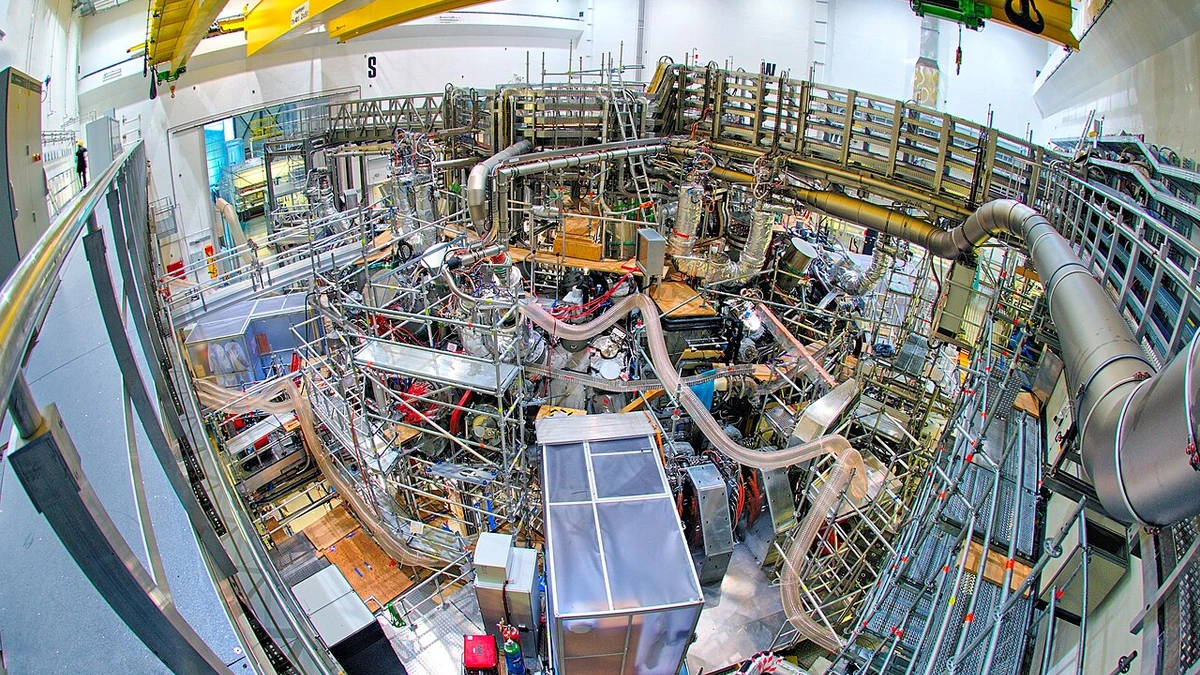
Type One Energy has raised $200 million in Series B funding to advance its stellarator fusion program and Project Infinity, the company’s planned fusion development campus at the Tennessee Valley Authority’s Bull Run site in East Tennessee. The round comes just over a month after Tennessee granted the project its first fusion-specific byproduct material license.
Type One said in its October 6 financing announcement that Breakthrough Energy Ventures and Clutterbuck Capital co-led the round. New investors included Lowercarbon Capital, Siemens Energy Ventures and SiteGround Capital, alongside other participants. The private company did not disclose a valuation or the ownership stakes associated with the financing.
The capital is intended to support Type One’s FusionDirect technology development program and continued work on Project Infinity. The company is pursuing a partner-heavy model that relies on outside manufacturing, engineering and operating capabilities rather than building every part of the supply chain internally. That strategy is central to how Type One says it plans to move from stellarator research into commercial power-plant deployment.
The funding is tied directly to Project Infinity
Project Infinity is planned as a phased development at TVA’s Bull Run Energy Complex in Clinton, Tennessee. The first phase, Infinity One, is an engineering prototype and workforce-training platform designed to test systems that Type One expects to use in later power plants. The company currently targets commissioning and startup of Infinity One in 2029.
A second phase, Infinity Two, is being developed as a grid-scale stellarator fusion plant. Type One now describes the design as a 400-megawatt-electric, or 400 MWe, plant. Its current technical materials describe an underlying plasma design producing about 800 megawatts of fusion power and delivering 400 MWe to the grid.
The Tennessee project also links Type One with TVA, a federal power supplier serving more than 10 million people across seven southeastern states. TVA has been evaluating fusion as a possible future source of firm power and is working with Type One on Infinity One at the former Bull Run Fossil Plant site. Bull Run’s coal plant was retired in December 2023, and TVA has continued using the site for new energy projects.
The latest financing does not mean a commercial fusion plant is already under construction or producing electricity. Type One is still moving through engineering, licensing and prototype milestones. The October announcement describes the Series B as capital for technology development and execution of Project Infinity, not as financing for a completed or operating power station.
Tennessee licensing moved the project into a new phase
The financing follows a regulatory milestone reached just over a month earlier. The Tennessee Department of Environment and Conservation said in its August 31 licensing announcement that it had issued Type One the state’s first fusion-specific byproduct material license for the Bull Run project. Tennessee said it was the first U.S. state to issue a license under the newer regulatory framework specifically for fusion machines.
The license matters because fusion projects in the United States are being regulated differently from conventional nuclear fission reactors. Tennessee’s radiological-health division developed the state licensing process after the Nuclear Regulatory Commission chose a byproduct-materials framework for fusion. Type One and TVA worked with state regulators on the application and project plans.
Tennessee said Type One intends to break ground on the first phase of Project Infinity in 2026 and expects full startup by 2034. The state also described Infinity Two as a 400 MWe stellarator plant. Those dates remain development targets rather than guarantees, and the later commercial phase still depends on engineering progress, construction, additional approvals and successful operation of the earlier project stages.
The regulatory sequence matters to the Series B because the company is raising capital after obtaining an initial site-specific operating license rather than before any site-specific regulatory work. Type One highlighted that milestone in announcing the round, arguing that the licensing path at Bull Run can support a broader model for commercial fusion deployment.
Type One is building on the stellarator approach
Type One is betting on stellarators, magnetic-confinement machines that use a complex, twisted magnetic geometry to control extremely hot plasma. The company says this geometry can support a stable, steady-state environment suited to continuous power generation. Commercializing that approach still requires Type One to translate experimental stellarator performance into a reliable power-plant system that can be manufactured, maintained and operated at grid scale.
The company traces its technical approach to decades of stellarator work, including the Helically Symmetric Experiment at the University of Wisconsin-Madison and the Wendelstein 7-X machine in Germany. Type One’s technology materials specifically cite Wendelstein 7-X as a major modern stellarator experiment and say Chief Technology Officer Thomas Sunn Pedersen served as a director of W7-X for 11 years. That lineage supports the company’s argument that the next challenges are increasingly centered on engineering and industrial execution rather than starting from an untested confinement concept.
Infinity One is intended to bridge that gap. Type One says the prototype will use non-planar high-temperature superconducting magnets and function both as an engineering verification platform and a training facility. Infinity Two is the larger commercial objective, with the company aiming to translate the same class of magnetic-confinement technology into a plant capable of supplying electricity to the grid.
That makes the $200 million round more than a general balance-sheet raise. The money arrives as Type One moves from design work and regulatory planning toward physical deployment at Bull Run, while also trying to establish an industrial network around components, fabrication, construction and plant operations. Siemens Energy Ventures’ participation gives the round an additional strategic-investor element alongside climate and technology funds, although Type One has not disclosed what specific commercial commitments, if any, accompany the investment.
The next milestones are concrete. Tennessee says the first phase is expected to break ground in 2026, Type One targets Infinity One commissioning and startup in 2029, and the state has pointed to 2034 for full startup of the broader project. Whether those dates hold will depend on engineering execution and later approvals, but the Series B gives Type One substantially more capital to pursue them.
More from Investing


Latest News
View all news- Zscaler Reaffirms Q1 and FY2027 Financial Guidance at Investor Day
- U.S. Trade Deficit Widens 13.7% to $105.6 Billion in August as Imports Surge
- Lamb Weston Raises FY2027 Outlook After First-Quarter Results
- Japan’s 10-Year Government Bond Auction Clears Near 3.10% With a 3.1% Coupon
- Informa to Buy Clarion for £2.24 Billion, Plans £940 Million Equity Raise and Taylor & Francis Separation