
Switzerland Commits CHF 40 Million to IMF Capacity-Building Work Through 2030
The 2026–2030 SECO partnership will support technical assistance to strengthen finance ministries, central banks and financial oversight in selected IMF member countries.
Our editorial standards
MarketReview publishes clear, independently produced financial information using reliable sources and transparent editorial standards.
Read our Editorial Policy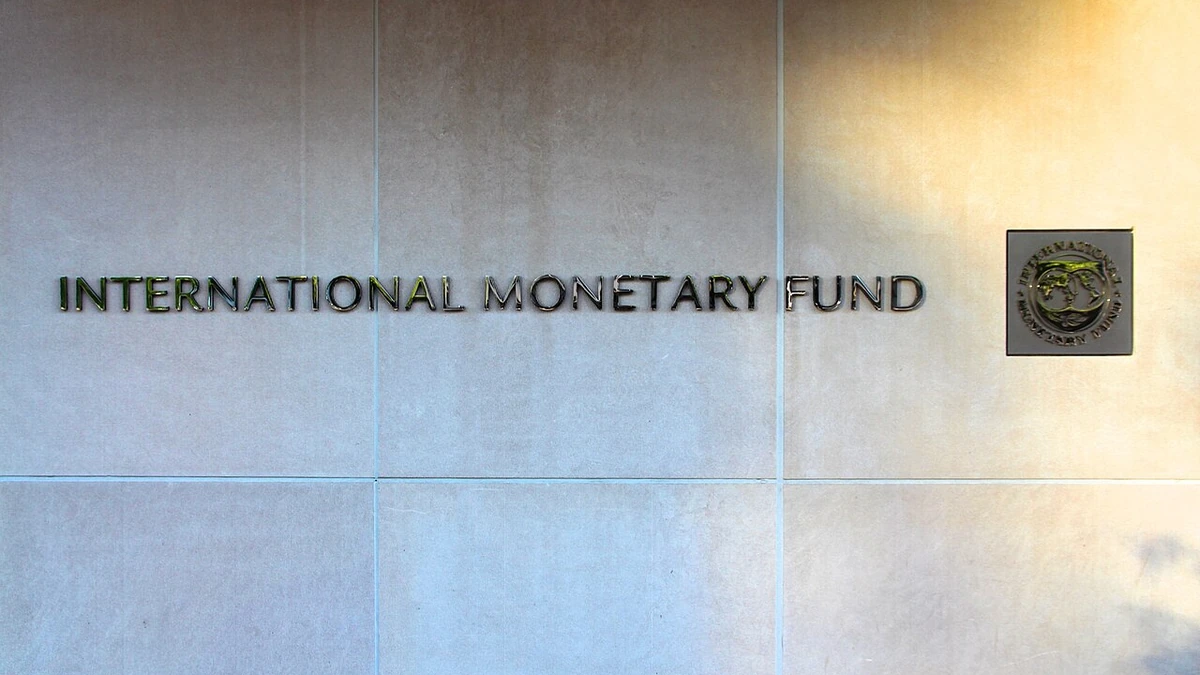
Switzerland has approved CHF 40 million for a five-year partnership with the International Monetary Fund, extending its support for technical assistance designed to strengthen economic institutions in IMF member countries. The funding covers 2026 through 2030 and will be administered on the Swiss side by the State Secretariat for Economic Affairs, known as SECO.
The Swiss Federal Council authorized the contribution on August 26, 2026. Its government subsequently said the agreement was due to be signed during the IMF and World Bank Annual Meetings in Bangkok, held October 15–17. The funding commitment is established by that approval; the public announcements examined here described the signing as planned, not completed.
The money is intended for institution-building rather than emergency balance-of-payments loans. The emphasis is on the ability of government agencies and financial authorities to make and implement economic policy, from public debt management to the reliability of the statistics on which decisions depend.
Finance Ministries, Central Banks and Regulators Are the Focus
In its October announcement, SECO said the partnership would help IMF members develop stronger public institutions. An earlier Swiss government statement specified the main recipients of that expertise: finance ministries, central banks and financial supervisory authorities in selected partner countries.
For finance ministries, the stated priorities include more sustainable management of public finances and debt. Work on public accounts and debt administration can help officials understand future payment obligations, manage fiscal risks and make spending decisions with more reliable information. The contribution does not itself pay a country’s debts or supply a new IMF lending facility.
The financial-sector component is meant to reinforce stability and the integrity of financial systems. That puts regulatory and supervisory capability alongside the public-finance work. SECO also identifies dependable economic statistics as a priority, reflecting the importance of good data when governments assess inflation, fiscal pressures and the condition of their financial sectors.
The IMF’s broader capacity-development operation delivers that kind of support through technical advisers, training, diagnostic work and regional centers. Its 2026 annual report describes a network of 17 regional capacity-development centers, alongside longer-term in-country advisers and shorter assignments. Those are established IMF delivery channels, not a published allocation plan for Switzerland’s new CHF 40 million commitment.
The Swiss announcements describe objectives and the total contribution but do not identify a country-by-country allocation, a schedule of annual payments or specific projects that will receive fixed portions of the money. Those details cannot be inferred simply from the size of the commitment or from the IMF’s existing programs.
A Partnership That Dates Back to 1997
Swiss financing for the IMF’s technical work predates the latest agreement by nearly three decades. According to the IMF’s capacity-development partner profile, Switzerland has worked through SECO on these activities since 1997. The Fund puts the country’s cumulative contributions to capacity development at approximately US$233 million, a historical figure reported separately from the new Swiss-franc commitment.
Existing Swiss support reaches across the IMF’s capacity-development system. The Fund says SECO has backed most of its thematic funds, regional centers serving Africa, Central Asia, Europe, and the Middle East and North Africa, and bilateral projects in countries Switzerland treats as cooperation priorities. The arrangement is thus a continuation of a longstanding policy relationship, not Switzerland’s first commitment to IMF technical assistance.
The IMF reports that donor partners and countries participating in regional centers finance about two-thirds of its direct capacity-development spending. Its 2026 annual report records work involving 1,655 experts supporting 163 IMF member countries during the fiscal year. These are IMF-wide figures, not a measure of what the Swiss pledge alone is expected to achieve.
Switzerland is listed among supporters of existing IMF efforts dealing with public finances, financial-sector stability, economic statistics and debt management. Such programs illustrate the subjects that Swiss-IMF cooperation has covered. They should not be read as evidence that a particular share of the newly approved CHF 40 million has already been earmarked for any one fund or region.
Why Switzerland Is Funding the Work
Bern presents the commitment both as development cooperation and as an economic-policy interest. In its August approval, the Federal Council said more stable and transparent economic conditions in partner countries could improve market access for Swiss businesses, support trade and investment and reduce risks. Those are the government’s intended benefits; the statements do not establish that the new funding has already produced them.
The program also fits Switzerland’s international cooperation strategy for 2025–2028 and its foreign economic policy, according to SECO. Strengthening a tax administration, for example, has a different immediate purpose from opening a market to exporters, but credible public institutions can form part of the conditions on which international commercial relationships rely. Progress will ultimately depend on reforms carried out by the countries receiving assistance.
The partnership also serves Switzerland’s position in multilateral economic institutions. Switzerland leads a voting constituency at the IMF and the World Bank, and the Swiss government says the funding can deepen economic-policy dialogue with partner countries. The contribution therefore has a diplomatic purpose alongside the technical work it is intended to support.
The contribution was highlighted ahead of the Bangkok meetings, where Swiss President Guy Parmelin, Federal Councillor Karin Keller-Sutter and Swiss National Bank governing board chairman Martin Schlegel were due to take part. Switzerland said it would advocate independent IMF policy advice, sound public finances, debt transparency and more efficient debt restructuring for developing and emerging economies.
Switzerland also outlined a separate CHF 4.14 million agreement with the World Bank for work toward a common electricity market in Central Asia. That initiative is distinct from the CHF 40 million IMF partnership. In the Swiss announcements available through October 17, the IMF commitment remains defined by its five-year funding amount and its institutional objectives, with detailed allocations and implementation milestones still unspecified.
More News


Latest News
View all news- NMI Resolves Payment Settlement Delays That Could Have Affected Merchant Funding
- Bank of Korea Governor Says International Won Payment Network Is Being Tested Ahead of January Launch
- Bank of Canada Signals Sharply Higher Inflation Forecast as Oil Prices Surge
- Bank of England’s Bailey Calls for Stronger AI Testing and Built-In Fraud Protection in Payments
- Australia Reports 41 Days of Petrol Supply and 33 Days of Diesel in October 17 Update
