
Bank of Korea Governor Says International Won Payment Network Is Being Tested Ahead of January Launch
The central bank is trialing international won settlement with four domestic banks before a planned January 2027 rollout that would broaden access for overseas institutions.
Our editorial standards
MarketReview publishes clear, independently produced financial information using reliable sources and transparent editorial standards.
Read our Editorial Policy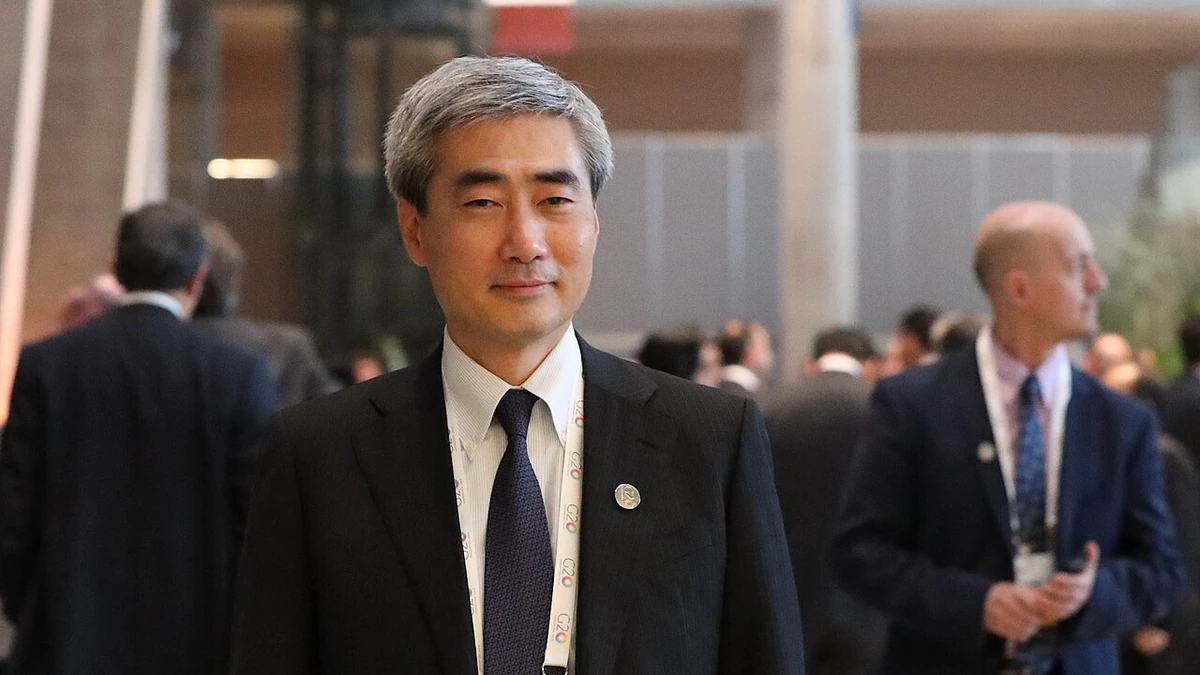
Bank of Korea Governor Hyun Song Shin says the central bank is testing an international network for won payments ahead of a planned January 2027 launch, as South Korea seeks to make its currency easier to use outside the country.
Speaking at the Group of Thirty international banking seminar in Bangkok on Saturday, October 17, Shin described a system that would allow payments in Korean won between overseas locations without requiring the customer to hold an account at a South Korean bank. His comments were reported by South Korean news organizations including Yonhap and Newsis.
The remarks do not mark the start of a new pilot. The Bank of Korea began testing its cross-border settlement network on September 21, after months of preparation. Shin’s announcement brings attention to the next stage: opening the infrastructure more broadly once the pilot has been assessed.
Four Korean banks are taking part in the pilot
In its September 21 notice, the central bank announced trial operations under the name Bank of Korea Won International Wire Network, also known as BOK-Wire Int. The initial participants are KB Kookmin Bank, Woori Bank, Hana Bank and Shinhan Bank. Foreign banks are expected to be added when the service moves into regular operation.
The network is designed for cross-border won settlement through registered foreign institutions for KRW business, known as RFI-Ks. An eligible foreign investor could use a won account maintained with such an institution abroad rather than opening a separate account at a financial institution in South Korea. That is a change in how overseas clients reach settlement infrastructure, not a promise that every overseas bank or retail customer will immediately have access.
According to reporting on the September pilot, two participating domestic institutions carried out an initial trial payment of approximately 1.4 billion won soon after the network began operating. That test showed a transfer could be processed through the system. It did not establish how much business the service will attract after launch, when overseas institutions are added.
Under the planned schedule, the network operates for 24-hour periods on business days, beginning at 9 a.m. Korean time and extending to 9 a.m. the following day. Weekends and public holidays are excluded. This is intended to make won settlement accessible during the working hours of financial centers such as London and New York, which do not align neatly with banking hours in Seoul.
Trading a currency and settling a payment in that currency are related but separate steps. An investor may agree to buy or sell won while a foreign market is open, yet still need the banking system to deliver the funds. The international network is intended to reduce that mismatch for eligible institutions.
Shin puts the emphasis on central-bank money
At the Bangkok discussion, Shin stressed what central bankers call the singleness of money: a unit of won should retain the same value regardless of which bank handles the payment. He argued that settlement in central-bank money is important for maintaining that principle when payments move across borders. Newsis also reported his view that regulatory changes, rather than the underlying technology, had been a central obstacle to the project.
In a March 2026 monetary policy report, the Bank of Korea laid out a design using real-time gross settlement, or RTGS. Under that method, qualifying payments are processed individually rather than left to be netted against other obligations later. The bank said this design was intended to limit credit risk in the settlement process, and identified the ISO 20022 financial-messaging standard as part of the planned infrastructure.
Settling in claims on the central bank means banks do not have to rely exclusively on another commercial bank’s promise to pay. It does not mean every overseas transfer becomes instant or free, and it does not remove exchange-rate risk, eligibility rules or other legal requirements. The project is primarily a wholesale payment-system reform.
Shin placed the shift in a longer policy context, saying that South Korea and other economies had been cautious about opening financial systems after the 1997 Asian financial crisis. His argument was that the constraints on international payments should now be reconsidered, while preserving the safeguards needed for financial stability.
The January target follows a broader opening of won trading
South Korea has already extended the hours during which the won can be traded. The Ministry of Finance and Economy confirmed the start of 24-hour foreign-exchange trading on July 6, making it possible for market participants to conduct won trades across more international time zones. In that announcement, the ministry described offshore won settlement as another reform scheduled for full implementation in January 2027.
For traders, the payment network is meant to support that extended trading schedule. Otherwise, foreign investors would have more hours to agree on currency trades without a corresponding improvement in the hours available to complete the won leg of those payments. The distinction is particularly relevant to institutions that need to move funds around securities purchases, sales and other cross-border investment activity.
The two reforms form part of South Korea’s effort to improve international access to its capital markets. The government released a foreign-exchange and capital-market roadmap in January with the goal of meeting the accessibility standards associated with MSCI developed-market classification. The Bank of Korea has separately connected improved won settlement access with that effort and with growing foreign participation in Korean financial assets.
More accessible payment infrastructure can reduce an operational hurdle for international investors, but it does not by itself ensure a change in MSCI classification or guarantee additional investment flows. Those outcomes depend on the broader market-access framework and on decisions made outside the central bank. The practical early test will be whether eligible foreign institutions can settle won reliably at times that match their normal business.
A complete public roster of foreign institutions that will use the network after the pilot has not been announced, nor has the potential scale of demand been established. January 2027 remains the stated launch target. Moving beyond the four-bank trial to routine offshore participation will be the next concrete step for the project.
More from Banking
Latest News
View all news- Anthropic Co-Founder Cites Scenario of $44 Trillion U.S. GDP by 2030 as AI Advances
- Worldpay Reports and Resolves U.S. Payment Authorization and Apple Pay Disruptions
- Japan Says Two-Year Food-Tax Cut Will Be Funded Without Deficit Bonds
- Australia Reports 41 Days of Petrol Supply and 33 Days of Diesel in October 17 Update
- Switzerland Commits CHF 40 Million to IMF Capacity-Building Work Through 2030
