
GE Aerospace Raises 2026 Outlook as Third-Quarter Orders Jump 49%
GE Aerospace lifted its annual profit, revenue and cash-flow forecasts after posting $19 billion in third-quarter orders, led by commercial engines and services.
Our editorial standards
MarketReview publishes clear, independently produced financial information using reliable sources and transparent editorial standards.
Read our Editorial Policy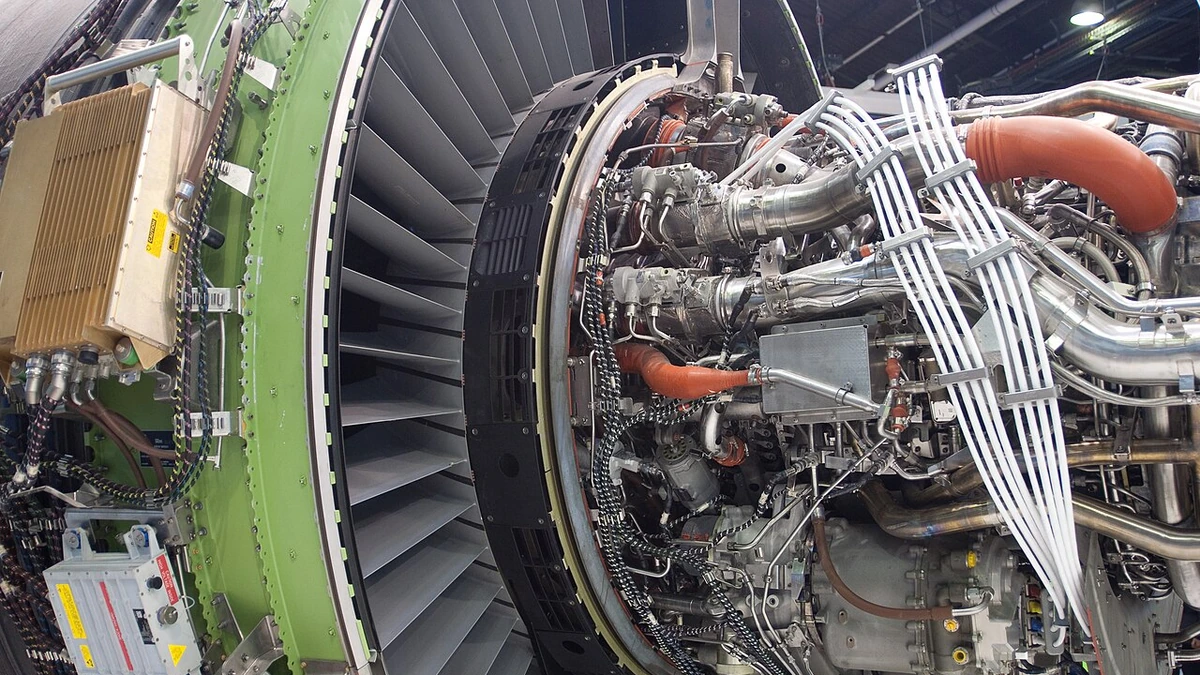
GE Aerospace raised its 2026 financial outlook after third-quarter orders jumped 49% to $19.0 billion, underscoring continued demand for aircraft engines and maintenance work. The aerospace manufacturer now expects adjusted earnings of $8.00 to $8.10 a share for the full year, up from its previous forecast of $7.65 to $7.85. The increase also covers expected revenue growth, operating profit and free cash flow.
Adjusted revenue climbed 18% to $13.3 billion in the three months ended September 30, and adjusted operating profit rose 30% to approximately $3.0 billion. Adjusted earnings were $2.25 a share, up 36% from $1.66 a year earlier. On a generally accepted accounting principles basis, total revenue increased 16% to $14.1 billion, while profit rose 12% to $2.8 billion. These figures use different accounting measures, so the adjusted and reported totals should not be treated as interchangeable.
Orders were the standout figure in GE Aerospace’s October 20 earnings release, rising much faster than current sales. Commercial Engines & Services accounted for most of the bookings, although the defense business expanded as well. New orders represent customer demand to be fulfilled or serviced over time; they are not revenue already earned. The pace at which GE converts that demand into deliveries and repairs remains central to its outlook.
Higher Earnings and Cash-Flow Targets for 2026
The updated guidance is broader than a single earnings-per-share increase. GE now projects adjusted revenue growth of approximately 19% to 20% in 2026, compared with its earlier expectation of growth in the high teens. Adjusted operating profit is expected to reach $10.9 billion to $11.0 billion, up from $10.55 billion to $10.75 billion. The company also lifted its free-cash-flow forecast to $9.1 billion to $9.4 billion from $8.9 billion to $9.2 billion. These are management forecasts, not results already achieved.
The new annual EPS range follows nine months in which adjusted earnings reached $6.13 a share, compared with $4.80 in the year-earlier period. Subtracting that year-to-date result from the full-year target implies roughly $1.87 to $1.97 a share for the fourth quarter if GE meets its updated range. That is an arithmetic implication of the guidance, rather than a separate fourth-quarter EPS forecast announced by management.
Year-to-date adjusted revenue reached $37.5 billion, up 23% from the same period of 2025. GE generated $6.7 billion in free cash flow over the first nine months, an increase of 13%. Those accumulated results provide context for the higher annual cash target despite a weaker free-cash-flow comparison in the September quarter itself.
Management based its revision on performance so far this year and expectations for the remaining quarter. The order book provides visibility into work that customers want, but converting bookings into sales depends on delivery schedules and service capacity. That distinction is particularly relevant for new engines whose shipments and revenue recognition can occur in different reporting periods.
Commercial Engine Orders and Maintenance Demand Lead Growth
Commercial Engines & Services generated $15.3 billion in orders, a 58% increase from the third quarter of 2025. Revenue in the segment grew 21% to $10.3 billion, while operating profit increased 21% to $2.9 billion. Its 27.9% operating margin was 10 basis points lower, with business mix and inflation partly offsetting higher service volume and pricing.
Service revenue rose 17%, supported by demand for maintenance work and replacement parts. Revenue from internal shop visits increased 12%, including growth of more than 40% for LEAP within that measure, according to GE. Spare-parts sales grew more than 20%. An installed fleet of aircraft engines creates recurring maintenance requirements after the original sale, making service activity an important revenue stream alongside new equipment deliveries.
Equipment revenue grew 38% as total engine deliveries rose 8%. GE reported 5% growth in LEAP deliveries and growth in GEnx activity. It also shipped GE9X engines, but said revenue from those shipments will be recognized after midseal certification. This makes the distinction between physical deliveries and recognized sales relevant to the quarter: an engine can leave the factory before its related revenue appears in the results.
GE cited commitments for more than 1,800 engines announced around the Farnborough International Airshow, including an agreement with IndiGo covering more than 1,000 LEAP-1A engines. An October agreement with Turkish Airlines involves more than 300 LEAP-1B engines, together with a long-term service agreement covering the airline’s LEAP-1B fleet of more than 600 engines. These commitments demonstrate prospective demand, rather than sales immediately recorded in the third quarter.
Looking into 2027, GE expects commercial-services revenue growth in the low double digits, supported in management’s view by a commercial-services backlog exceeding $170 billion. For 2026, the company now forecasts low-20s percentage revenue growth across the broader commercial segment, compared with its previous outlook of approximately 20%. Its operating-profit forecast for that segment increased to $10.5 billion to $10.6 billion from $10.25 billion to $10.35 billion.
Quarterly Cash Flow and Production Timelines Remain in Focus
Strong orders did not translate into equally strong cash generation during the quarter. Cash from operating activities fell 14% to $2.2 billion, and free cash flow declined 14% to about $2.0 billion. That three-month drop contrasts with the 13% rise in free cash flow for the first nine months. GE raised its full-year cash-flow forecast despite the latest quarterly decline, emphasizing the importance of separating the quarter’s performance from the cumulative annual figures.
Profitability also moved differently depending on the accounting basis. Reported profit margin slipped 80 basis points to 19.9%, whereas adjusted operating margin increased 220 basis points to 22.5%. GE presents adjusted measures to help compare ongoing operations, but they do not replace its GAAP results. The company’s earnings materials include reconciliations of those measures, allowing both the adjusted improvement and the narrower reported margin to be assessed.
Defense & Propulsion Technologies supplied a second source of growth, though at a slower pace than the commercial business. Orders rose 18% to $4.3 billion, revenue grew 7% to $3.5 billion and operating profit improved 8% to $475 million. GE attributed the higher profit to increased volume and pricing, partly offset by business mix and inflation. It maintained the segment’s 2026 outlook for low-double-digit revenue growth and operating profit of $1.6 billion to $1.7 billion.
Meeting customer demand also depends on manufacturing capacity. GE said material input from priority suppliers rose by double digits from a year earlier. It has agreed to acquire Consolidated Precision Products to expand access to critical castings used across commercial and defense engines; the earnings release described an agreement, not a completed acquisition. GE also cited annual research and development spending of more than $3 billion as it works on existing engines and future propulsion technologies.
One near-term milestone is the GE9X midseal certification, which determines when the company can recognize revenue from engines already delivered in the quarter. In its October investor update, GE said it was working toward certification by the end of 2026. Progress on that approval and on filling engine and maintenance orders will affect how the stronger demand translates into reported results in the final quarter.
More from Investing


Latest News
View all news- Pending U.S. Home Sales Drop 7.3% in September as All Four Regions Decline
- U.S. Housing Starts Fall 5.2% in September to 1.22 Million Annual Rate
- Philadelphia Fed Survey Shows Improving Service-Sector Activity but Persistent Cost Pressures
- NCUA Proposes Easing Three Credit Union Rules, Including Investment Reserve Requirements
- Instacart Agrees to $5 Million Settlement Over U.S. Hiring Discrimination Allegations
