Atlanta Fed Survey Puts Businesses’ Year-Ahead Inflation Expectations at 2.3%
Businesses expect slower growth in their own unit costs, even as the Atlanta Fed survey shows actual costs rising 2.6% over the past year.
Our editorial standards
MarketReview publishes clear, independently produced financial information using reliable sources and transparent editorial standards.
Read our Editorial Policy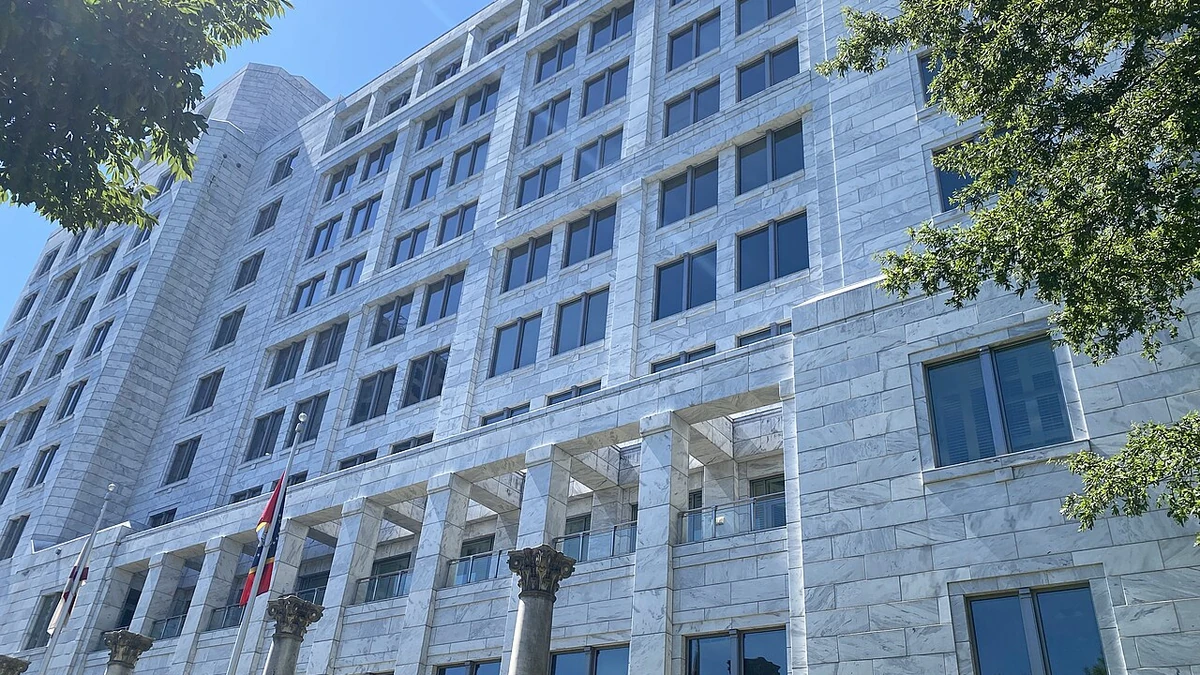
Businesses surveyed by the Federal Reserve Bank of Atlanta expect their unit costs to rise 2.3% over the next 12 months, down from 2.4% in September. The reading, published Wednesday, October 21, offers a modest easing in firms’ outlook for their own operating costs, even though those costs have continued to increase over the past year.
The October Business Inflation Expectations survey also found that respondents reported average unit-cost growth of 2.6% over the preceding 12 months, unchanged from September. The distinction between costs already incurred and those expected ahead is central to the release: executives anticipate somewhat slower increases, but they are not reporting a decline in the level of costs.
Cost expectations remain above their pre-pandemic norm
According to the Atlanta Fed’s October monthly report, the year-ahead estimate is well below the 3.8% peak reached in April 2022. It nevertheless remains above the 2.0% average recorded from January 2017 through December 2019, before the pandemic disrupted supply chains and business operations. October’s 2.3% reading also matches the level published for October 2025.
The latest move was small and does not establish a sustained downward trend. Expectations registered 2.2% in August before rising to 2.4% in September, then pulling back this month. The October report also says uncertainty about firms’ year-ahead unit costs has increased since a low of 1.9% in February. A lower central forecast therefore should not be taken to mean businesses have become more certain about the path of their expenses.
The survey asks business decision-makers to assess changes in costs at their own firms, including the costs associated with producing or delivering a unit of goods or services. Participants assign probabilities to different potential outcomes for the next year rather than simply choosing a single forecast. The Atlanta Fed uses those responses to track expectations and the uncertainty surrounding them.
That makes the 2.3% figure different from the widely followed Consumer Price Index or the personal consumption expenditures price index. Those indicators measure prices paid for goods and services; this survey focuses on costs faced by firms. The Federal Reserve’s longer-run 2% inflation objective applies to PCE inflation, not to the business survey’s unit-cost expectations. The numbers can illuminate different aspects of inflation pressure without being directly interchangeable.
Survey participants are executives and managers at firms in the Federal Reserve’s Sixth District, which includes much of the southeastern United States. Respondents describe the conditions at their own companies, so the findings provide an additional perspective on business behavior rather than a comprehensive national price index. The question is useful precisely because firms make staffing, purchasing and pricing decisions based partly on what they think future costs will be.
Sales and margins show an uneven business environment
The October results suggest that the operating backdrop cannot be summarized by the slight drop in expected cost inflation. The Atlanta Fed reported improvements in assessments of current sales levels and profit margins relative to what firms consider normal conditions. Those measures are based on respondents’ own benchmarks, however, and an improvement does not necessarily mean activity or margins have returned to normal.
A separate quarterly question pointed to softer sales conditions overall compared with July 2026. The bank said sales levels at small firms were unchanged, while its measures for midsize and large businesses improved by 1.2 and 2.3 percentage points, respectively. The differences underscore why an aggregate reading is not a description of every company’s experience: business conditions vary by size, and the survey contains both monthly assessments and quarterly measures.
Other Federal Reserve reporting points to some of the pressures behind that mixed picture. In the October Beige Book account for the Atlanta district, contacts described moderate increases in nonlabor costs, with diesel prices lifting transportation expenses and some construction inputs becoming more expensive. Retailers, meanwhile, reported limited room to raise their own prices. These are qualitative accounts from a separate Federal Reserve reporting exercise, not proof of what caused the latest change in the inflation-expectations survey.
For a company, slower expected unit-cost growth can ease pressure on budgets without reversing previous increases. What happens to profits will also depend on productivity, sales volumes and the prices customers are willing to pay. Improved current assessments alongside weaker sales relative to July offer little basis for a single sweeping conclusion about corporate margins.
Employee turnover remains another operating expense
October’s special questions examined employee turnover and the costs businesses associate with replacing workers. Most respondents said turnover had changed little over the previous 12 months. Smaller firms reported the most stable experience, while medium-sized firms saw a modest decline and large firms a slight increase in turnover, according to the survey’s breakdown.
More than half of firms characterized employee turnover as moderately or significantly costly, taking into account recruitment, hiring, training and lost productivity. Medium and large businesses were more likely than smaller companies to describe turnover as a substantial cost. Those results help explain why personnel changes can affect budgets even when a company’s head count is broadly stable, although the survey does not isolate turnover’s contribution to the overall 2.3% cost forecast.
The report said average monthly employee turnover has been around 7% since mid-2025. Firms collectively anticipate that rate declining by roughly two percentage points to 5.6% over the coming year. The Atlanta Fed cautioned that earlier turnover forecasts have not proved particularly reliable, making the projection a statement of business expectations rather than an established improvement in labor conditions.
Wage and benefit pressures also featured in the district’s October Beige Book. Most contacts described wage increases of 2% to 3% annually, while some reported rising employer-provided insurance and benefit costs. Such reports help provide a wider picture of what businesses are managing, but they should not be used to convert the unit-cost survey into a prediction of employee pay or consumer inflation.
The next scheduled Business Inflation Expectations release is November 18. That update will show whether October’s decline in expected unit-cost growth persists, reverses or remains within the modest month-to-month changes seen recently.
More News


Latest News
View all news- BILL Agrees to $6 Billion Take-Private Acquisition Led by TPG, With Corpay Taking Minority Stake
- South Korea Readies Stock Market Stabilization Fund After Emergency Meeting
- Nintendo’s $50 Switch 2 Bundle Discount Begins at U.S. Retailers
- U.S. Rail Exemption Takes Effect for Nearly 60 Miles of Pennsylvania Rail Lines
- Qatar’s Inward Foreign Investment Stock Rises 5.2% to QAR 180.6 Billion