
German Business Confidence Improves in October as Manufacturing Expectations Recover
Factories reported a better flow of orders and stronger production plans, but Germany's current business conditions and service-sector sentiment weakened.
Our editorial standards
MarketReview publishes clear, independently produced financial information using reliable sources and transparent editorial standards.
Read our Editorial Policy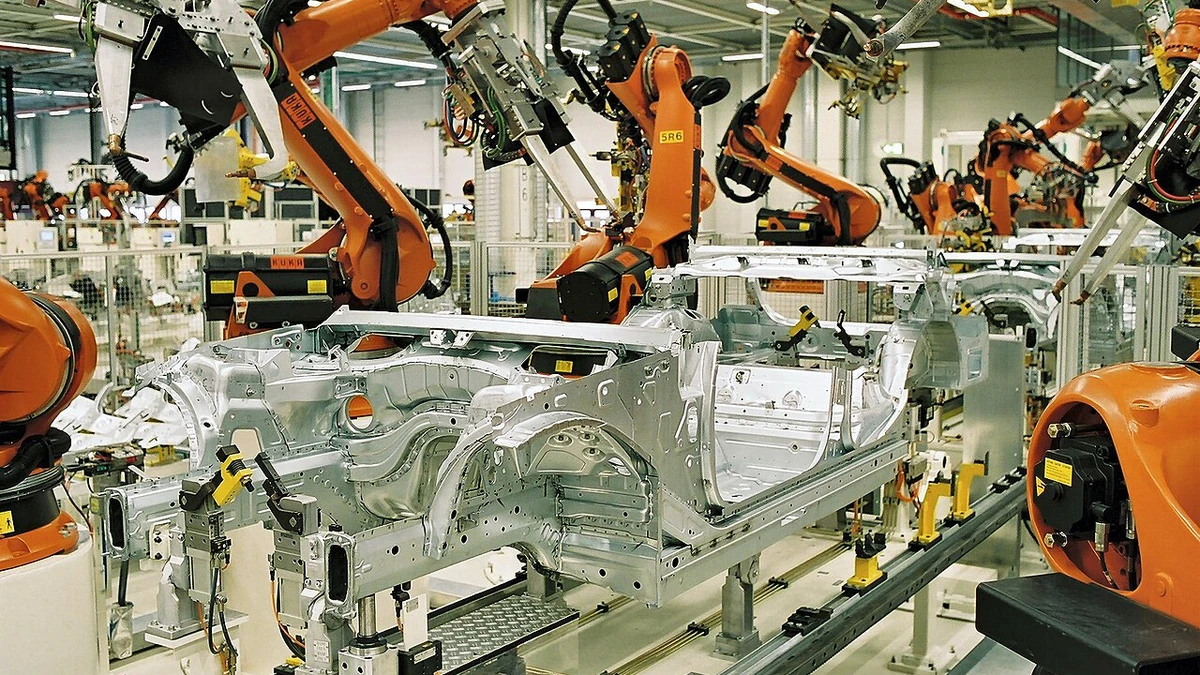
German business confidence improved slightly in October as manufacturing firms grew more optimistic about demand and their production plans, giving Germany’s recovery a stronger industrial component. The ifo Business Climate Index rose to 90.2 points from 89.9 in September, the Munich-based research institute reported on Monday. The headline gain was small, but the shift inside the factory sector was much larger.
Companies’ expectations for the next six months brightened even as assessments of present business conditions deteriorated. The national expectations index climbed to 91.6 from 90.4, while the current-situation index fell to 88.8 from 89.5. That distinction is important: the survey signals greater confidence about future activity without showing that conditions across the economy have already improved.
October marked the sixth consecutive monthly rise in the headline index, which stood at 84.7 in April. The ifo Institute’s October release attributes the latest improvement to expectations rather than current trading conditions. Its survey draws on roughly 9,000 business responses each month, covering manufacturing, services, trade and construction. Respondents report how business is going now and how they expect it to develop over the next six months.
Manufacturing expectations turn positive after a prolonged slump
Factories produced the clearest change. The seasonally adjusted manufacturing business-climate balance moved to positive 1.2 in October from negative 2.7 in September. That is a balance measure for the sector, not the same scale as the headline national index. Manufacturing companies gave substantially better assessments of both their current position and the outlook, with those two underlying indicators returning to positive territory for the first time in more than three years.
Factory respondents also reported an increase in incoming orders and said they planned to raise production. The development matters because it links the improvement in confidence to businesses’ own reports of demand, rather than optimism alone. Still, plans to manufacture more goods are not a record of additional output. Whether stronger order books translate into sustained production will be established by later industrial data.
The October figure is a marked improvement from the negative manufacturing balances earlier in the year. In April the sector stood at minus 15.4, and it was still at minus 4.3 in August. By October the balance had crossed zero. A positive reading means favorable assessments outweigh unfavorable ones after the survey’s aggregation and seasonal adjustment; it does not mean every manufacturer is expanding or that industrial activity has returned to a previous peak.
Differences between sectors also help explain why the overall confidence measure could rise despite a decline in the national assessment of current conditions. Manufacturers were reporting a broad improvement in sentiment at the same time that some of the economy’s other sectors remained under pressure. The result is a more encouraging factory outlook, not a uniform rebound in German business activity.
Services weaken and retailers remain cautious
Services moved in the opposite direction. Their business-climate balance declined to negative 1.2 in October from positive 0.7 in September as firms became less satisfied with current activity. Service-sector expectations nevertheless improved, and the institute singled out information-technology service providers as relatively strong performers. That split between present conditions and future expectations resembles the national pattern, although the sector’s overall confidence measure fell.
Trade offered little support for the headline increase. Its climate balance remained at minus 17.2, with companies judging current business more negatively and anticipating a modest improvement ahead. Wholesalers fared better than retailers, according to ifo. The unchanged reading left trade substantially weaker than manufacturing on the survey’s balance scale, suggesting that the improvement in factory sentiment had not spread evenly to businesses serving domestic demand.
Construction showed a more favorable direction, though from a weak starting point. Its climate balance increased to minus 15.5 from minus 17.0. Companies reported noticeably better current business conditions and somewhat stronger expectations. The figure remained negative, underscoring that an improvement from the previous month is different from a sector-wide assessment of good conditions. Taken together, the sector readings show why the slight national increase should not be mistaken for an acceleration in every part of the economy.
Output, orders and price data offer a more complicated picture
Published industrial data offer a more uneven picture than October’s confidence reading alone. In August, real new manufacturing orders fell 10.6% from the previous month after seasonal and calendar adjustment, while industry-wide production rose 2.0%. Those figures, included in the Federal Statistical Office’s manufacturing updates, cover an earlier period than October’s business survey. They measure actual activity rather than how managers feel about the coming months, so the results should not be treated as directly comparable readings.
There were signs of a larger pipeline of unfinished work. Destatis reported that the real stock of manufacturing orders grew 0.5% in August from July and was 10.7% above its level a year earlier on a calendar-adjusted basis. That can provide work for factories even when new monthly orders fluctuate, but it does not guarantee a particular pace of future production. The ifo survey’s October reports of higher incoming orders will need to be tested against subsequent statistical releases.
A separate warning about the recent economy came from the Bundesbank on October 21. In its monthly assessment, the central bank said third-quarter German output probably stagnated after a stronger first half. It cited temporary disruptions from low Rhine water levels, pressure on manufacturing and high energy costs, among other factors. That was the Bundesbank’s assessment ahead of official third-quarter results, not a confirmed GDP outcome. It also concerns an earlier period than the six-month expectations expressed in the ifo poll.
Higher prices complicate the factory outlook. Destatis reported that prices for industrial products sold domestically increased 6.7% in September from a year earlier and 1.9% from August. Energy producer prices were 14.9% higher than a year before. Those are measures of producers’ selling prices, not a direct measure of every manufacturer’s input costs or profit margins, but they illustrate the inflationary environment in which firms are planning output and evaluating demand.
Timing is central to interpreting the October survey. The ifo report captures business judgments near the end of the month and offers an early signal of future activity. Industrial orders, factory production and national output figures provide a check on those intentions, typically with a delay. A sustained improvement would require the better factory outlook to show up in those hard measures without a corresponding deterioration elsewhere in the economy.
ifo plans to release its next Business Climate survey on November 24. It will show whether the October manufacturing improvement persists and whether the weaker current assessments in services and trade begin to recover.
More News
Latest News
View all news- Verizon Raises 2026 Earnings Outlook as Postpaid Phone Adds Reach 406,000
- Strive Launches $1 Billion Preferred-Stock Sales Program With Bitcoin Among Planned Uses
- Treasury Updates Sanctions Reporting Guidance for Banks Handling Blocked and Rejected Payments
- Bank of Hawaii Expands Share Buyback Program by $200 Million as Quarterly Profit Rises
- Japan Announces ¥250 Billion Climate-Transition Bond Offering for November
