
Bank of Hawaii Expands Share Buyback Program by $200 Million as Quarterly Profit Rises
The bank raised its remaining repurchase capacity to $268.7 million as net interest margin reached 2.82% for the third quarter.
Our editorial standards
MarketReview publishes clear, independently produced financial information using reliable sources and transparent editorial standards.
Read our Editorial Policy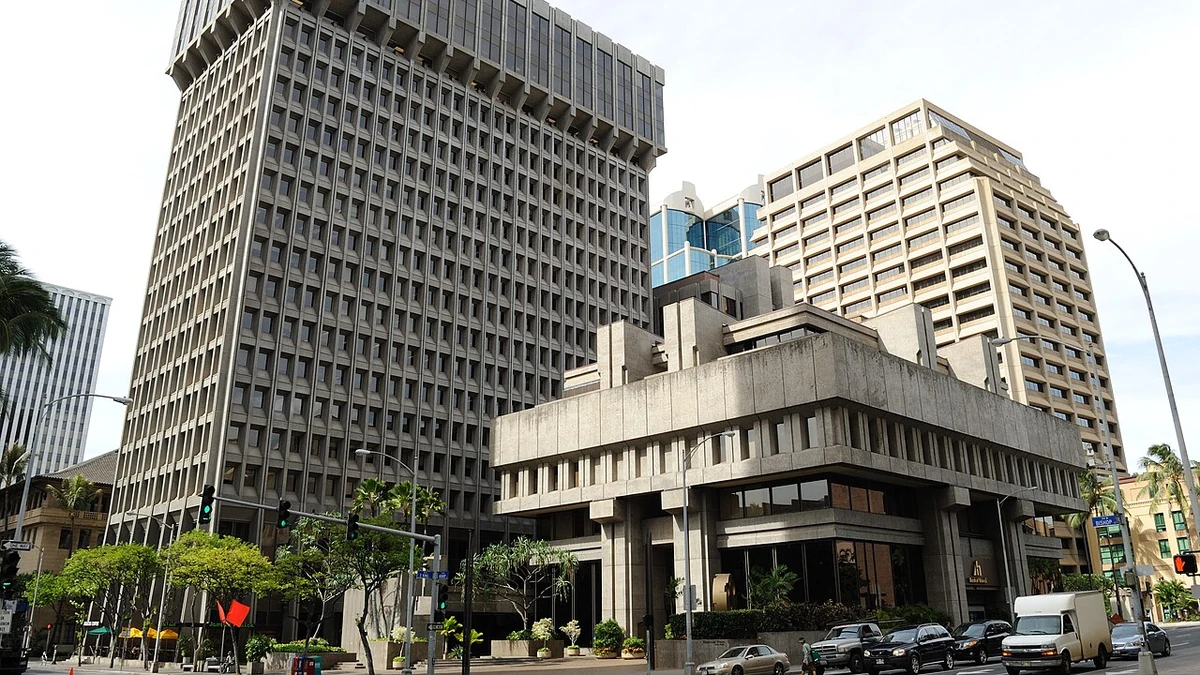
Bank of Hawaii Corporation has added $200 million to its share-repurchase authorization, increasing the amount available for future buybacks to $268.7 million after reporting higher profit for the third quarter of 2026. The board approved the increase after the September quarter ended, rather than as a purchase of shares already completed.
The Honolulu-based lender earned $64.3 million in the three months ended September 30, compared with $63.8 million in the preceding quarter and $53.3 million a year earlier. Diluted earnings per common share reached $1.49, up from $1.47 in the second quarter and $1.20 in the third quarter of 2025.
Interest earnings continued to improve as the bank replaced older, lower-yielding assets with higher-yielding loans and investments. Its net interest margin climbed to 2.82%, marking the tenth consecutive quarterly increase, even as changes in the mix of deposits partly offset the benefit from higher asset yields.
Buyback Authorization Climbs to $268.7 Million
Bank of Hawaii had $68.7 million in unused repurchase authority on September 30. The additional $200 million raised that remaining capacity to $268.7 million after quarter-end, according to the bank’s October 26 financial results. The increase expands what the board permits management to repurchase; it does not represent $200 million in shares bought during the quarter.
During the third quarter, the bank repurchased about 256,000 common shares for $20.2 million. That followed the purchase of 216,000 shares at a cost of $17.0 million in the second quarter, bringing repurchases across those two quarters to $37.2 million. The latest expansion gives the existing program more room to continue after those purchases.
Authorization and execution are separate decisions. The balance describes how much the bank is allowed to spend under its program, not a commitment to buy that dollar amount on a fixed timetable. The October 26 release did not specify when the newly authorized capacity would be used, leaving the pace of future purchases dependent on subsequent decisions and conditions.
Buybacks can reduce the number of shares outstanding and affect per-share measures, but the effect depends on the actual number and price of shares purchased, along with any new shares issued. The immediate confirmed change is to the bank's repurchase capacity, not a completed reduction in its share count equal to the full authorization.
Higher Interest Income Drives the Profit Gain
Net interest income reached $156.1 million in the third quarter, up 1.6% from $153.6 million in the second quarter and above the $136.7 million reported a year earlier. Net interest margin, a measure of net interest income relative to earning assets, increased four basis points from 2.78% in the June quarter. It stood at 2.46% in the year-earlier period.
The average yield on interest-earning assets rose five basis points from the previous quarter to 4.13%. Bank of Hawaii attributed much of the improvement to fixed-rate assets maturing or paying down and the proceeds being reinvested at higher prevailing rates. The average yield on loans and leases increased three basis points to 4.82%, while loans originated during the quarter carried a weighted average rate of 5.89%.
Deposits did not become uniformly cheaper. The average rate across all deposits was unchanged at 1.27%, and the bank reported a shift away from noninterest-bearing and very low-rate accounts toward deposits carrying higher rates. That shift absorbed some of the benefit from asset repricing, although the net result was another quarterly increase in margin.
Other revenue and costs present a less uniform picture. Noninterest income slipped 1.4% from the second quarter to $42.7 million, with lower gains on sales of leased assets and the timing of trust-related tax services revenue contributing to the decline. Noninterest expense rose 1.0% to $112.3 million, partly reflecting higher equipment and occupancy costs.
The provision for credit losses fell to approximately $2.8 million from $3.6 million in the preceding quarter, providing some support to earnings. At the same time, the effective tax rate increased to 23.24% from 22.31%. Return on average common equity eased to 15.38% from 15.47%, despite the increase in reported net income and diluted earnings per share.
The profit comparison is considerably stronger over a full year than over a single quarter. Net income increased about 20.5% from the $53.3 million earned in the third quarter of 2025, whereas the rise from the second quarter of 2026 was 0.7%. Those two comparisons help distinguish the longer recovery in interest earnings from the smaller sequential improvement.
Credit Exposure Rises as Deposits Decline
The earnings release also identified a deterioration in one closely watched credit measure. Nonperforming assets increased to $43.4 million at September 30 from $11.5 million at June 30, and their ratio to loans, leases and foreclosed real estate rose to 0.30% from 0.08%. The bank said the increase was mainly attributable to a single commercial mortgage placed on nonaccrual status because of circumstances specific to that borrower.
Management said it did not believe the commercial mortgage reflected broader weakening across the loan portfolio. That is the bank's assessment rather than a determination that the exposure poses no risk. Net loan and lease charge-offs were $3.3 million, or nine basis points of average loans on an annualized basis, slightly below the prior quarter's $3.4 million and ten-basis-point rate.
Lending balances continued to grow even as deposits fell. Loans and leases totaled $14.4 billion at the end of September, up 2.1% from December 31, 2025, with commercial loans rising 3.8% over that period. Total deposits were $20.5 billion, down 3.3% from year-end. Bank of Hawaii linked that reduction chiefly to a planned runoff of public funds and lower commercial deposit balances.
Noninterest-bearing accounts represented 26.5% of total deposits at September 30, compared with 27.2% at the end of 2025. The smaller share of deposits that carry no interest cost shows why the bank's funding mix remains relevant to future margins, even with asset yields increasing. Continued earnings improvement depends in part on how those asset and deposit trends evolve.
Capital levels provide another important context for the larger repurchase authorization. The bank reported a preliminary Tier 1 capital ratio of 14.41% at September 30, down from 14.45% at June 30 and 14.49% at the end of 2025. It attributed the year-to-date decline partly to higher risk-weighted assets and share repurchases, offset in part by retained earnings, and said its capital ratios remained above regulatory well-capitalized minimums.
The board also declared a quarterly cash dividend of $0.70 per common share. The payment is scheduled for December 14, 2026, for shareholders of record at the close of business on November 30.
More from Banking
Latest News
View all news- Verizon Raises 2026 Earnings Outlook as Postpaid Phone Adds Reach 406,000
- India Clears ₹2.12 Lakh Crore in Defence Proposals, With 82% of Procurements Planned From Indian Industry
- Texas Manufacturing Growth Slows in October as New Orders Lose Momentum
- Strive Launches $1 Billion Preferred-Stock Sales Program With Bitcoin Among Planned Uses
- Chicago Fed Index Turns Positive in September, Signaling a Pickup in U.S. Economic Activity
