BLS Releases 2025 Consumer Spending Data After Government Shutdown Disruptions
The agency kept its October 29 release date after missing survey observations prompted statistical adjustments and greater uncertainty in some spending estimates.
Our editorial standards
MarketReview publishes clear, independently produced financial information using reliable sources and transparent editorial standards.
Read our Editorial Policy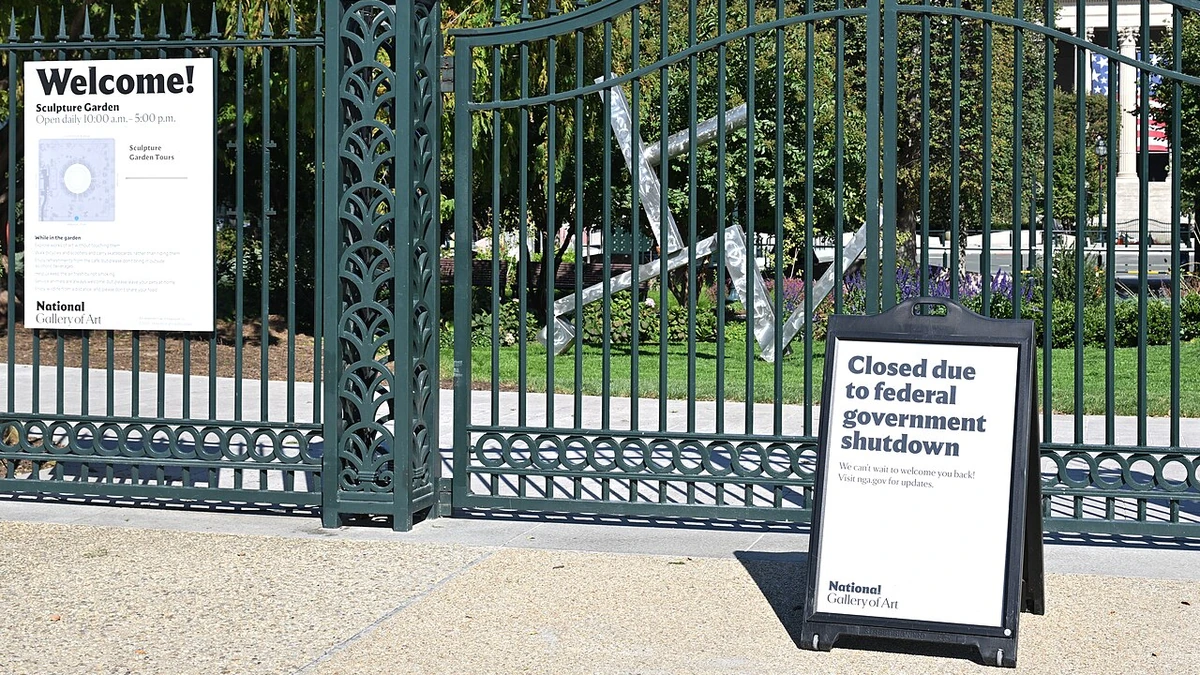
The U.S. Bureau of Labor Statistics moved ahead with its annual report on 2025 consumer expenditures on Thursday, October 29, after a federal government shutdown disrupted the collection of household spending information last year. The scheduled publication depended on statistical adjustments to account for survey work that could not be carried out in October and November 2025.
The shutdown created an unusual problem for one of the government’s principal measures of how Americans spend their money. The Census Bureau, which collects information for BLS, was unable to conduct the Consumer Expenditure Surveys during the interruption. Collection did not resume until December 5, several weeks after federal funding was restored.
BLS said the affected observations would be addressed through survey-weight adjustments rather than a wholesale reconstruction of missing household purchases. In its explanation of the shutdown’s effect on consumer spending statistics, the agency also acknowledged that a smaller sample increases uncertainty in some estimates. The issue is distinct from any claim that the shutdown caused a delay in the annual report: BLS planned to keep the October 29, 2026 release date.
The figures are used to assess spending on housing, food, transportation and other household expenses across different income groups. They also inform future inflation calculations. That makes the data-collection gap relevant beyond the annual survey itself, particularly when interpreting detailed categories with relatively few responses.
Two spending surveys faced different data gaps
The Consumer Expenditure Surveys consist of an Interview Survey and a Diary Survey. The interview component asks households to recall major or recurring purchases over a three-month period. The diary component records smaller and more frequent expenses during two consecutive weeks. Together, they provide a picture of spending that neither survey could capture on its own.
Because the Interview Survey asks about earlier months, some spending during the shutdown was still reported after interviewing resumed. A household questioned in December, for example, could report purchases made in September, October and November. But the missed interviews reduced the number of reports available for other reference months. BLS estimated that roughly one-third of expected expenditure reports were missing for July and October and about two-thirds for August and September.
The Diary Survey presented a more direct gap. Nobody was collecting the relevant household diaries in October or November, leaving those months without the usual diary observations. Response rates were also unusually low in September because field employees were unable to retrieve some completed diaries once the shutdown began. The resulting shortfall affected both the number of records and the mix of household purchases represented in the sample.
The interruption lasted beyond the period when federal agencies were without full funding. The lapse in appropriations ran from October 1 through November 12, 2025. Funding returned November 13, but the Census Bureau did not restart collection for the expenditure surveys until December 5. Consequently, the statistical problem extended beyond the formal end of the shutdown.
BLS used weighting adjustments to preserve the release schedule
BLS chose to give greater statistical weight to expenditure reports it had collected rather than attempt to estimate each missing household’s purchases individually. The approach seeks to make the available observations represent the months for which field collection was interrupted. It does not create actual records of purchases that were never reported.
For the Interview Survey, the agency’s technical research specified that July and October expenditures would be weighted by a factor of 1.5 and August and September expenditures by a factor of three. Those differences reflect the three-month recall design and the number of interview opportunities lost for each reference month. In the annual Diary Survey estimates, September and December observations received double weight to stand in for the missing October and November collection periods.
Before settling on this method, BLS examined more elaborate ways to account for missing information, including models that would estimate individual consumer-unit spending and models built around patterns in spending categories over time. Officials also sought advice from panels convened through the National Association for Business Economics and the Committee on National Statistics. Both panels emphasized maintaining the publication timetable and limiting the risks that more complicated methods could introduce.
The choice involved a trade-off. Historical simulations suggested that the weighting approach could produce annual spending estimates close to those calculated using complete data. Yet a smaller effective sample generally produces less precise results. BLS said it would flag estimates failing its data-quality thresholds, including cases involving insufficient sample sizes or large standard errors relative to the reported mean.
There is a further limit to what the tests can establish. Simulations using an earlier, complete year offer a way to gauge how an adjustment might perform, but they cannot reveal exactly what the missing 2025 respondents would have reported. BLS has said the true effect of the absent observations cannot be measured without the information that was never collected. The adjustments therefore reduce the gap; they do not remove uncertainty from every spending estimate.
The gaps extend to inflation measures and comparison tables
Consumer expenditure data help determine how much weight different purchases receive in the Consumer Price Index. The CPI measures price changes, whereas the expenditure surveys measure household spending patterns. Updated spending weights help ensure that the price index reflects how consumers allocate their budgets rather than relying indefinitely on an older mix of purchases.
BLS plans to use the 2025 expenditure data in the January 2027 weight update for its CPI-U and CPI-W measures. The agency also uses spending information for the chained CPI-U, which incorporates more frequent changes in purchasing patterns. For that measure, the treatment of missing diary data differs from the annual expenditure estimates: October monthly weights are copied from September and November weights from December.
The effects are not confined to the inflation indexes. BLS said it would not publish the customary 2024–2025 two-year expenditure tables by geographic area and certain cross-tabulations alongside the 2025 annual data. The agency is changing the way it estimates standard errors, moving to Fay’s method, a variation of balanced repeated replication. Because the variance methods differ between the two years, the normal two-year tables will not be produced.
Another distinction matters for researchers who work directly with household-level files. BLS planned to release the 2025 public-use microdata without applying the same weight corrections included in published annual estimates. Users attempting to reproduce the headline expenditure tables from those files must make the appropriate adjustments themselves. Treating the unadjusted public-use data as if they matched the published estimates could lead to misleading comparisons.
As a benchmark, the previous annual BLS report found average expenditures of $78,535 per consumer unit in 2024, up 1.8% from 2023. That is a 2024 figure, not an estimate of 2025 spending. The new survey is intended to extend the annual record, but comparisons between individual spending categories also need to account for the wider uncertainty created by the missing observations.
The next scheduled statistical milestone linked to the disruption is November 10, 2026, when BLS plans to publish final chained CPI-U estimates for October through December 2025. The January 2027 CPI weight update, expected in February, will provide another test of how the adjusted expenditure data feed into the government’s inflation measures.
More News


Latest News
View all news- BILL Agrees to $6 Billion Take-Private Acquisition Led by TPG, With Corpay Taking Minority Stake
- South Korea Readies Stock Market Stabilization Fund After Emergency Meeting
- Nintendo’s $50 Switch 2 Bundle Discount Begins at U.S. Retailers
- U.S. Rail Exemption Takes Effect for Nearly 60 Miles of Pennsylvania Rail Lines
- Qatar’s Inward Foreign Investment Stock Rises 5.2% to QAR 180.6 Billion