
NRG Energy Agrees to Sell Six Natural Gas Power Plants to LS Power for $4 Billion
The 4.9-gigawatt sale would leave NRG with 20 GW of generation capacity and support larger buybacks and debt reduction, pending regulatory approval.
Our editorial standards
MarketReview publishes clear, independently produced financial information using reliable sources and transparent editorial standards.
Read our Editorial Policy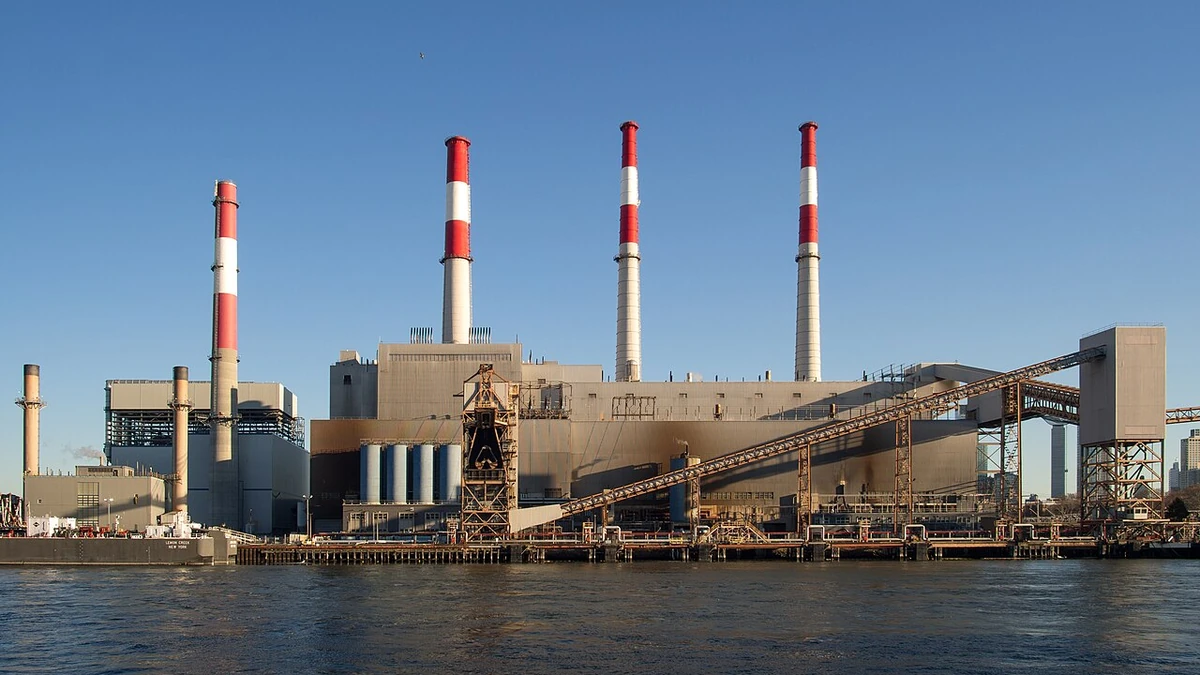
NRG Energy has agreed to sell six natural gas-fired power generation facilities to LS Power for $4 billion in cash, a planned sale that would reduce its power plant portfolio while providing additional money for share repurchases and debt repayment. The facilities have a total generating capacity of 4.9 gigawatts across the Northeast and Texas.
The agreement, announced Monday, November 9, is subject to working-capital and other closing adjustments. NRG expects the sale to close in the second quarter of 2027, provided it receives the necessary regulatory approvals. Until then, the price and the company’s planned use of the proceeds remain subject to the conditions set out in its announcement.
Six facilities across three electricity markets
The assets identified by NRG are Ravenswood in New York, Ocean State Power in Rhode Island, Wallingford in Connecticut, and three Texas facilities: Jack County, Johnson County and R.W. Miller. Together they operate in three regional electricity markets: NYISO in New York, ISO New England and ERCOT in Texas. Their 4.9 GW figure describes generating capacity, rather than the amount of electricity they produce over a given period.
LS Power described the Jack County, Johnson County and Ocean State Power facilities as combined-cycle gas plants, which use heat from gas turbines to generate additional electricity. Wallingford is a simple-cycle facility, while the Ravenswood and R.W. Miller sites include different types of generating units. That mix gives the buyer power plants serving markets with distinct operating conditions and electricity demand patterns.
NRG says it would retain approximately 20 GW of generation capacity after the sale, split evenly between ERCOT and the PJM electricity market in the eastern United States. Its current fleet is approximately 25 GW, meaning the proposed divestiture represents close to one-fifth of its generation capacity. The company is not exiting natural gas power generation; it is concentrating its remaining fleet in the two markets it has identified as central to its operating strategy.
The retained portfolio also includes the entire PJM generation business and CPower, a commercial and industrial demand-response business, that NRG acquired from LS Power earlier this year. Separately, NRG expects another 1.1 GW to become operational in ERCOT by 2028 through its remaining two Texas Energy Fund projects. Those future additions are planned projects, not capacity included in the proposed six-facility sale.
A larger buyback plan and more debt repayment
NRG is presenting the sale principally as a capital-allocation decision. The $4 billion purchase price equates to an estimated 8.0 times the facilities’ adjusted earnings before interest, taxes, depreciation and amortization for 2027, according to the company. The multiple is based on NRG’s forecast for that year, not on audited earnings already achieved by the plants. The final cash proceeds could also change because of closing adjustments.
The company had already laid out a base plan for 2027 that called for $1 billion of share repurchases and $1 billion of debt reduction, as well as an 8% increase in the annual common dividend to $2.05 per share. The proposed asset sale would allow NRG to go further, particularly on debt repayment, without abandoning its remaining generation business.
Under its expanded plan, NRG expects total share repurchases of $3 billion across 2026 and 2027. That figure includes an additional $1 billion of buybacks it expects to begin before the end of the fourth quarter of 2026. It is a two-year total, rather than a promise to spend $3 billion of the sale price on stock as soon as the facilities change hands. Repurchases will still depend on market conditions, available capital and the company’s credit objectives.
After the sale closes, NRG plans another $2 billion of debt reduction on top of the $1 billion in its 2027 base plan. This would take total planned debt reduction for 2027 to $3 billion. The remaining approximately $1 billion of expected sale proceeds would be held for contracted growth investments or further debt repayment. Those alternatives give management flexibility, but neither use has been presented as a firm commitment to a specific project.
The emphasis on debt comes after NRG completed a much larger acquisition from LS Power in January. NRG reported about $6.0 billion of liquidity at the end of September, down from roughly $9.6 billion at the end of 2025, with the decrease primarily reflecting the funding of that earlier acquisition. Selling part of the fleet offers a route to reducing leverage while keeping significant generation capacity in markets where NRG continues to operate.
LS Power adds gas capacity after its earlier sale to NRG
The buyer is familiar with NRG’s generation business. In January, LS Power completed the sale of about 13 GW of gas-fired generation and its CPower business to NRG, describing the completed purchase at approximately $13 billion. The companies are now on opposite sides of a separate agreement involving six facilities. The new announcement does not itself establish that every asset being sold was part of January’s portfolio purchase.
LS Power says buying operating gas-fired facilities offers a way to add electricity supply without waiting for new plants to be developed and connected to the grid. Its November announcement emphasizes the value of existing, permitted and interconnected assets amid higher power demand. That is the buyer’s stated investment rationale, rather than evidence that the facilities will necessarily operate more often or earn higher margins after a change in ownership.
The company also has a separate proposed acquisition of approximately 4.4 GW of gas generation from Constellation. LS Power says completing both purchases would expand its natural gas fleet from 2.2 GW to about 11.5 GW. That projection depends on the two acquisitions closing; the additional capacity should not be counted as already owned. LS Power also operates power assets using renewable energy and storage technologies, so its gas fleet is only part of its broader generation portfolio.
Regulatory approvals and an earnings forecast that excludes the sale
NRG identified review under the Hart-Scott-Rodino antitrust process, approval from the Federal Energy Regulatory Commission and approval from the New York State Public Service Commission among the requirements for completion. A signed agreement does not mean those permissions have been granted. The second-quarter 2027 closing date is a target, and timing or financial terms could change if the review process or other closing conditions require it.
The proposed sale was announced alongside NRG’s third-quarter earnings. It reported $561 million of net income for the quarter ended September 30, compared with $152 million a year earlier. Adjusted EBITDA rose to $2.01 billion from $1.21 billion. NRG attributed much of the improvement to the generation assets it acquired from LS Power in January, along with higher eastern capacity prices and improved Texas margins, while also noting higher interest and depreciation costs connected to that acquisition.
Crucially, NRG’s initial 2027 financial guidance does not include the expected effects of selling the six plants. Its forecast calls for adjusted EBITDA of $5.5 billion to $6.0 billion and adjusted earnings per share of $8.05 to $10.05. Investors therefore cannot treat those figures as an estimate of the smaller generation business after closing, or assume that debt reduction and buybacks will offset earnings that the sold facilities would otherwise have generated.
NRG expects to update its 2027 financial guidance and capital-allocation plan after the sale is completed. For now, the concrete next steps are the required regulatory reviews and satisfaction of the closing conditions. Those decisions will determine whether the $4 billion sale proceeds and the related debt-reduction plans can be carried out on the announced schedule.
More from Investing


Latest News
View all news- U.S. Wholesale Sales Jump 2.8% in September as Inventories Rise 0.7%
- RBI Injects ₹50,003 Crore Into Banking System Through Four-Day Repo Auction
- USDA Finalizes Rural Mortgage Rule Excluding Agent Commissions From Seller Concession Cap
- SEC Holds Roundtable on AI-Readable Financial Data and Market Risks
- New York Fed Research Finds Major U.S. Monetary-Policy Improvements Came Only in Recent Decades
