U.S. Rail Exemption Takes Effect for Nearly 60 Miles of Pennsylvania Rail Lines
Wilkes-Barre Terminal Railway can move forward with a proposed 59.65-mile acquisition in Luzerne County, but the federal exemption does not confirm the sale has closed.
Our editorial standards
MarketReview publishes clear, independently produced financial information using reliable sources and transparent editorial standards.
Read our Editorial Policy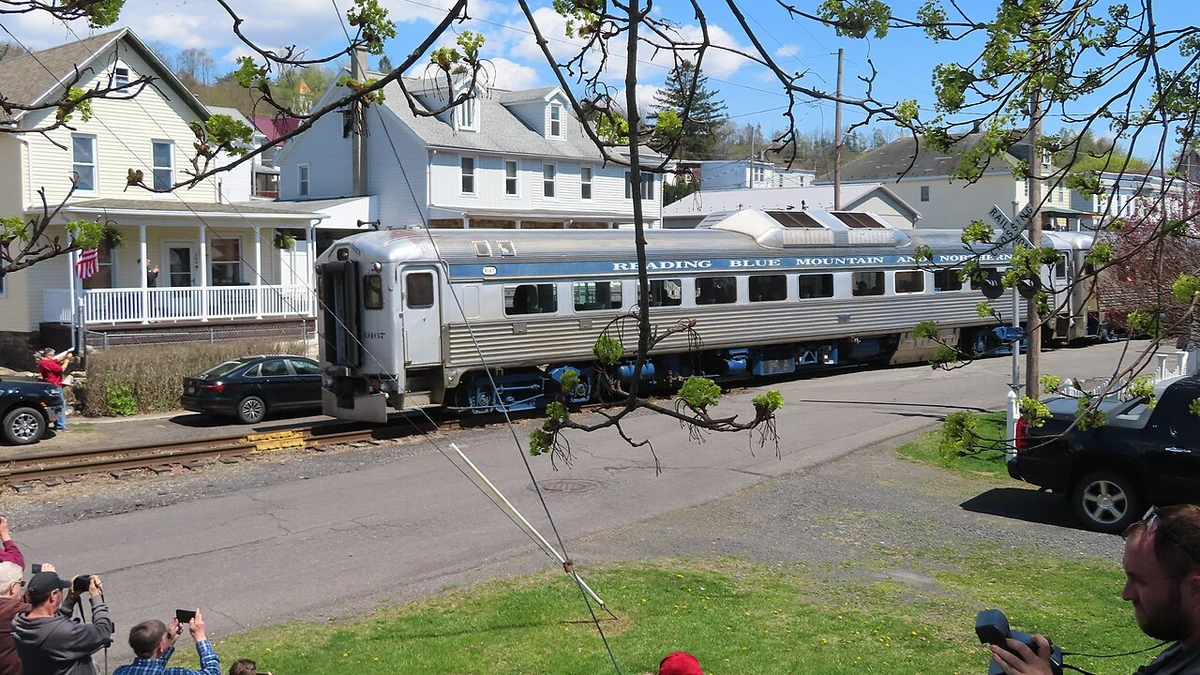
A federal rail exemption allowing Wilkes-Barre Terminal Railway Company to pursue control of approximately 59.65 miles of track in northeastern Pennsylvania reaches its effective date on November 22, opening the earliest permitted window for the proposed acquisition and an associated change of operator. The lines are in Luzerne County and include both active freight routes and segments that are out of service.
The Surface Transportation Board notice does not establish that the sale has closed or that a new railroad has taken over operations. It authorizes a path for the transfer, with Reading Blue Mountain & Northern Railroad positioned to provide local service on the active portions through a separate trackage-rights arrangement.
Ownership would shift across a network of active and inactive lines
Under the revised federal notice, Wilkes-Barre Terminal Railway (WBT), identified as a noncarrier at the time of filing, seeks to acquire the lines from the Luzerne County Redevelopment Authority. It would also obtain operating rights from the authority’s non-operating subsidiary, Luzerne County Rail Corporation. The filing uses the federal exemption procedure under 49 CFR 1150.31.
The 59.65-mile figure describes the proposed network as a whole, not the amount of track that would immediately see trains. Its listed active portions include the Wilkes-Barre Secondary between Ashley and Pittston, the Kingston Industrial Track, the Suscon Industrial Track and connections around Avoca and Duryea. Those links form part of the region’s local freight network and connect industrial tracks with other railroad routes.
Some of the mileage is not in service. The notice separately identifies portions of the West Pittston Running Track, the Nanticoke Industrial Track, the Harry E. Breaker Spur, the Miner’s Mills Industrial Track and the Pettibone Branch as inactive, along with sections of the Dunmore Secondary and Avoca Industrial tracks. Counting these segments in the filing does not mean the buyer has announced plans to reopen them.
WBT told regulators it included out-of-service track because it found no regulatory history showing those segments had been formally abandoned. That distinction matters under rail law: the filing says WBT expects to retain a common-carrier obligation even on the inactive portions, despite considering their return to active service unlikely. The exemption therefore concerns more than the tracks currently used to reach customers.
If the acquisition is completed, WBT would become a Class III rail carrier. Its filing projects that annual revenue from the proposed acquisition would not exceed $5 million and that the company would not qualify as a Class I or Class II railroad. The revenue figure is a regulatory projection, not a disclosed purchase price or evidence of the lines’ current profitability.
Reading Blue Mountain & Northern is set to handle local service
A related change would remove R.J. Corman Railroad Company/Luzerne & Susquehanna Line, LLC as the common-carrier operator on part of the network. The November notice says that company’s existing lease has expired and describes it as the incumbent operator for roughly 41 miles. WBT says it has conferred with R.J. Corman and that the incumbent consents to the proposed change.
WBT plans to give Reading Blue Mountain & Northern (RBMN) local trackage rights so trains can continue serving customers after the current operator’s lease ends. This is a separate operating authority from WBT’s proposed ownership of the larger network. Local trackage rights permit a railroad to operate over specified tracks it does not own, subject to the governing agreement and regulatory authority.
The earlier Surface Transportation Board notice in October authorized RBMN to seek approximately 41.79 miles of local trackage rights over in-service portions of the network. That number should not be confused with the 59.65 miles involved in the acquisition notice. Nor does the arrangement transfer all the listed out-of-service segments into immediate use by RBMN.
The sequence is important. Federal records state that RBMN cannot consummate its trackage-rights authority until WBT has first exercised its own acquisition authority. The arrangement is designed to preserve a local freight operator following the change in control, but the notice alone does not supply a commencement date for RBMN’s service.
The filing also addresses customers directly. WBT certified that it contacted the affected shippers about the planned operator change and served them with the notice. It said the proposed acquisition contains no interchange commitment, meaning the filing does not impose a contractual promise to direct traffic through a particular interchange. That is a distinct issue from the practical connections with other railroads identified in the route descriptions.
Effective date clears a regulatory step, not the closing
November 22 is the earliest date the revised exemption permits the acquisition and operator change to be consummated. The new notice was published on November 6 after WBT supplemented and restated an earlier filing, adding authority to replace the incumbent operator. An October notice had set an earlier effective date for the initial acquisition-only filing, but the subsequent filing establishes the timeline applicable to the expanded request.
The Board set November 13 as the deadline for petitions seeking to stay the revised exemption. Petitions to revoke may be filed at any time, although submitting one does not by itself suspend the exemption. As with other verified-notice exemptions, the authority would be void from the outset if the filing contained false or misleading information.
Those procedural terms should not be mistaken for a report of an active legal challenge. The notice states how objections may be brought; it does not establish that a stay was granted, nor does it document whether the parties completed the sale on the first eligible day. No closing confirmation was identified in the official notices reviewed for this story.
WBT stated that the action qualifies for categorical exclusions from the Surface Transportation Board’s environmental review and historic-preservation reporting requirements. That is a description of the treatment claimed for this regulatory filing, not a finding that future track construction or rehabilitation would require no separate approvals.
For local rail customers, the practical issue is when responsibility for operations passes from R.J. Corman to the incoming arrangement and whether service proceeds without interruption. The exemption sets the earliest lawful date for that handover. Confirmation of the acquisition and the start of RBMN’s local operations would establish when the regulatory plan became an operating change.
More News



Latest News
View all news- BILL Agrees to $6 Billion Take-Private Acquisition Led by TPG, With Corpay Taking Minority Stake
- South Korea Readies Stock Market Stabilization Fund After Emergency Meeting
- Nintendo’s $50 Switch 2 Bundle Discount Begins at U.S. Retailers
- Qatar’s Inward Foreign Investment Stock Rises 5.2% to QAR 180.6 Billion
- Taiwan Expands Insurance Manager Eligibility as 12-Field Rule Takes Effect