UK Government Unveils Financial Literacy Overhaul for Schools in England
Primary pupils will learn everyday money skills, while older students will study inflation, compound interest, scams and mortgages under reforms planned for 2028.
Our editorial standards
MarketReview publishes clear, independently produced financial information using reliable sources and transparent editorial standards.
Read our Editorial Policy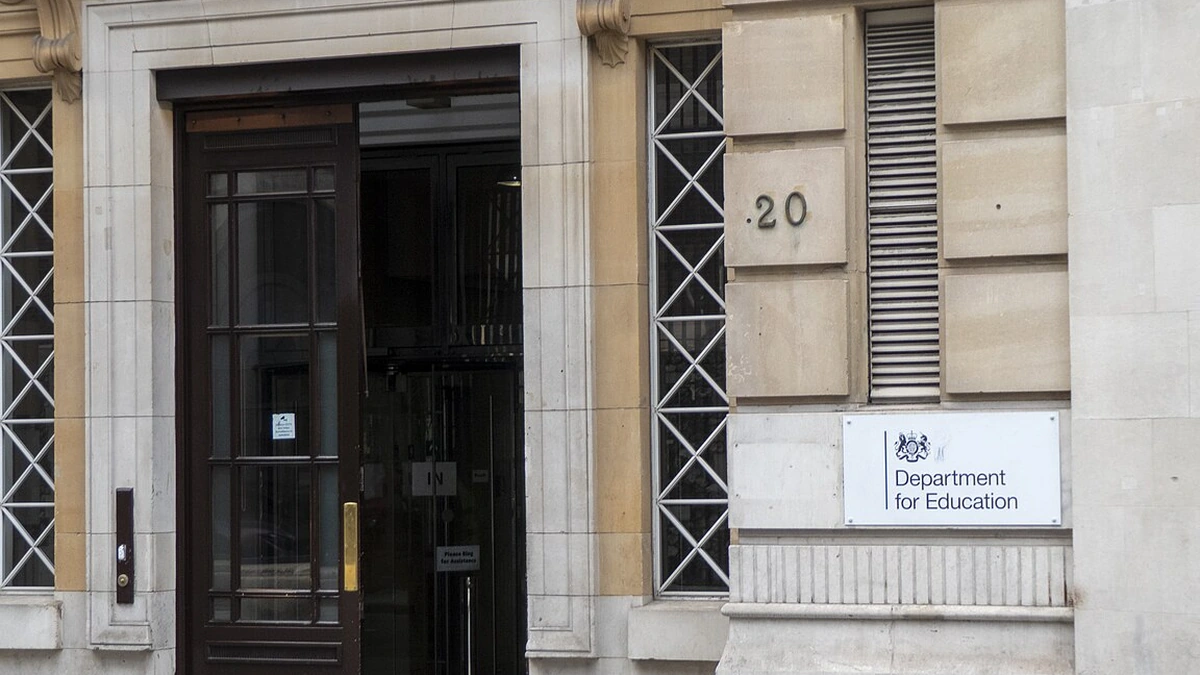
The UK government has outlined plans to strengthen financial education in schools across England, with children set to learn more about everyday spending, saving, borrowing and financial risk. The changes are part of a wider national curriculum overhaul intended to reach classrooms from September 2028.
Primary-school pupils would build a stronger understanding of money and value, while secondary students would examine inflation, compound interest and diversification of risk. Lessons would connect those ideas to decisions such as comparing prices, spotting scams and understanding mortgages, rather than treating money as an occasional example in a maths exercise.
The Department for Education set out the latest proposals on November 22, arguing that children’s financial experiences have changed faster than classroom teaching. The announcement adds detail to a curriculum reform programme first outlined last year. It does not mean the new lessons are already in force.
Government figures cited with the announcement suggest that the gap is substantial. About 71% of children aged 7 to 17 make purchases online, and 67% of that group do so without adult supervision. The department also said only about one-third of children recalled learning about money at school and finding it useful, while 48% of parents believed schools spent too little time on financial management.
From primary-school spending choices to mortgages and financial scams
The proposed approach would start with situations familiar to younger children. Comparing prices, checking whether a discount offers value and understanding what money can buy would give pupils a practical use for arithmetic. Government examples also include working out earnings from a part-time job and seeing how savings can grow over time as children progress through school.
At secondary level, the department wants pupils to work with three central financial concepts: inflation, compound interest and diversification of risk. Inflation helps explain why the same amount of money may buy less over time. Compound interest affects both savings and borrowing, while diversification addresses the danger of relying too heavily on a single investment. These are intended as foundations for informed decisions, not lessons encouraging pupils to buy particular financial products.
The government also plans to connect citizenship teaching more closely with mathematics. That matters because a student can learn to calculate a percentage without necessarily knowing how to interpret an advertised discount or the cost of credit. Understanding a mortgage, for example, requires more than knowing how to multiply an interest rate by a balance. The practical application is the focus of the new proposals.
Changes to mathematics teaching would accompany the money lessons. The Department for Education says it wants topics sequenced more effectively so pupils understand the reasoning behind calculations and can explain how they arrived at an answer. At GCSE, particularly at foundation tier, it plans to rebalance content toward skills used in life and work, including financial mathematics and statistics. The precise classroom requirements will depend on the final curriculum.
Financial education is not entirely new to English schools. Existing secondary mathematics already covers subjects including compound interest, and citizenship teaching addresses income, spending, credit, debt and savings. The change is intended to make those lessons more coherent and practical, while extending compulsory citizenship education, including financial literacy, into primary schools.
Online spending exposes the limits of existing money lessons
The figures on children’s online purchases provide an important part of the government’s case. Digital payments can make buying something feel very different from handing over cash, and young people may encounter promotional claims or financial scams before they have much experience managing a budget. The department wants pupils to be better able to question figures and assess the choices put in front of them.
The 67% figure specifically describes children who already shop online, not all children aged 7 to 17. Likewise, the finding that only a third remember useful financial lessons describes reported experience, rather than a direct test of what pupils know. Those distinctions matter when judging how much the figures establish about current teaching and how much remains to be assessed once the changes are introduced.
The reforms also reflect concerns about unequal access to financial guidance outside school. Some families can explain borrowing, investments and housing costs from direct experience, while others may have fewer opportunities to discuss those subjects. In the government’s announcement, Sophie Pender, founder of the state-educated members’ organisation The 93% Club, argued that an essential life skill should not depend on a child’s family network.
Rishi Sunak, a co-founder of the numeracy charity The Richmond Project, said the organisation was working with the Department for Education on the new financial literacy curriculum. The charity is testing material in classrooms ahead of the planned introduction. That testing is a practical step toward delivery, although the announcement does not establish how much teacher training schools will ultimately receive or how learning outcomes will be measured.
Schools have until 2028 to prepare for the revised curriculum
The timetable is important. The government previously said it aimed to publish the revised national curriculum by spring 2027, leaving schools time to prepare for first teaching in September 2028. In a parliamentary answer in March 2026, the Department for Education said it would consult on updated programmes of study before they were finalised. The November announcement describes the direction of reform, not a finished set of lesson plans that every school must adopt immediately.
The policy also fits into the government’s wider financial inclusion agenda. A Treasury strategy published in 2025 committed to compulsory primary-school financial education through citizenship and called for closer coordination between financial topics and mathematics. It identified financial capability as a concern for young adults and argued that schools could help pupils navigate decisions they will eventually face independently.
There are also differences in how the rules would reach individual schools. The government has proposed legislation that would require all state-funded schools in England, including academies, to teach the national curriculum up to age 16. Academies do not currently have the same general obligation to follow every part of the national curriculum as maintained schools. That wider legal change is distinct from the content of the proposed financial education lessons.
Although the announcement comes from the UK government, the national curriculum reforms described here concern England. Education is devolved, and Scotland, Wales and Northern Ireland have their own approaches to financial education. The new English timetable should therefore not be read as a single UK-wide classroom requirement.
Delivery will depend on how well the final material connects teaching across different ages. Asking pupils to apply compound interest to a savings example is most useful when the relevant mathematical foundation has already been taught. In an earlier parliamentary response, the department acknowledged that it was examining what further support and training teachers might need. The November release does not put a specific new funding figure against the financial literacy lessons.
The next substantive milestone is the detailed curriculum and its supporting arrangements. They will show how far the government turns the proposed emphasis on everyday financial decisions into teachable requirements, and what preparation schools will need before September 2028.
More News



Latest News
View all news- BILL Agrees to $6 Billion Take-Private Acquisition Led by TPG, With Corpay Taking Minority Stake
- South Korea Readies Stock Market Stabilization Fund After Emergency Meeting
- U.S. Rail Exemption Takes Effect for Nearly 60 Miles of Pennsylvania Rail Lines
- Qatar’s Inward Foreign Investment Stock Rises 5.2% to QAR 180.6 Billion
- Taiwan Expands Insurance Manager Eligibility as 12-Field Rule Takes Effect