South Korea Readies Stock Market Stabilization Fund After Emergency Meeting
Officials are preparing a market-support fund for possible use while planning temporary buyback relief and closer scrutiny of illegal short selling.
Our editorial standards
MarketReview publishes clear, independently produced financial information using reliable sources and transparent editorial standards.
Read our Editorial Policy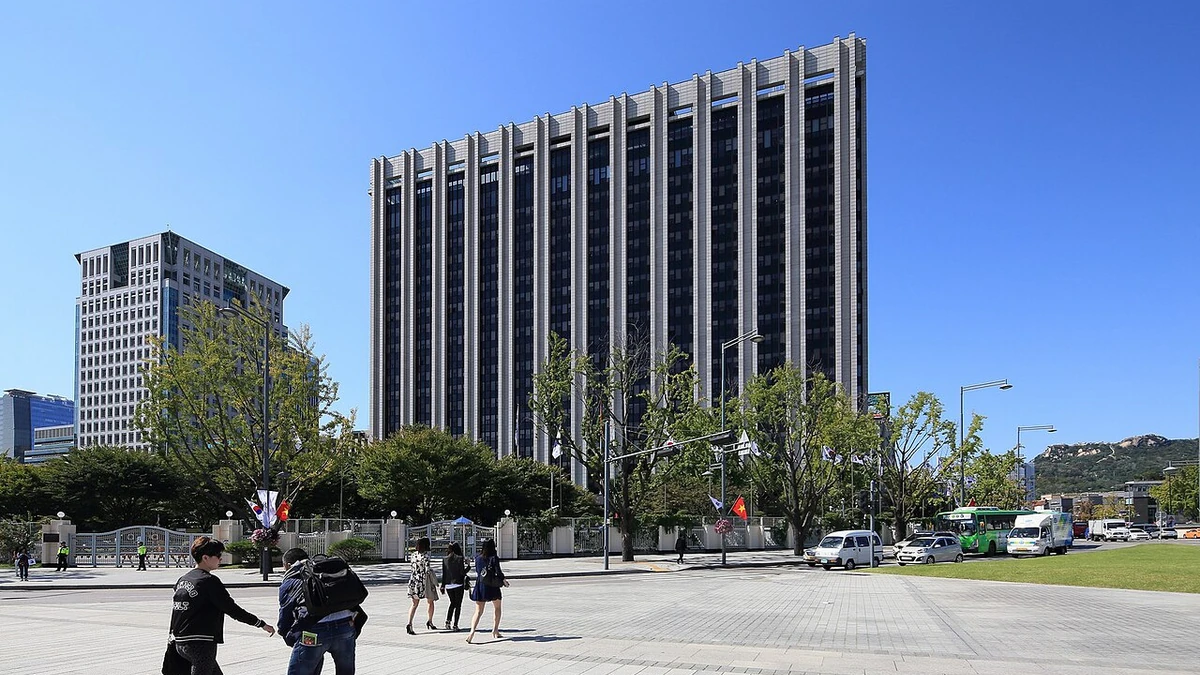
South Korea is preparing to make a stock market stabilization fund available for possible deployment after senior economic and financial officials met on Sunday, November 22, to assess a sharp rise in market volatility. The authorities have not announced that the fund has begun buying shares. Their immediate decision is to ready the mechanism so that it can be used if conditions warrant.
Finance Minister Lee Hyoung-il chaired the emergency meeting at Government Complex Seoul at 3 p.m. local time. Bank of Korea Governor Shin Hyun-song, Financial Services Commission Chairman Lee Eog-weon and Financial Supervisory Service Governor Lee Chan-jin attended, according to the government’s November 22 announcement. The officials reviewed the possible spillover from falling U.S. equities into South Korea’s financial markets and considered the risks ahead of the next domestic trading session.
The response goes beyond the prospective fund. Authorities also outlined a temporary relaxation of daily share-repurchase order limits for listed companies and a three-month period of closer scrutiny of illegal short selling. Those measures are intended to address different sources of selling pressure, but none is a commitment to maintain stock prices at a particular level.
The stabilization fund is being prepared, not activated
The clearest distinction in Sunday’s announcement is between readiness and deployment. Officials want the fund’s activation procedures and practical effectiveness reviewed so that a decision to use it could be carried out promptly. They did not announce a new allocation, an activation threshold or a timetable for purchases. Describing the fund as already operating would therefore overstate the action taken.
South Korea has used the stabilization-fund concept before as a backstop against disorderly selling. In March 2020, the Financial Services Commission announced plans for a 10.7 trillion won fund supported by financial holding companies, other financial institutions and securities-related organizations. Its proposed investment approach involved raising contributions when needed and buying market-wide index products, including those linked to the KOSPI 200. That historical design illustrates the policy tool, not the size or exact operating terms of the fund now under consideration.
The difference matters for interpreting a potential government intervention. A fund that purchases broad index exposure can add demand across the market, rather than directing assistance to one named listed company. Its intended effect is to counter a sudden imbalance between sellers and buyers. But the authorities still have to determine whether conditions justify putting money to work, and the impact would depend on the scale and timing of any purchases.
Preparation can also matter before cash is committed. Market participants know that an additional buyer could enter if volatility becomes harder to contain. Yet readiness alone provides no guarantee against further declines, particularly if investors continue reassessing earnings expectations, financing costs or risks in the technology sector. Sunday’s announcement therefore represents an available policy option, not an official prediction that share prices will recover.
Buyback relief and scrutiny of illegal short selling
The more immediate rule change concerns companies purchasing their own shares. Authorities plan to ease the daily ceiling on the quantity of share-buyback orders that listed companies may place, for three months beginning Tuesday, November 24. The measure is designed to give companies with existing repurchase capacity greater flexibility to support demand when trading becomes volatile. It does not require any company to initiate a buyback or specify how much it must spend.
Repurchases operate differently from a stabilization fund. When a company buys its own shares, that company supplies the demand and uses its own resources, subject to the applicable rules. A market support fund would instead draw on an arranged pool of contributions and deploy them under its mandate. The two measures could operate alongside each other, but their funding sources and decision-making processes are separate.
The Financial Supervisory Service and Korea Exchange are also preparing a three-month period of intensified monitoring for illegal short selling, with enforcement action if violations are detected. This should not be confused with a blanket prohibition on lawful short selling. The focus, as announced, is surveillance and enforcement against prohibited conduct rather than the abolition of permitted market activity.
Officials plan to pay close attention to margin lending, unsettled stock purchases and forced liquidation. Those channels can magnify a decline when borrowers cannot meet collateral or payment requirements and brokers must sell shares. Authorities also intend to improve advance notice to investors facing forced sales and strengthen checks for market manipulation and the spread of false information during periods of instability.
These steps address the mechanics of a selloff rather than its underlying causes. Relaxed buyback limits may create room for corporate demand, and surveillance may deter illegal activity, but neither eliminates the risk that market prices adjust lower as investors change their valuations. The government’s measures are aimed at reducing the chance that abrupt financing pressures and disorderly trading intensify that adjustment.
Earlier margin relief and the next market test
Sunday’s meeting follows an intervention earlier in the month. On November 6, the Financial Services Commission announced a three-month waiver of the requirement for securities firms to maintain a 140% collateral ratio on credit-financed stock purchases, effective November 9. The stated purpose was to limit excessive forced selling after steep share-price declines. Officials said at that time that additional stabilization measures could be prepared if volatility intensified.
The waiver is relevant because falls in share prices can reduce the value of collateral backing leveraged investments. Without relief, pressure to restore collateral coverage may prompt rapid sales that feed into further price declines. The temporary rule change gives securities firms additional flexibility; it does not forgive investors’ borrowing obligations or remove the economic risks associated with leveraged positions.
That earlier action and the latest fund preparations form a sequence of responses, rather than a single newly announced cash injection. The authorities first sought to ease pressure from margin-related selling and have now added a potential market-wide funding tool, repurchase flexibility and tighter enforcement. The scope and timing of each action differ, which is important when assessing what will actually be in effect as trading resumes.
The need for a response was underscored by Friday’s domestic selloff. Korea Exchange market data showed the KOSPI at 4,869.96 at the November 20 close, after a fall of roughly 5.2% on the day. The government has identified weakness in overseas equities and uncertainty surrounding the artificial intelligence and semiconductor industries as important factors in the recent increase in volatility. These are the authorities’ assessment of market risks, not a determination that a single development caused every share-price move.
Beyond the immediate measures, officials have discussed advancing capital-market reforms, including proposals intended to encourage longer-term investment and address structural imbalances in demand for shares. Some proposals would require legislation or budget decisions and should not be mistaken for measures already in force. The near-term milestones are Monday, November 23, when South Korean markets reopen and regulators may take further decisions, and Tuesday, November 24, when the temporary buyback-order relief is scheduled to begin. Whether the stabilization fund itself is deployed remains contingent on market conditions.
More from Investing

Latest News
View all news- India Launches ₹5,610 Crore Development Initiatives in Arunachal Pradesh
- Australia-Led COP31 Talks End Without Overarching Climate Accord After Fossil Fuel Standoff
- UK Government Unveils Financial Literacy Overhaul for Schools in England
- Nintendo’s $50 Switch 2 Bundle Discount Begins at U.S. Retailers
- U.S. Rail Exemption Takes Effect for Nearly 60 Miles of Pennsylvania Rail Lines