Business Growth Slows in November as Flash Composite PMI Falls to 54.6
US services growth slowed more sharply than manufacturing in November, but hiring and backlogs suggested that firms were still working through capacity constraints.
Our editorial standards
MarketReview publishes clear, independently produced financial information using reliable sources and transparent editorial standards.
Read our Editorial Policy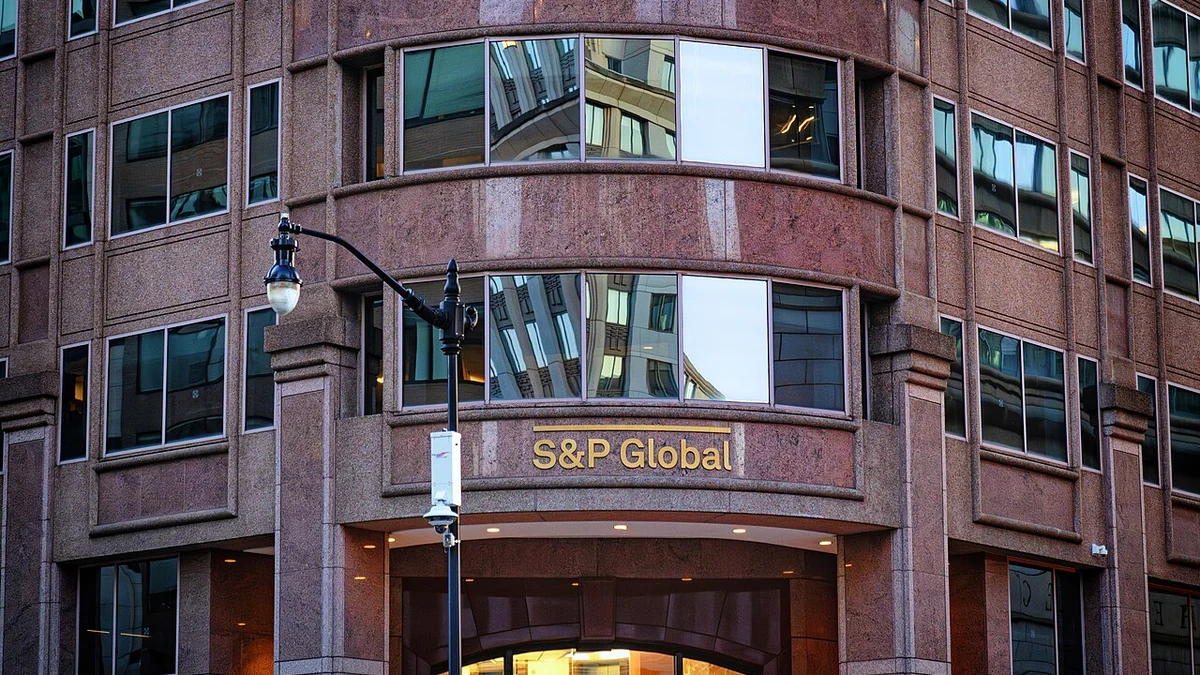
US business activity continued to expand in November, but at its slowest pace in four months as growth cooled across both services and manufacturing, according to S&P Global’s preliminary purchasing managers’ survey released Monday. Its flash composite output index fell to 54.6 from October’s final reading of 55.9.
The reading remained above the 50 mark that separates expansion from contraction, so the decline points to slower growth rather than a shrinking private sector. Service providers reported a sharper loss of momentum than manufacturers, adding to signs that high prices and limits on firms’ ability to meet demand are affecting activity even as the economy keeps growing.
S&P Global’s chief business economist, Chris Williamson, said the survey still indicated fourth-quarter US gross domestic product growth of around 3% at an annualized rate. That is an estimate derived from the company’s survey relationship with economic output, not an official GDP result or a guarantee of the quarter’s eventual performance.
Service-sector slowdown drives the weaker reading
The flash services PMI fell to 54.7 in November from 56.1 in October, a 1.4-point decline and its lowest reading in four months. The manufacturing PMI edged down to 54.5 from 54.9, a three-month low. Both remained comfortably in expansion territory, but the larger services decline accounted for an important part of the weaker overall signal.
Those individual measures should not be read as percentages of economic growth. A PMI is a diffusion index based on companies’ responses about whether conditions have improved, stayed unchanged or deteriorated from the previous month. The composite output measure tracks changes in activity across manufacturing and services, while the headline manufacturing PMI combines several operating indicators. Its distance above 50 shows the breadth and direction of improvement, not a directly comparable GDP growth rate.
New-business growth weakened, particularly among service providers. Businesses reported that elevated prices were discouraging some customers from placing orders. Manufacturers, meanwhile, saw relatively little change in new-order momentum. That distinction matters because a slowdown in incoming orders can eventually affect firms’ willingness to expand output or recruit, even when current activity remains positive.
The November figures were flash estimates, based on early survey responses rather than the final monthly data. They also compare November’s preliminary results with October’s finalized readings, so a later revision can alter the size of the month-to-month movement. The release provides a timely view of conditions across companies, but it is not a count of completed sales or a comprehensive measure of all US economic activity.
In its preview of the November flash surveys, S&P Global said October’s readings had pointed to some of the strongest growth since 2022 and raised the possibility that elevated inflation and tighter monetary conditions would cool activity. That background helps explain why the latest slowdown does not automatically signal weakness in the absolute level of business activity. Growth is cooling from a high starting point, and firms are still reporting more output than in the previous month.
Backlogs and hiring show that capacity is still stretched
Demand is not the only factor shaping the November picture. Companies also reported difficulty keeping up with work already on their books. Backlogs of unfinished orders continued to accumulate, suggesting that available staff, materials or delivery capacity could not always match the volume of work flowing through businesses.
For an individual firm, rising backlogs can mean two different things. They may signal a healthy pipeline of business that has yet to be completed, but they can also indicate bottlenecks that delay shipments or service delivery. The survey’s simultaneous findings of slower output growth and continued backlogs point to both forces being relevant. The composite PMI alone cannot show how much of the slowdown stems from softer demand and how much from constraints on supply.
Businesses responded in part by adding employees. S&P Global reported hiring across manufacturing and services during November, even though activity growth eased. Continued recruitment is an important counterweight to the softer headline index: companies under pressure to clear unfinished orders may need more staff even if the pace of new business is moderating.
Supplier delays were another concern. Reports of shipping disruptions became more widespread, according to Williamson’s assessment of the survey. Slower delivery of inputs can hold back production and create additional expense. It can also make it harder to tell whether a missed output target reflects a lack of orders or an inability to obtain the materials needed to fulfil them.
These constraints are not new. In its October analysis, S&P Global described difficulties meeting demand, rising backlogs and longer supplier lead times. November’s findings suggest the capacity issue persisted rather than disappearing as the headline composite index declined. That leaves businesses facing an uneven environment: the flow of new orders has become less vigorous, yet work already in hand may still be difficult to complete on schedule.
Price pressures ease but remain a concern for the Fed
There was some moderation in the pace at which businesses’ input costs increased in November, with lower fuel prices offering relief. That did not mean prices were falling across the private sector. A slower rate of cost inflation still leaves companies facing higher expenses than before, and the survey continued to indicate considerable pressure on the prices businesses charge customers.
Williamson warned that the survey’s pricing measures remained consistent with inflation running above the Federal Reserve’s 2% objective in the coming months. That is a forward-looking interpretation of business survey responses, not a forecast produced by the Fed or a substitute for the official consumer price and personal consumption expenditures inflation reports.
The distinction is especially important when activity and inflation indicators move in different directions. Softer growth may point to less demand pressure, but lingering shipping problems and high input costs can prevent a corresponding decline in the prices households and firms actually pay. A company encountering higher transport costs may still pass part of the increase to customers even if its order book is growing more slowly.
At its October meeting, the Federal Open Market Committee left its policy rate target at 3.75% to 4.00% and emphasized the need for more information on inflation before judging the appropriate stance of policy. November’s PMI adds another piece of evidence, but its message is mixed: a less rapid expansion alongside cost and supply pressures that have not fully abated.
The survey’s signal of roughly 3% annualized fourth-quarter growth provides context for that debate. It suggests the economy was still expanding at a substantial pace in the companies sampled, despite the cooling from October. The estimate could change as the rest of the quarter unfolds and as official measures of spending, production and inflation become available.
The final November PMI indexes will incorporate subsequent survey responses, providing a more complete picture of the month’s activity. The flash findings already establish the immediate contrast: growth is continuing, but new demand is less vigorous and businesses still face capacity and price pressures.
More News


Latest News
View all news- ISS and Glass Lewis Back Tempus AI’s Proposed Acquisition of Personalis Ahead of Vote
- SEC Settles Insider-Trading Case Linked to ANI Pharmaceuticals’ Alimera Acquisition
- SEC Publishes 24X Exchange Proposal to Expand Into Options Trading
- Swiss FINMA Raises Annual Supervisory Levy for Untied Insurance Intermediaries
- FCC Publishes Proposal to Tighten Vetting for Federal Broadband Subsidies