Nvidia Reinstates Jensen Huang as CEO While Independent Investigation Continues
Nvidia said its board has reinstated Jensen Huang as president, CEO and board member, while an independent investigation tied to recent reporting will continue to its conclusion.
Our editorial standards
MarketReview publishes clear, independently produced financial information using reliable sources and transparent editorial standards.
Read our Editorial Policy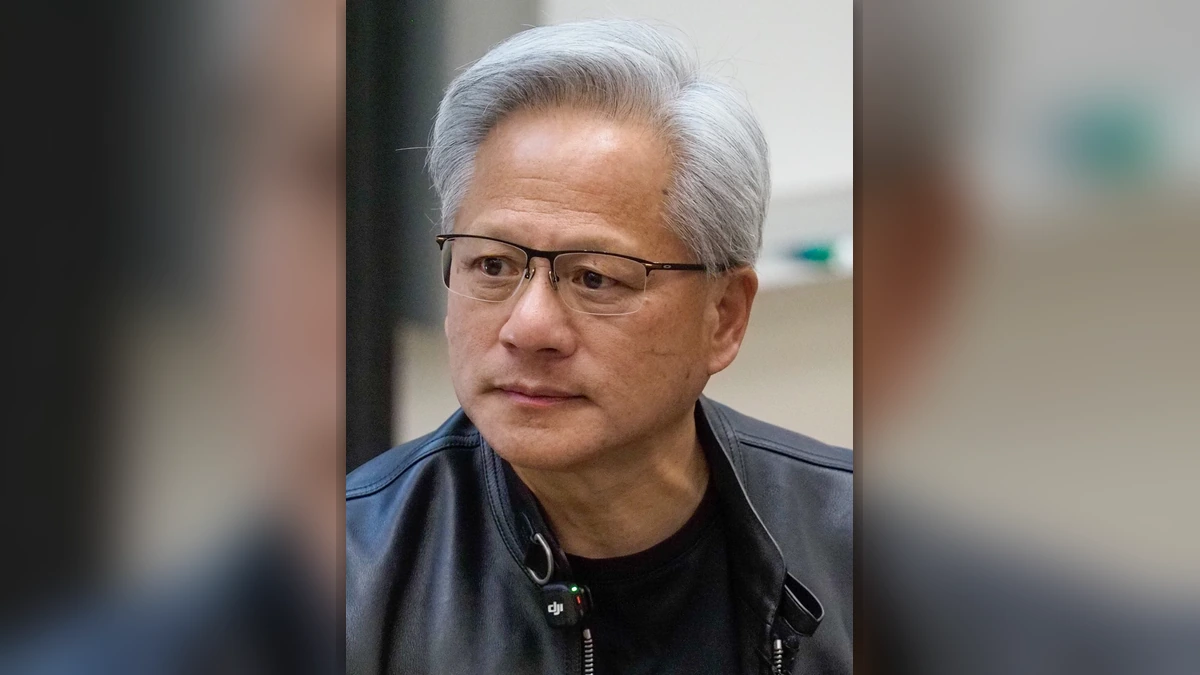
Nvidia said on Monday that founder Jensen Huang has been reinstated as president, chief executive officer and a member of the board, ending an 11-day period in which finance chief Colette Kress had been serving as interim CEO. The board’s decision returns the company’s longtime leader to the top job while an independent investigation tied to recent reporting about Huang continues.
In a press release and a related Form 8-K, Nvidia said the reinstatement took effect immediately. The company said the board voted unanimously after a series of discussions and meetings with Huang and, based on input from senior levels of the U.S. government, concluded that his return posed no national security risk. Nvidia also said the investigation being conducted by a committee of independent directors, assisted by outside counsel, will continue to its conclusion.
The update gives investors a clearer near-term leadership picture at one of the world’s most important chip companies, but it does not fully close the episode. Nvidia paired the reinstatement with a set of governance and compliance steps, including a new National Security and Export Control Committee made up solely of independent directors and a search for a chief compliance officer. The company also said it would continue cooperating with ongoing government investigations and inquiries.
Nvidia restores Huang to the CEO role after a brief leadership disruption
According to Nvidia’s official announcement, Huang has been reinstated as president, CEO and board director effective immediately. In the same statement, board chair Harvey C. Jones said the board believes Huang is the right person to lead Nvidia and that reinstating him is in the best interests of shareholders, employees, partners and customers.
Nvidia’s Form 8-K filing with the Securities and Exchange Commission confirms the board action occurred on November 22, with the filing submitted the following day. The filing also says Kress will continue in her standing role as executive vice president and chief financial officer after serving as interim CEO during Huang’s absence from the position.
The reinstatement follows a highly unusual sequence of events for a company that has been closely associated with Huang for decades. On November 12, Nvidia announced that Huang had resigned as president, chief executive officer and board member, and named Kress interim CEO while the board searched for a permanent successor. That abrupt shift came after the independent members of the board had already said they were launching an investigation in light of reporting that Huang had been the target of a foreign intelligence effort.
The investigation began against a personal and corporate backdrop that Huang addressed directly. In a November 8 message to Nvidia employees published by the company, he wrote, “I was unfaithful to my wife,” apologized to his family and colleagues, and took responsibility for his conduct. He also pledged to cooperate with the board’s inquiry. The apology did not identify the person involved, establish how many relationships there had been, or resolve the separate questions about possible foreign-intelligence activity.
Reporting about Huang’s personal relationships had raised concerns extending beyond his private life. The New York Times reported that he had a relationship with Alice Huang, a Chinese businesswoman formerly connected with Singapore-based technology company Megaspeed, and described U.S. intelligence suspicions that she had gathered information for China. Reuters separately reported allegations of relationships with Nvidia employees, including a company executive who reported to Huang. Reuters attributed aspects of its reporting to people familiar with the matter; those accounts have not been independently verified by MarketReview. The espionage suspicions are allegations, not an established finding that Alice Huang acted as a spy or that Nvidia technology was compromised.
The reinstatement settles the immediate question of who is running Nvidia, but it should not be mistaken for an investigative finding. The board said it had received input from senior levels of the U.S. government and was confident Huang’s return posed no national-security risk. It did not disclose the underlying discussions or announce the independent committee’s final conclusions.
The board says the investigation continues and new oversight steps are being added
Nvidia has separated the leadership decision from the unfinished investigation. On November 8, the board said it was opening an independent inquiry into reports that Huang had been targeted by a foreign intelligence effort. The board also said it had no reason at that time to believe U.S. national security or Nvidia secrets were compromised. On November 10, the independent directors identified former federal prosecutor Joon H. Kim and law firm Wachtell, Lipton, Rosen & Katz as counsel for the review.
In Monday’s reinstatement announcement, the board reiterated that the committee’s work will proceed to conclusion and said Huang is cooperating. That language matters. It means the board is not presenting the matter as fully resolved. Instead, it is saying that the facts presently available are sufficient for Huang to return to the company’s top leadership post while the review continues on a parallel track.
Nvidia also disclosed several compliance and governance measures that expand the company’s response beyond the question of Huang’s role alone. The new National Security and Export Control Committee, composed solely of independent directors, is intended to oversee trade compliance and national security risks. The company said the committee is engaging counsel with national-security experience and that those advisers will in turn retain specialists in the field.
Separately, Nvidia said it is beginning a search for a chief compliance officer who will oversee compliance across the company and report to the nominating and corporate governance committee. That is a notable addition because it suggests Nvidia wants to demonstrate a broader, more durable response rather than limit its actions to the immediate board investigation. The company also said it will continue to cooperate with government investigations and inquiries, indicating that the matter still has an external dimension beyond Nvidia’s own internal review.
What the reinstatement means for Nvidia and for investors watching governance risk
For Nvidia’s business, the most immediate effect is leadership continuity. Huang is not just the company’s founder and chief executive; he is also the public face of Nvidia’s strategy across AI accelerators, data-center infrastructure, software ecosystems and long-range product planning. A short interim period under Kress may not have threatened day-to-day operations, but uncertainty over long-term leadership at Nvidia was always likely to attract intense scrutiny because of the company’s central role in the global AI hardware market.
That helps explain why the board’s decision, and the way it framed the decision, matters as much as the headline itself. By saying it received input from senior levels of the U.S. government and is confident the reinstatement poses no national security risk, the board is trying to provide a stronger basis for its judgment than a simple expression of internal confidence. That does not disclose all of the facts behind the matter, but it does show the board wants investors to understand that outside official views informed its decision.
Even so, some uncertainty remains. The independent investigation is still underway, and Nvidia did not say on Monday when it expects that process to conclude. Nor did it provide detailed findings from the review to date. As a result, the company has restored Huang to power, but it has not fully drawn a line under the episode.
For shareholders, that leaves two messages operating at once. The first is reassuring: Nvidia’s board has unanimously restored its founder to the CEO role and says it sees no national security issue with that decision. The second is more measured: the investigation remains active, government inquiries are continuing, and the company believes stronger oversight structures are warranted. Those points are not contradictory, but together they suggest the board is trying to stabilize leadership without appearing dismissive of the underlying concerns.
In practical terms, Monday’s action likely reduces immediate governance uncertainty around Nvidia, especially after the surprise resignation announcement earlier this month. But the story is not entirely finished. The eventual conclusion of the board committee’s work, and any further disclosure that follows, will determine whether the reinstatement marks the end of a brief corporate disruption or simply the start of a longer effort to reassure investors, regulators and partners that Nvidia’s controls are strong enough for the political and strategic environment in which it now operates.
More News


Latest News
View all news- ISS and Glass Lewis Back Tempus AI’s Proposed Acquisition of Personalis Ahead of Vote
- SEC Settles Insider-Trading Case Linked to ANI Pharmaceuticals’ Alimera Acquisition
- SEC Publishes 24X Exchange Proposal to Expand Into Options Trading
- Swiss FINMA Raises Annual Supervisory Levy for Untied Insurance Intermediaries
- FCC Publishes Proposal to Tighten Vetting for Federal Broadband Subsidies