


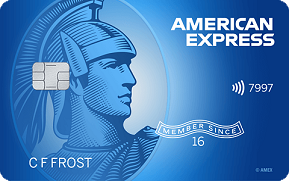
The card is really a bet on your grocery and streaming spend
Blue Cash Preferred makes the most sense when your household naturally spends enough in the card’s strongest categories to overcome the annual fee after the first year. American Express currently charges $0 for the first year and $95 thereafter, so the first year is easy to evaluate: you can use the 6% supermarket and streaming rates without having to earn back a fee first. The harder question is whether the card remains worth keeping once the $95 charge begins.
The headline category is 6% cash back at eligible U.S. supermarkets on up to $6,000 in purchases per calendar year, then 1%. If you spent the full $6,000 at qualifying supermarkets, the 6% rate would produce $360 in Reward Dollars before considering the annual fee or any other spending. That is a strong maximum for one household category, but it is not the same as 6% on every grocery purchase everywhere.
American Express excludes superstores, convenience stores, warehouse clubs and meal-kit delivery services from its supermarket definition. That means a household that buys most groceries at Walmart, Target, Costco, Sam’s Club or a similar merchant may not get the headline rate. Merchant coding controls the result, so the card is strongest when your regular grocery stores actually process as qualifying U.S. supermarkets.
The 6% streaming category can add meaningful value because it is not currently advertised with the same $6,000 annual cap. Eligible subscriptions have to be from select U.S. streaming providers, and American Express warns that subscriptions bundled with another product or billed through certain third parties may not qualify. Paying a streaming service directly with the card is therefore cleaner than assuming every digital-entertainment charge will earn 6%.
Blue Cash Preferred also earns 3% at U.S. gas stations and 3% on transit, including eligible rideshare, taxis, parking, tolls, trains, buses and ferries. These rates make the card broader than a grocery-only product, but the 1% return on other eligible purchases is weak. A household can get more value by using Blue Cash Preferred for its bonus categories and another card for spending that would otherwise earn only 1%.
How much grocery spending makes the $95 fee worthwhile?
The cleanest way to judge the post-first-year annual fee is to compare Blue Cash Preferred with a no-fee alternative. American Express’s own Blue Cash Everyday® Card earns 3% at U.S. supermarkets on up to $6,000 per year, then 1%. Blue Cash Preferred earns 6% on the same first $6,000 of qualifying supermarket spending. The incremental grocery advantage is therefore 3 percentage points before considering other categories or benefits.
At a 3-percentage-point advantage, roughly $3,167 of eligible annual supermarket spending produces about $95 of extra cash back. That is the approximate grocery-only break-even point against a 3% no-fee supermarket card, assuming the comparison is otherwise equal and ignoring the first-year fee waiver. Spend less than that and the grocery differential alone may not cover the annual fee. Spend more and the 6% rate can begin to pull ahead.
The comparison changes if your alternative is a 2% flat-rate card. Against 2%, Blue Cash Preferred has a 4-percentage-point advantage at qualifying supermarkets, which means roughly $2,375 of eligible supermarket spending would generate about $95 of incremental cash back. A household choosing between cards should compare against the card it would actually use, not against a generic baseline chosen to make the math look better.
The grocery cap also matters. Once you pass $6,000 in eligible supermarket purchases during the calendar year, Blue Cash Preferred falls to 1% on additional supermarket spending. A household spending $9,000 a year at qualifying supermarkets would earn 6% on the first $6,000 and 1% on the remaining $3,000, producing $390 before the annual fee. A 3% no-fee grocery card with its own $6,000 cap and 1% thereafter would produce $210 under the same simplified spending pattern. The difference is $180, not an unlimited 3-percentage-point advantage.
Streaming, gas, transit and the Disney credit can improve the economics beyond the grocery calculation. That is why the $3,167 figure should not be treated as a universal threshold. A commuter with substantial transit costs, a household paying several eligible streaming services and someone who already uses Disney+, Hulu or ESPN can justify the fee with less grocery spending. Someone who does not use those categories needs more supermarket spend to make the same case.
The Disney Streaming Credit can offset the fee, but only if you already want the service
Blue Cash Preferred currently offers up to $120 per year in Disney Streaming Credit. After enrollment, cardmembers can receive up to $10 per month in statement credits when the enrolled card is used for eligible subscription purchases at DisneyPlus.com, Hulu.com or Stream.ESPN.com U.S. websites. The subscription is subject to auto-renewal.
On paper, $120 per year is more than the $95 annual fee after the first year. That does not mean every cardholder should value the benefit at $120. The full value only exists for someone who would otherwise pay at least $10 per month for an eligible subscription and remembers to enroll and use the card correctly. If you do not want the service, spending money to trigger a credit does not create savings.
The monthly structure also matters. A benefit delivered as up to $10 each month is different from a flexible $120 annual credit. Missing a month usually means losing that month’s opportunity rather than rolling unused value forward. A cardholder who cancels the service for part of the year should value the benefit only for the months actually used.
For an existing subscriber, the credit can materially change the annual-fee calculation. Someone who naturally gets the full $120 in credits could cover more than the $95 annual fee before counting supermarket, streaming, gas or transit rewards. That makes Blue Cash Preferred much easier to justify than a fee card whose benefits require changing normal spending habits.
The Disney credit should still be separated from the 6% streaming category when evaluating the card. The credit is a specific statement-credit benefit with enrollment rules. The streaming category is an earning rate on select U.S. streaming subscriptions. Both can be useful, but they are distinct mechanisms and should not be compressed into one inflated annual-value estimate.
The 6% categories are powerful, but merchant coding creates real boundaries
Cash-back categories sound simple until a merchant does not code the way you expect. American Express says supermarkets qualify based on merchant classification, and it specifically excludes superstores, convenience stores, warehouse clubs and meal-kit delivery services from the 6% supermarket category. A large retailer that sells groceries may therefore earn only 1% if it is classified as a superstore rather than a supermarket.
The gas category has similar limits. Blue Cash Preferred earns 3% at U.S. gas stations, but American Express says gas sold by superstores, supermarkets and warehouse clubs does not count as a gas-station purchase for the bonus category. A driver who routinely fills up at Costco or a supermarket fuel center should not assume those purchases will receive 3%.
Transit is broader than gas but does not mean all travel. Eligible transit includes categories such as trains, taxis, rideshare, ferries, tolls, parking, buses and subways. Airfare, car rentals and cruises are not considered transit. A reader looking for a general travel-rewards card should not interpret the 3% transit rate as 3% on vacations.
Streaming also depends on how the subscription is billed. American Express says a select streaming subscription may fail to receive the 6% rate when it is bundled with another product or service or billed through certain third parties, such as a digital platform, cable company, telecommunications provider or car manufacturer. Paying the eligible streaming provider directly is the most straightforward way to match the published category.
These restrictions are not unusual for category rewards, but they matter more on a card with an annual fee. If much of your apparent grocery, gas or streaming spending does not qualify, the break-even calculation changes quickly. Before applying, review where your largest purchases actually occur and whether those merchants fit American Express’s category definitions.
Reward Dollars are simple, but this is not a flexible-points card
Blue Cash Preferred earns cash back in the form of Reward Dollars. American Express currently says Reward Dollars can be redeemed as a statement credit, and the card’s membership guide also allows Reward Dollars to be used at Amazon.com checkout. The product page states that cash back used at Amazon checkout has the same value as when redeemed as a statement credit.
This is simpler than a travel-points program because there is no need to calculate airline transfer ratios or search for award space. If you earn $100 in Reward Dollars, the value proposition is designed to be understandable. That simplicity is useful for a household card where the main goal is reducing the net cost of groceries, streaming and transportation.
The trade-off is a lack of upside from travel redemptions. Reward Dollars do not operate like Membership Rewards® points. You are not opening a transfer-partner ecosystem or trying to get outsized value from a hotel award. Someone who wants flexible travel rewards should look at a different American Express product or another issuer entirely.
This distinction is important because Blue Cash Preferred’s 6% headline rate should not be compared directly with a 3X or 4X points card without assigning a value to those points. Six percent cash back is a straightforward percentage return. Three points per dollar may be worth more, less or roughly the same depending on the program and redemption. For a reader who dislikes that uncertainty, Blue Cash Preferred’s cash-back model is a strength.
The current welcome offer is personalized, so treat the maximum as a ceiling
American Express currently uses a personalized welcome-offer flow for Blue Cash Preferred. Our current product snapshot reflects an offer that can be as high as $300 cash back after $3,000 in purchases in the first six months of Card Membership, but American Express makes clear that welcome offers vary and an applicant may not be eligible for the maximum offer.
That changes how the offer should be discussed. A fixed $300 signup bonus can be included directly in a first-year value calculation. A personalized offer that can be as high as $300 cannot. The correct number is the offer American Express actually presents to you before you accept the card.
The spending requirement itself is moderate when spread over six months. Three thousand dollars over six months averages $500 per month. A household that intends to use the card for groceries, gas, transit and streaming may be able to meet that requirement through normal purchases without shifting its budget.
The first-year economics are particularly favorable because the annual fee is currently $0 for the first year. If an applicant receives a strong welcome offer, earns 6% in eligible categories and uses the Disney Streaming Credit, the first year can deliver substantial value without paying the $95 fee. The more important retention decision comes around the first renewal, when the introductory fee waiver disappears.
Do not increase spending simply to reach the bonus. The card’s post-intro variable APR can be much more expensive than the cash-back value if a balance is carried. A welcome offer should reward spending that was already planned, not create new debt.
The 12-month 0% APR helps, but financing is secondary to the rewards case
Blue Cash Preferred currently offers 0% intro APR on purchases and balance transfers for 12 months from account opening. After the introductory period, American Express lists a variable APR of 19.49% to 28.49%. Balance transfers must be requested within the first 60 days of account opening, and the current Card Member Agreement lists a balance-transfer fee of either $5 or 3% of the transfer amount, whichever is greater.
The purchase offer can be useful for a planned expense, especially in the first year when the annual fee is also waived. Someone financing a $3,600 necessary purchase over 12 months could set an illustrative target of $300 per month to clear it before the promotional APR ends. The goal should be full repayment ahead of the deadline, not making minimum payments and hoping the remaining balance is small.
For balance transfers, the 12-month window is less compelling than the longest specialist offers. A $6,000 transfer at a 3% fee would cost $180 before any repayment begins. If the fee is added to the balance, an illustrative even payoff over 12 months would require about $515 per month. A dedicated balance-transfer card with a longer promotional window may be better when the monthly payment needed here is unrealistic.
The 60-day transfer-request deadline also narrows the use case. Blue Cash Preferred is not a card to open now and use for a promotional transfer six months later. Anyone applying specifically for a transfer should know which balance needs to move and make the request promptly.
Most importantly, the 0% APR should not distract from the card’s long-term identity. Blue Cash Preferred is primarily a cash-back card. Readers whose main goal is debt payoff should compare the longest financing offers and fees in our best balance transfer credit cards and best 0% APR credit cards guides rather than accepting a shorter promotional period because the same card also earns 6% at supermarkets.
The protection benefits are stronger than many cash-back cards
Blue Cash Preferred includes several purchase protections that add value beyond the rewards structure. American Express currently provides purchase protection for eligible covered purchases against accidental damage or theft for up to 90 days, with coverage up to $1,000 per covered purchase and $50,000 per Card Member account per calendar year, subject to exclusions and restrictions.
Return Protection can reimburse eligible U.S. purchases when the seller will not take them back, up to $300 per item and $1,000 per Card account per calendar year under the current terms. This can be useful for an expensive eligible purchase that falls outside a retailer’s return policy, although exclusions and documentation requirements still apply.
Extended Warranty can add up to one year to an eligible original manufacturer’s warranty of five years or less. American Express currently limits coverage to the amount charged to the eligible card up to $10,000 per covered item and $50,000 per Card Member account per calendar year. That is potentially valuable on electronics and appliances, but it should be treated as insurance with conditions rather than as an automatic replacement promise.
The card also includes secondary Car Rental Loss and Damage Insurance when the entire eligible rental is paid with the card and the rental company’s collision damage waiver is declined. American Express notes territorial and vehicle exclusions, including that the coverage is not available for rentals in Australia, Italy and New Zealand. Liability coverage is not included.
Global Assist® Hotline can coordinate emergency assistance when traveling more than 100 miles from home, including medical and legal referrals and other services, but cardmembers remain responsible for costs charged by third-party service providers. These protections are useful supporting benefits. They do not turn Blue Cash Preferred into a travel card, especially given the 2.7% foreign transaction fee.
The 2.7% foreign transaction fee is a clear reason to leave it at home abroad
Blue Cash Preferred currently charges 2.7% of each foreign transaction after conversion to U.S. dollars. That makes the card a poor choice for international spending even though American Express provides some travel-related assistance and rental coverage.
A $2,000 equivalent of foreign purchases would create about $54 in foreign transaction fees at 2.7%. If those purchases earned only the card’s 1% base rate, the rewards would amount to roughly $20, leaving the cardholder worse off on the transaction-cost comparison before considering currency conversion or merchant pricing.
Even a purchase that would normally qualify for a higher U.S. category may not solve the problem because the rewards categories themselves can be geographically restricted. Blue Cash Preferred is best treated as a domestic household cash-back card. A no-foreign-transaction-fee card should handle most spending abroad.
Who should consider Blue Cash Preferred?
The strongest candidate is a household that spends several thousand dollars a year at qualifying U.S. supermarkets, pays for eligible streaming subscriptions and can use at least some of the 3% gas or transit categories. In that spending pattern, the card’s bonus rates are concentrated exactly where recurring household expenses occur.
A Disney+, Hulu or ESPN subscriber who can naturally use the $10 monthly Disney Streaming Credit has an additional reason to consider it. If that credit would be used anyway, it can cover the $95 annual fee after year one in face value, allowing the grocery and streaming rewards to become incremental upside.
The card is also attractive in the first year for someone who wants both cash back and temporary financing. The annual fee is currently waived for year one, and the 12-month 0% purchase APR can help with a planned expense. That combination can make the initial year particularly strong, provided the purchase is repaid before the promotional APR ends.
Blue Cash Preferred also works for someone who values straightforward cash rewards rather than travel points. Reward Dollars do not require learning airline partners or redemption charts. The card’s value can be estimated from actual household spending with relatively little guesswork.
Finally, the purchase protections can make the card appealing for larger eligible purchases even when they earn only 1%. Return Protection, Purchase Protection and Extended Warranty add a layer of security that some no-fee cash-back cards do not match.
Who should skip Blue Cash Preferred?
Skip it if your grocery spending is low or concentrated at superstores and warehouse clubs. The 6% supermarket rate is powerful only when your purchases actually qualify. A household that shops primarily at Walmart, Target, Costco or Sam’s Club may get much less value than the headline implies.
A light grocery spender should also compare a no-fee card carefully. Against a 3% no-fee supermarket card, the grocery-only break-even point is roughly $3,167 of eligible annual supermarket spending after the first-year fee waiver ends. If you spend well below that and do not use the Disney credit or other bonus categories heavily, paying $95 may not make sense.
Frequent international travelers should avoid using Blue Cash Preferred abroad because of the 2.7% foreign transaction fee. A travel card with no foreign transaction fee is a better companion outside the United States.
Someone seeking a strong general-purpose card may also be disappointed. Purchases outside the bonus categories earn only 1%. A 2% flat-rate card can be a better default for uncategorized spending, so Blue Cash Preferred often works best as one card in a multi-card setup rather than the only card in a wallet.
And anyone whose primary goal is a long balance-transfer window should look elsewhere. Twelve months can help, but specialist financing cards can offer more time. The rewards program should not be used to justify a shorter repayment window when debt payoff is the main objective.
Is Blue Cash Preferred worth the annual fee?
For a household with the right spending pattern, yes. The 6% supermarket rate is one of the highest straightforward cash-back rates available on a recurring household category, and the $6,000 cap is large enough to cover about $500 per month of eligible supermarket spending. Streaming at 6%, gas and transit at 3% and the Disney Streaming Credit can add value around that core grocery proposition.
The first year is particularly easy to justify because American Express currently charges a $0 introductory annual fee. The retention decision becomes more analytical when the $95 fee begins. At that point, compare the extra cash back you are actually earning over a no-fee alternative and count only benefits you would naturally use.
The card’s weaknesses are real. The grocery category excludes several places many households buy groceries. Spending above the $6,000 supermarket cap falls to 1%. Non-bonus purchases earn only 1%, the foreign transaction fee is 2.7%, and the 12-month financing window is useful but not market-leading.
Those limitations do not change the basic conclusion. Blue Cash Preferred is unusually strong for a domestic household that spends enough at qualifying supermarkets and eligible streaming providers. It also offers purchase protections and a recurring Disney credit that can make the $95 fee easier to absorb.
We therefore rate Blue Cash Preferred 4.8/5 and consider it one of the strongest cash-back choices for groceries and streaming. Readers who want to avoid an annual fee or who spend less in qualifying supermarkets should compare the alternatives in our best cash back credit cards guide before deciding whether the higher category rates justify paying for the card after year one.