


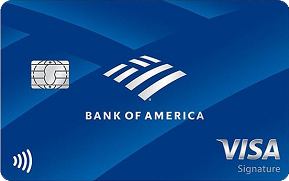
A student card should first be affordable and manageable
The biggest mistake in evaluating a student credit card is treating rewards as the first priority. For someone establishing an independent payment history, the account needs to be affordable to keep and simple enough to manage consistently. Bank of America Travel Rewards for Students gets those basics right: there is no annual fee, the main earning rate is a flat 1.5 points per dollar and there is no foreign transaction fee.
No annual fee matters because a first credit card can remain open without creating a yearly cost simply for existing. A long-lived account can be useful over time, but there is no reason to keep a card open solely for credit-history purposes if it creates fees you do not want to pay. This product avoids that annual-fee pressure entirely.
The flat 1.5X structure also reduces decision fatigue. A student does not need to remember which dining, grocery or gas category is active. Most ordinary purchases receive the same base earning rate. The one major exception is travel booked through BofA Travel, which currently earns 3X.
That simplicity is valuable, but it should not be confused with market-leading earning. No-fee cards exist that return 2% cash back on broad spending, and some student cards offer higher category rates. Travel Rewards for Students is better understood as a low-maintenance travel-friendly starter card than as a rewards-maximization tool.
Our 4.7/5 rating reflects that balance. The card is inexpensive to keep, easy to use and unusually friendly to foreign spending for a student product. It gives up some rewards upside in exchange for fewer moving parts.
The no-foreign-transaction-fee feature is the clearest reason to consider it for studying abroad
Bank of America currently charges no foreign transaction fee on Travel Rewards for Students. That is a meaningful advantage for a student who expects an exchange semester, international internship, family travel or any other period of spending outside the United States.
A typical 3% foreign transaction fee would add $90 to $3,000 of foreign purchases. On a student budget, that is not trivial. A card that earns rewards but gives 3% back in fees can become a poor travel tool quickly.
The flat 1.5X base rate also travels well because it does not depend on a U.S.-only grocery, gas or dining category. An eligible purchase abroad can still earn the standard rate, subject to normal merchant processing and rewards terms.
No foreign transaction fee does not mean every international payment issue disappears. Merchants can offer dynamic currency conversion, where they convert a purchase into U.S. dollars using their own rate. Choosing the local currency is generally the cleaner way to let the card network handle conversion rather than accepting a merchant’s potentially less favorable exchange rate.
Acceptance should also be considered. Travel Rewards for Students uses a broadly accepted card network, which makes it more practical abroad than a card with more limited international acceptance. A student traveling internationally should still carry a backup payment method and some emergency access to funds rather than relying on one credit card for every situation.
For that reason, “Best for travel and studying abroad” is not just a marketing label in our Student Best page. The cost structure genuinely fits international use better than many student cards that charge 3% on foreign purchases.
The 1.5X base rate is simple, but simplicity has a price
Travel Rewards for Students earns unlimited 1.5 points per dollar on ordinary purchases. That means $10,000 of qualifying annual spending would earn 15,000 points before any BofA Rewards relationship bonus. The value of those points depends on how they are redeemed, but the current welcome-offer language provides a useful reference: Bank of America describes 25,000 points as worth $250 toward eligible travel or dining statement credits.
At that one-cent travel-and-dining statement-credit benchmark, 15,000 points would represent $150. A 2% cash-back card would return $200 on the same $10,000 of simplified spending. That $50 difference is the opportunity cost of choosing a 1.5X base card over a 2% flat-rate alternative when all other features are ignored.
The gap is not necessarily a reason to reject the card. A student traveling abroad may value the lack of foreign transaction fees more than the extra half percentage point of domestic cash back. The intro APR, welcome offer and student-focused positioning can also make the first year more attractive than the base rate alone suggests.
What matters is how the card will actually be used. A student with very little travel and mostly domestic everyday spending should compare 1.5X with straightforward cash-back alternatives. Someone who wants one no-fee card that can move easily between campus spending and international travel may prefer the simpler travel-oriented package.
The absence of caps on the 1.5X rate is another small advantage. There is no annual limit to track and no quarterly activation. The card is predictable even if it is not the highest-return option.
The 3X BofA Travel rate is useful only when the booking itself makes sense
Eligible travel purchases booked through BofA Travel currently earn 3 points per dollar. That doubles the card’s standard 1.5X earning rate and can be useful for a flight, hotel or other eligible trip booked through the issuer’s travel channel.
A $1,000 qualifying BofA Travel booking would earn 3,000 points rather than 1,500 at the standard rate. At a one-cent statement-credit benchmark, the extra 1,500 points would represent about $15 of additional value.
Fifteen dollars is useful, but it should not determine where you book. A direct airline or hotel rate can be cheaper, more flexible or more useful for loyalty benefits. A student should compare the total trip cost and cancellation terms before choosing a portal simply to earn extra points.
This is especially important for hotels. Some loyalty programs give points, status credit or elite benefits only on eligible direct bookings. A traveler without hotel status may not care. Someone who does care should compare those lost benefits with the extra 1.5 points per dollar from BofA Travel.
The 3X travel rate therefore adds upside without changing the card’s basic identity. If BofA Travel is competitive, use it and earn more. If a direct booking is better, the card still earns its standard rate and the no-foreign-transaction-fee feature remains useful.
Travel Rewards points are straightforward, but not truly flexible travel points
Bank of America Travel Rewards points are designed to be easy to understand. The issuer currently describes the program as allowing cardholders to use points for statement credits toward eligible travel and dining purchases, with no blackout dates in the product description.
That is simpler than a transferable-points ecosystem. There is no need to search airline award charts or move rewards to a hotel program. A student can make an eligible travel or dining purchase and later use points toward a statement credit under the program rules.
The trade-off is limited upside. Travel Rewards does not currently provide airline and hotel transfer partners. A point cannot be moved into an airline program in hopes of booking a high-value award. The value proposition is much more fixed and predictable.
For a first rewards card, that can be a positive. Travel programs with transfer partners can be valuable, but they require more attention to award availability, transfer ratios and program changes. A student who wants simple rewards may prefer knowing approximately what the points are worth toward eligible travel or dining.
A student who does not care about travel redemption at all may find cash back more flexible. Cash can be used for rent, groceries, books or any other expense. Travel statement credits are useful when travel is genuinely part of the budget, but they are narrower than unrestricted cash.
The current 25,000-point online offer is realistic for a student budget
Bank of America currently advertises 25,000 online bonus points after at least $1,000 in purchases within the first 90 days of account opening. The issuer describes those points as a $250 value toward eligible travel or dining statement credits.
A $1,000 threshold over 90 days averages roughly $333 per month. That is much more accessible than travel-card offers requiring $4,000 or $5,000 in three months, although it can still be too high for a student with limited spending.
The correct way to meet the requirement is with normal purchases already in the budget. Tuition, textbooks, groceries, transportation or other expenses may help, depending on how the merchant processes the transaction and whether a card payment fee is involved. Paying a large convenience fee just to earn a bonus can reduce or eliminate the value of the offer.
The offer should never justify carrying debt. A $250 travel-credit value can disappear quickly if $1,000 of welcome-offer spending is revolved at a high post-intro APR. The card’s temporary 0% purchase period gives additional flexibility, but a student should still plan repayment rather than treating promotional financing as free money.
Bank of America also says online offers can depend on the application channel. The offer displayed when you actually apply should be treated as the controlling version.
The 15-billing-cycle 0% purchase APR can help with a planned school expense
The card currently offers 0% intro APR for the first 15 billing cycles on purchases. After the promotional period, the variable APR is 17.49% to 27.49% based on creditworthiness and other factors.
This can be useful for a planned expense such as a computer, required equipment or relocation costs when the student has a clear repayment plan. A $1,500 necessary purchase spread evenly over 15 billing cycles would require an illustrative $100 per cycle to reach zero before the promotional APR ends.
The phrase “billing cycles” matters. Fifteen billing cycles should not be treated as a guaranteed number of calendar days. The first statement may close sooner than a full month after account opening. A repayment plan should aim to finish ahead of the final promotional statement rather than relying on the last possible date.
The 0% offer can also create bad habits if it encourages spending beyond the amount that can realistically be repaid. A first credit card should help build disciplined payment behavior. Carrying a large balance for more than a year simply because the APR is temporarily 0% can make the eventual transition to a regular APR dangerous.
The promotional period is therefore most useful when the expense is planned, necessary and matched to a monthly payoff target from the beginning.
The balance-transfer feature exists, but it is not the main reason a student should choose this card
Travel Rewards for Students currently extends the 0% intro APR for the first 15 billing cycles to balance transfers made within the first 60 days of account opening. The introductory balance-transfer fee is currently 3% during the first 60 days, with future transfers charged 5% under the current listing.
A $2,000 transfer at a 3% fee would create a $60 upfront cost. If the fee is added to the transferred balance, the starting amount becomes $2,060. Spread evenly across 15 billing cycles, the simplified payoff target would be roughly $137 per cycle.
That can save money compared with high-interest debt, but a student should be careful about opening a new account simply to move balances without changing the spending behavior that created the debt. A transfer is a repayment tool, not debt forgiveness.
The 60-day transfer window also requires planning. A borrower who needs the promotional rate should know which outside balance is moving and complete the transfer early enough to avoid missing the introductory terms.
For a student carrying meaningful credit-card debt, a dedicated balance-transfer card with a longer 0% period may be more appropriate. Travel rewards should not be the deciding factor when the central problem is debt repayment.
Student branding does not mean automatic approval
The word “student” can create the wrong expectation. A student credit card is marketed toward a particular stage of credit development, but the issuer still evaluates the application. Enrollment in college does not override underwriting or the legal requirement that issuers consider a consumer’s ability to make required payments.
Federal ability-to-pay rules are especially important for applicants under 21. The Consumer Financial Protection Bureau’s official interpretation of Regulation Z explains that an applicant under 21 generally has to demonstrate an independent ability to make the required minimum payments, subject to the applicable rules. Income can include qualifying wages and other current or reasonably expected income or assets, but income to which the applicant merely expects access is treated differently for younger applicants.
This means a student should not assume a parent’s income can simply be entered as personal income when the rules do not allow it. Applications should be completed accurately based on the issuer’s instructions and the applicant’s actual circumstances.
Approval standards are not fully public, and Bank of America can consider factors such as credit history, income, existing obligations and other underwriting criteria. A student with limited credit history may be within the intended audience, but that is not the same as a guaranteed approval threshold.
The better way to think about the product is as a student-focused unsecured card that can help establish payment history when used responsibly. The benefit comes from paying on time, keeping borrowing manageable and building a record over time, not from the word “student” on the product page.
Credit-building value depends much more on behavior than on rewards
A first credit card can become a long-term financial tool or an expensive source of debt. The difference is mostly behavior. Paying on time is more important than earning an extra half point per dollar. Keeping balances manageable is more important than using every dollar of available credit.
Travel Rewards for Students helps by charging no annual fee, which makes it easier to keep the account without paying for inactivity. The rewards are also simple enough that a student does not need to spend extra to maximize complicated categories.
The 0% intro APR can be useful, but it should not become the normal expectation for carrying balances. Once the promotional period ends, the regular APR can be expensive. A student who learns to pay statement balances in full when possible gets far more long-term value from the card than one who chases rewards while revolving debt.
Automatic payments for at least the minimum due can reduce the risk of an accidental missed payment, but the account still needs to be reviewed for unexpected charges and the full statement balance. A credit card should not be placed on autopilot so completely that spending goes unnoticed.
Rewards are best treated as a byproduct of purchases already in the budget. If the card changes spending behavior, the financial cost can be much larger than the value of the points.
BofA Rewards can improve the card, but most students should not chase relationship status for points
Eligible BofA Rewards members can currently receive a 10% to 75% credit-card rewards bonus depending on tier. Bank of America’s own Travel Rewards examples show the 3X BofA Travel rate increasing to 3.3X, 3.75X, 4.5X or 5.25X and the 1.5X base rate increasing to 1.65X, 1.87X, 2.25X or 2.62X.
Those boosted rates can make the card much more competitive. A student who already qualifies through an existing Bank of America or Merrill relationship should include the applicable tier bonus in the comparison.
What does not make sense is moving large amounts of savings or investments solely to earn a slightly higher credit-card rate. Relationship balances involve much larger financial decisions than one student card. Banking fees, investment costs, account features and where your money is best held matter more than a rewards multiplier.
The relationship bonus is best treated as an existing-customer advantage. If it is already available, use it. If not, judge the card on its standard 3X BofA Travel and 1.5X general earning rates.
Who should consider Travel Rewards for Students?
The clearest fit is a student who expects international travel or study abroad and wants a $0-annual-fee card without foreign transaction fees. That cost structure is valuable before the rewards program is even considered.
The card also works for someone who wants a simple rewards rate rather than rotating categories. Unlimited 1.5X on ordinary purchases is easy to understand, and the 3X BofA Travel category adds extra value when the issuer’s travel portal has a competitive booking.
A student with a planned purchase may value the 15-billing-cycle 0% intro APR, provided the purchase fits a realistic repayment plan. The current 25,000-point bonus is also easier to reach than many mainstream travel-card offers.
Existing Bank of America customers who already qualify for BofA Rewards can get more value from the same spending without paying an annual fee. That can make the card useful well beyond graduation.
Finally, the card fits someone who prefers fixed travel statement-credit value over learning airline and hotel loyalty programs. The rewards system is less ambitious but easier to manage.
Who should look at another student card?
A student who rarely travels may prefer cash back. Cash is more flexible than travel statement credits and can be used for any expense. A 2% flat-rate cash-back card can also beat the standard 1.5X return on ordinary spending.
Someone who wants high grocery, dining or entertainment rewards may find a category-focused student card more useful. Travel Rewards for Students does not permanently pay 3% or more across those everyday categories.
A student carrying existing high-interest debt should compare dedicated balance-transfer products rather than choosing a card because it also earns travel points. The 15-cycle transfer period may not be long enough for a large balance.
Applicants under 21 who cannot meet the applicable ability-to-pay requirements should not assume the student label changes those rules. The application still has to satisfy issuer underwriting and federal requirements.
And a student who wants to learn transferable-points travel hacking will not find that ecosystem here. Travel Rewards points are designed for a simpler fixed-value approach.
The best part of this card may be what happens after college
A student card can become awkward when its original audience no longer fits the cardholder. Travel Rewards for Students has a better path because the basic economics are not tied to being on campus. No annual fee, no foreign transaction fee and flat-rate earning can remain useful after graduation.
A graduate who begins traveling more can continue using the card abroad without adding a foreign transaction fee. Someone whose income and banking relationship grow may eventually qualify for a higher BofA Rewards tier, improving the earning rate without changing the core account.
The card may also become less important over time. A higher-income graduate might add a richer travel card or a 2% cash-back card and move most spending elsewhere. Because Travel Rewards for Students has no annual fee, it can remain open as a backup if it still serves a purpose rather than forcing an immediate keep-or-cancel decision.
That long-term flexibility is more meaningful than squeezing a few extra points from freshman-year spending. A first card works best when it teaches good habits, costs little to keep and does not need to be replaced the moment the cardholder’s life changes.
For a student who genuinely expects travel to be part of college life, this is a sensible place to start. For someone who does not, the strongest feature may simply be that there are other student cards built for different priorities, and choosing one of them is perfectly reasonable.