


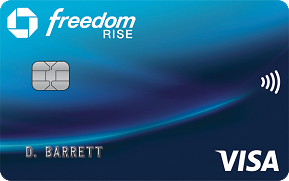
Freedom Rise is designed to be a first real credit card, not a forever rewards card
Chase Freedom Rise is aimed at people who are new to credit, including students and young adults who may not yet have an established revolving-credit history. Chase says no prior credit history is required to qualify, which makes the product more approachable than many mainstream rewards cards that are marketed to applicants with established credit profiles.
That does not mean approval is automatic. Chase still evaluates the application, and the bank states that having at least $250 in Chase checking or savings can increase the applicant’s chances of approval. Chase describes that deposit relationship as helpful, not as a guarantee. Income, existing obligations and other underwriting factors still matter.
The card’s structure fits that audience reasonably well. There is no annual fee, the rewards are simple and there is no complex category calendar to manage. A new cardholder can put a few normal purchases on the account, learn how statements and due dates work and earn 1.5% cash back without needing to optimize every transaction.
The card also has a built-in graduation path. Chase says Freedom Rise cardmembers are automatically evaluated each year for an upgrade to Freedom Unlimited when current conditions are met. That gives the product a clear role: help the cardholder establish a track record, then potentially move into a stronger rewards card without requiring the original account to be abandoned.
This is why Freedom Rise should not be judged against premium rewards cards. Its real competition is other starter and student products. Within that group, a no-fee card with 1.5% cash back, purchase protections and a possible upgrade path is a strong package.
The 1.5% base rate is simple enough for a first card
Freedom Rise earns unlimited 1.5% cash back on purchases under the current rewards program. That is not the highest flat rate available, but it is better than a 1% starter card and requires no category activation.
A cardholder who spends $500 per month on purchases that would have happened anyway would put $6,000 on the card over a year. At 1.5%, that spending would earn $90 in cash back before considering the temporary dining offer. A 2% card would earn $120 on the same simplified spending, a $30 difference.
That difference matters more as spending grows. For a new-to-credit applicant, though, maximizing every fraction of a percentage point is usually less important than establishing reliable payment habits and avoiding interest. The card should not encourage more spending simply because cash back is available.
The flat structure can also reduce mistakes. There is no need to remember which supermarket qualifies, whether a quarterly category was activated or whether a spending cap has already been reached. That makes the card easier to manage alongside school, a first job or a changing budget.
Once the cardholder’s spending and credit profile grow, the 1.5% rate may become less compelling. That is where the Chase upgrade path becomes more important than the original rewards rate.
The temporary 3% dining offer is useful, but it should not define the card
Chase currently offers 3% total cash back on eligible dining purchases during the first six months from account opening, up to $6,000 in dining purchases. Chase explains that this is 1.5% additional cash back on top of the permanent 1.5% base rate.
That structure means the promotion is valuable only for the first six months or until the dining cap is reached, whichever comes first. It is not a permanent 3% dining category on Freedom Rise.
A new cardholder spending $150 per month on eligible dining during the first six months would spend $900 and earn $27 at 3%. At the ordinary 1.5% rate, the same spending would earn $13.50. The temporary promotion therefore adds $13.50 in this simple example.
The promotion can be useful, but it is not large enough to justify eating out more often. A starter card should support an existing budget, not create a reason to increase discretionary spending. The best use is simply putting normal qualifying dining purchases on the card while the offer is active.
After the promotion ends, dining returns to the standard Freedom Rise rewards structure. A cardholder who later wants permanent bonus rewards on dining may find Freedom Unlimited or another card more attractive.
The $25 autopay credit is small, but the behavior behind it matters
Freedom Rise currently offers a $25 statement credit when a new cardholder sets up automatic payments within the first three months of opening the account and remains enrolled for at least 90 consecutive days. Chase says the credit posts after the qualifying period under the offer terms.
Twenty-five dollars is not a large signup bonus, but the incentive is unusually aligned with good account management. Autopay can reduce the risk of forgetting a due date, which is especially useful for someone learning how a first credit card works.
Autopay is not a substitute for reviewing the account. A linked bank account still needs enough money to cover the scheduled payment, and the cardholder should check statements for unexpected charges, duplicate transactions or spending that has grown faster than planned.
For someone who can afford to do so, paying the full statement balance is generally much more valuable than earning the $25 credit. The current regular APR is high enough that one or two months of interest on a meaningful balance can exceed the value of the statement credit quickly.
The incentive is best viewed as Chase rewarding a useful habit rather than as a major financial benefit.
Chase’s $250 deposit guidance can improve odds without turning approval into a certainty
Chase currently states that having at least $250 in Chase checking or savings accounts increases the chance of approval for Freedom Rise. That is unusually specific language from an issuer, and it can be helpful for an applicant deciding how to prepare before applying.
The key phrase is “increases your chances.” Chase does not promise approval at a $250 balance. The bank can still consider income, debt, identity verification, existing Chase relationships and other underwriting information.
Chase also notes that additional verification documents may be required after application, including documents such as a U.S.-issued driver’s license and Social Security card. A new applicant should be prepared for identity verification rather than assuming an instant decision.
Opening or funding a Chase bank account solely for an approval boost should also be considered carefully. A deposit account has its own fees, minimums and features. If the account makes sense independently, the relationship can be useful. If not, the credit-card approval benefit alone may not justify changing banks.
The deposit guidance is best treated as a helpful signal from Chase, not as a shortcut around underwriting.
Under 21, ability-to-pay rules still matter
Freedom Rise is marketed to students and people who are new to credit, but federal ability-to-pay rules still apply. Card issuers generally must consider whether an applicant can make the required payments before opening a credit-card account.
Applicants under 21 face stricter requirements. Federal Regulation Z generally requires independent ability to make the minimum payments unless a qualifying cosigner, guarantor or joint applicant arrangement applies under the law. Student status does not remove that requirement.
Current or reasonably expected wages, salary, tips and certain other income or assets can be considered under the applicable rules. Applicants should follow Chase’s instructions and report income accurately rather than inflating numbers to improve approval odds.
For applicants age 21 or older, issuers have more flexibility to consider income or assets to which the applicant has a reasonable expectation of access. The exact underwriting process remains Chase’s decision.
The practical lesson is simple: Freedom Rise can be accessible to someone without prior credit history, but that is different from being accessible to someone without the financial capacity to repay the account.
The APR is the most important number on the page once a balance is carried
Freedom Rise currently lists an 18.24% to 27.74% variable APR. There is no 0% introductory purchase APR on the public Freedom Rise offer.
That makes carrying a balance expensive. A 1.5% cash-back rate cannot compensate for sustained interest above 18%. Someone earning $15 of cash back on $1,000 of purchases can lose far more than $15 if a large portion of that balance remains unpaid for months.
This is especially important for a first card because rewards can make spending feel productive. The cardholder may think, “I earned cash back,” while the interest cost quietly outweighs the reward. The only durable way to make the cash back valuable is to avoid unnecessary interest.
A first credit card does not need a large amount of monthly spending to help establish payment history. A few predictable charges can be enough to learn statement management and build a record over time.
Freedom Rise works best as a paid-off rewards card rather than as a borrowing tool.
The 3% foreign transaction fee makes it a poor study-abroad card
Freedom Rise currently carries a 3% foreign transaction fee. That is a significant weakness for students or young adults planning international travel.
A $1,500 equivalent of foreign purchases would create about $45 in issuer foreign transaction fees at 3%. At the ordinary 1.5% rewards rate, the same spending would earn about $22.50 in cash back. The fee would be roughly twice the reward value.
That makes Freedom Rise a poor choice for routine spending abroad. A no-foreign-transaction-fee student or starter card is a better travel companion, even if its domestic rewards rate is similar.
The foreign fee also matters when comparing Freedom Rise with other Chase products. Freedom Rise is designed around building credit and a future upgrade path, not around international travel.
A cardholder who later begins traveling regularly may have another reason to graduate to a different product.
The annual Freedom Unlimited evaluation is the most interesting long-term feature
Chase says Freedom Rise cardmembers are automatically evaluated each year for an upgrade to Chase Freedom Unlimited when current eligibility conditions are met. Chase currently lists conditions including keeping the Freedom Rise account open, making a purchase in the previous 12 months, making all payments to financial lenders on time during the previous 12 months and keeping Chase accounts free from suspension.
An automatic upgrade can be useful because Chase says the move to Freedom Unlimited does not require a new credit check. Chase also says the account’s credit score and credit limit do not change merely because of the upgrade itself.
Freedom Unlimited offers stronger permanent rewards than Freedom Rise, including 3% on dining and drugstores, 5% through Chase Travel℠ and 1.5% on other purchases under the current product structure. That gives a successful Freedom Rise cardholder a clear improvement path without needing to start from scratch.
The upgrade should not be treated as guaranteed. Chase evaluates eligibility under the current rules, and product terms can change. A cardholder should build good financial habits because they are financially useful, not merely to chase a future product conversion.
Still, the upgrade path is a meaningful differentiator. Many starter cards help establish history but provide no clear next step. Freedom Rise makes the next stage visible.
A possible credit-line increase after six months can help, but more credit is not a reason to spend more
Chase says Freedom Rise cardmembers may be evaluated for a credit-line increase in as soon as six months. A higher credit limit can provide additional flexibility and can reduce the percentage of available credit being used when spending remains unchanged.
The important condition is keeping spending under control. A higher limit is not extra income. If a cardholder receives a larger credit line and immediately increases spending to fill it, the financial benefit disappears.
Chase’s own educational material emphasizes payment behavior and account status when discussing credit-line increases. Paying on time and paying down balances are healthier signals than using every dollar of available credit.
A new cardholder should therefore think of a higher limit as additional capacity for emergencies or routine account management rather than as permission to expand the budget.
The same logic applies to the eventual Freedom Unlimited upgrade. Better rewards and a larger limit are useful only when the spending remains affordable.
The protections are better than many people expect on a starter card
Freedom Rise includes purchase protection and extended warranty protection under the current Chase benefits structure. Eligible new purchases can be covered against theft or damage for 120 days, up to $500 per item, with New York residents subject to a 90-day coverage period under the current terms.
Extended warranty protection can add one year to an eligible U.S. manufacturer’s warranty of three years or less, subject to the Guide to Benefits. That can be useful for electronics and other purchases a new cardholder may make during school or early employment.
Chase also lists trip cancellation and interruption coverage for eligible prepaid, non-refundable passenger fares, with current limits of up to $1,500 per covered traveler and $6,000 per trip when a covered reason applies.
These benefits do not turn Freedom Rise into a premium travel card. They do give the product more substance than a basic starter account whose only feature is reporting to the credit bureaus.
The insurance terms, coverage limits and exclusions should be reviewed before relying on a benefit for an expensive purchase or trip.
DoorDash is a temporary extra, not a reason to choose the card
Freedom Rise currently includes access to a complimentary DashPass period when activated by the stated deadline, followed by paid renewal unless canceled. Chase also lists a quarterly non-restaurant DoorDash promotion for enrolled eligible cardmembers during the current benefit window.
These perks can be useful for someone who already uses DoorDash, but they have expiration dates and program conditions. A starter card should not be selected based on a temporary delivery benefit.
The permanent features matter more: no annual fee, 1.5% cash back, credit-building access and the upgrade path to Freedom Unlimited.
Temporary partner offers should be treated as extra value while they exist rather than as part of the long-term case for keeping the account.
Who should consider Freedom Rise?
The strongest candidate is someone who is new to credit and wants a straightforward unsecured card without an annual fee. Chase’s statement that no prior credit history is required to qualify makes Freedom Rise particularly relevant to a first-time applicant.
A student or young adult with an existing Chase checking or savings relationship may also find the card appealing because Chase says at least $250 in deposit accounts can improve approval chances.
The card is a good fit for someone who values a clear upgrade path. A cardholder who develops strong payment habits can be evaluated for Freedom Unlimited without needing to treat Freedom Rise as a permanent end state.
The temporary dining promotion and $25 autopay credit provide useful first-year extras, but they should be viewed as bonuses around the starter-card proposition rather than the central reason to apply.
Who should skip Freedom Rise?
A person with an established credit history who can qualify for a stronger no-annual-fee rewards card should compare those options first. Freedom Unlimited, flat-rate 2% cash-back cards and richer category products can offer better long-term rewards.
Anyone planning to carry a balance should also be cautious. The current variable APR is high enough that interest can erase cash-back value quickly.
International travelers and students studying abroad should prefer a card without a foreign transaction fee. Paying 3% abroad is difficult to justify on a card earning only 1.5% cash back.
And someone who wants a large signup bonus will find Freedom Rise modest. The current $25 autopay credit is useful but much smaller than mainstream welcome offers.
The real value of Freedom Rise is the bridge it creates
Freedom Rise is not trying to be the card a customer uses forever. Its best feature is that it gives someone with little or no prior credit history a reasonably useful account today and a visible path to something better later.
The 1.5% cash-back rate makes the card less painful to use than a zero-rewards starter account. The temporary 3% dining offer and $25 autopay credit add some early value. Purchase protections and Chase Credit Journey give the account more substance.
The more important milestone is what happens after a year of good behavior. If Chase upgrades the account to Freedom Unlimited, the same relationship can move from a starter-card role into a stronger rewards structure without requiring the cardholder to abandon the original path.
That makes Freedom Rise a good fit for someone who sees a first credit card as a beginning rather than a trophy. The goal is not to maximize cash back in month one. It is to establish habits and history that make better financial options available later.