


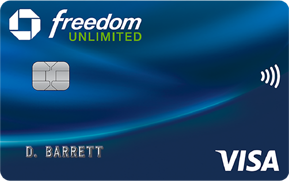
Where the Chase Freedom Unlimited earns its keep
Freedom Unlimited makes the strongest case for itself as a multi-purpose everyday card. Many no-annual-fee cards are easy to understand because they do one thing: earn a flat rate, rotate through bonus categories or provide a temporary financing offer. Freedom Unlimited blends those jobs. It gives you permanent bonus rates in two common spending categories, a higher rate on Chase Travel℠ bookings, a respectable return everywhere else and a 15-month 0% introductory APR on both purchases and balance transfers.
That breadth matters more than it may sound. A card can be mathematically excellent and still be inconvenient if you need to remember quarterly activations, track a complicated cap or carry several cards to cover ordinary spending. Freedom Unlimited is not completely flat-rate, but its 3% dining and drugstore categories work without quarterly activation, while the 1.5% base rate means you are not left with a token return when a purchase falls outside a bonus category.
The $0 annual fee also changes the decision. There is no yearly break-even calculation just to justify keeping the account. If the rewards fit your spending, you can keep using it. If another card becomes better for a particular category later, Freedom Unlimited can still serve as a no-fee backup or as part of a broader Chase Ultimate Rewards setup. That flexibility is a major reason we rate the card highly, even though several competitors beat it on individual features.
The rewards structure is better than the 1.5% headline suggests
Freedom Unlimited earns 5% cash back on travel purchased through Chase Travel℠, 3% on dining at restaurants, including eligible takeout and delivery, 3% at drugstores and 1.5% on other purchases. The dining and drugstore rates are the most important parts of that structure for long-term use because they apply to categories many households encounter regularly and do not require you to wait for a quarterly calendar.
The 1.5% base rate is the obvious weak point. A 2% flat-rate card earns an extra half percentage point on spending that would otherwise fall into Freedom Unlimited’s base category. If you put $12,000 a year of non-bonus purchases on Freedom Unlimited, 1.5% back would produce $180. A 2% card would produce $240 on the same hypothetical spending, a $60 difference. That is not huge for every budget, but it is enough to matter if nearly all of your card spending earns the base rate.
The bonus categories can narrow or reverse that gap. Suppose the same household also spends $4,000 a year on dining. Freedom Unlimited would earn $120 on that dining at 3%, while a 2% card would earn $80, recovering $40 of the $60 base-rate disadvantage in this simplified example. Drugstore spending and eligible Chase Travel purchases can add more. The point is not that Freedom Unlimited always beats a 2% card. It is that the correct comparison depends on how much of your real spending lands in the 3% and 5% categories.
The 5% Chase Travel rate deserves a little more skepticism than the permanent dining and drugstore categories. It is a strong headline rate, but you only earn it when the travel is purchased through Chase Travel℠. Travelers who prefer booking directly with an airline or hotel, want to use elite-status benefits tied to direct bookings or simply find a better price elsewhere should not treat 5% as the card’s universal travel return. For direct travel purchases that do not otherwise qualify for a bonus category, the ordinary 1.5% rate may apply.
Cash back is really Ultimate Rewards points
Chase markets Freedom Unlimited as a cash-back card, but the rewards are tracked as Ultimate Rewards® points. Under the current Freedom Unlimited rewards agreement, 100 points equals $1 when redeemed for cash, and Chase says points can also be used for options such as gift cards and travel. The agreement currently values cash, gift-card and travel redemptions at one cent per point, while other redemption methods can be worth more or less.
That distinction matters because not every redemption is equally attractive. Chase’s current offer terms, for example, state that using points through Amazon Shop with Points gives a lower redemption value of $0.80 per 100 points. If the same 10,000 points can be redeemed for $100 in cash, using them for $80 of Amazon value would be a poor trade unless there were another promotion changing the economics. A cash-back card should be simple to redeem, and Freedom Unlimited generally is, but cardholders should still check the value before choosing a non-cash option.
Points do not expire while the account remains open and in good standing under the program rules, although Chase lists circumstances in which points can be lost, such as certain account closures or program misuse. There is also no need to redeem after every statement. That makes it reasonable to accumulate points for a larger cash redemption or to save them until you decide whether a broader Chase setup would be useful.
Freedom Unlimited becomes more interesting when paired with another eligible Chase card. Its own rewards agreement allows points to be combined with other eligible Chase Ultimate Rewards cards belonging to you or, under Chase’s rules, one household member. Freedom Unlimited itself does not provide direct transfers to airline and hotel loyalty programs. Chase currently reserves that transfer capability for cards such as Sapphire Preferred®, Sapphire Reserve® and Ink Business Preferred®. If you hold an eligible transfer-enabled card, combining Freedom Unlimited points into that account can turn everyday cash-back earnings into a more flexible travel-rewards pool.
That pairing potential should not be mistaken for guaranteed extra value. Transfer partners have their own award pricing and availability, and redemption values can change. A person who wants uncomplicated cash back can ignore the travel ecosystem entirely and still get a useful card. Someone already invested in Chase Ultimate Rewards may value Freedom Unlimited more because the same points can serve a different purpose after they are combined with an eligible account.
The welcome offer is good, but eligibility matters
The current public offer is $200 after you spend $500 on purchases in the first three months from account opening. That spending requirement is modest compared with welcome offers that require several thousand dollars of purchases, so it is relatively accessible for a mainstream no-annual-fee card. The bonus is issued as 20,000 points, which Chase says can be redeemed for $200 cash back under the current offer terms.
Do not assume the bonus is available simply because an application is approved. Chase currently says the product is not available to current cardmembers of this credit card or previous cardmembers who received a new-cardmember bonus for this card within the past 24 months. The account also has to remain open and not in default when the bonus is fulfilled. Chase notes that offers can vary by application channel and can change over time, so the offer shown when you apply should be treated as the controlling version.
Not every transaction counts toward the $500 requirement. Chase excludes transactions such as balance transfers, cash advances and other cash-like transactions, interest and fees from qualifying purchases. That is another reason not to move a balance and assume it will also help earn the bonus. The simplest approach is to meet the spending requirement with purchases you would have made anyway and pay attention to the three-month deadline.
The welcome offer strengthens the first-year case, but it should not be the reason to keep the card. After the bonus is gone, the long-term value comes from the permanent rewards categories, the no-annual-fee structure and the way the card fits into your broader wallet. A strong signup bonus can make a mediocre card look temporarily attractive. Freedom Unlimited has the advantage of remaining useful after that first incentive disappears.
The 0% intro APR adds real utility, with limits
Freedom Unlimited currently offers 0% intro APR for 15 months from account opening on purchases and balance transfers. After the introductory period, Chase lists a variable APR of 18.24% to 27.74%, depending on creditworthiness and other factors. A balance-transfer fee applies. This is a meaningful financing feature, but it should be evaluated separately from the rewards program because carrying revolving debt at the regular APR can quickly overwhelm the value of cash back.
For purchases, the introductory period can be useful when you have a planned expense and a clear repayment schedule. If you finance a large purchase, divide the balance by the number of months you actually have available rather than waiting until the final statement to think about repayment. The goal should be to reach a zero balance before the promotional period ends, not merely to make minimum payments while the clock runs.
The balance-transfer offer is more nuanced. Fifteen months can save meaningful interest if you can repay the transferred balance within that period, but specialist balance-transfer cards may offer longer promotional windows. The transfer fee also reduces the savings, particularly on a smaller balance or when you could repay the debt quickly without moving it. Before transferring, compare the fee, the number of promotional months and the regular APR that would apply to any balance left after the offer expires.
Rewards should be a secondary consideration when debt payoff is the main objective. A card offering an extra fraction of a percentage point in cash back is not automatically better if another card gives you several additional months at 0% APR. Readers focused primarily on financing should compare our best 0% APR credit cards and best balance transfer credit cards rather than choosing Freedom Unlimited solely because it also earns rewards.
The benefits are unusually useful for a $0 annual fee card
Freedom Unlimited includes several protections that are easy to overlook because the card is marketed primarily around cash back. Chase currently lists purchase protection, extended warranty protection, trip cancellation and interruption insurance, auto rental coverage and travel and emergency assistance for the Freedom family. These are not premium-card benefits on the scale of airport lounge access or broad travel credits, but they can still provide practical value when an eligible purchase or trip goes wrong.
Purchase protection currently covers eligible new purchases against damage or theft for 120 days from the purchase date, up to $500 per item. Extended warranty protection can add one year to an eligible manufacturer’s U.S. warranty of three years or less, subject to the benefit terms. Those benefits can matter on electronics, appliances and other purchases where a repair or replacement would be painful, but the coverage is not a substitute for reading the Guide to Benefits before relying on it.
Trip cancellation and interruption insurance can reimburse up to $1,500 per covered traveler and $6,000 per trip for eligible prepaid, non-refundable passenger fares when a covered reason applies. Auto Rental Coverage can reimburse eligible theft or collision damage to many rental vehicles when the rental company’s collision coverage is declined and the rental is paid with the card. Chase describes the coverage as secondary in the United States in many circumstances, while it may operate differently when you do not have personal auto insurance or are renting outside your country of residence.
These protections make Freedom Unlimited a more credible travel backup than its annual fee would suggest, but the 3% foreign transaction fee keeps it from being a strong card for international spending. Paying a 3% fee on purchases abroad would erase the value of a 1.5% cash-back rate and then some. If international travel is frequent, a card with no foreign transaction fee should usually handle those purchases even if you keep Freedom Unlimited for domestic dining, drugstores and everyday spending.
Chase also advertises temporary partner benefits. As of our current review, eligible Freedom Unlimited cardmembers can activate six months of complimentary DashPass by the stated deadline in 2027, with automatic paid renewal after the complimentary period unless canceled, and qualifying Lyft purchases currently earn 2% cash back total through September 30, 2027. These can be useful extras, but we would not base a long-term card decision on benefits with expiration dates. The permanent rewards and protections are more important to the card’s core value.
Who should consider Chase Freedom Unlimited
Freedom Unlimited fits someone who wants a single no-annual-fee card to cover a broad range of ordinary spending without rotating categories. The card is especially attractive if dining and drugstores account for a meaningful share of your budget because those 3% categories can offset part of the weaker 1.5% base rate. It also works well for someone who occasionally uses Chase Travel℠ and is comfortable comparing portal prices with direct booking options before choosing where to buy.
Existing Chase Ultimate Rewards users have another reason to consider it. If you already hold an eligible Sapphire or Ink card that can transfer points to travel partners, Freedom Unlimited can act as an everyday earning companion. You can use it for 3% dining and drugstores or 1.5% miscellaneous spending, then combine the points with the transfer-enabled account when that creates a better redemption opportunity. That setup is optional, not a requirement for getting value from the card.
The current welcome offer and 15-month intro APR also make Freedom Unlimited reasonable for someone who wants first-year value without paying an annual fee. A planned purchase can benefit from the promotional APR if you have a disciplined repayment plan, while the $500 welcome-bonus requirement is low enough that many households can meet it with normal purchases rather than manufactured spending.
Finally, the card is a good fit for people who value keeping a long-standing no-fee account open. There is no annual fee forcing an annual keep-or-cancel decision. Credit-profile effects depend on the rest of your situation and are not a reason to open a card by themselves, but the absence of an annual fee does make long-term ownership less costly if the card continues to serve a purpose.
Who should skip it
Start with the base rate. If almost every purchase you make would earn only 1.5%, a strong 2% flat-rate card is likely to be the cleaner choice. Freedom Unlimited needs its bonus categories to do some of the work. A person who rarely eats out, buys little at drugstores and avoids travel portals may be accepting a lower everyday rate without getting enough in return.
Frequent international travelers should also look elsewhere for their primary spending card. The 3% foreign transaction fee is a material weakness, not a footnote. Even though Freedom Unlimited offers useful travel-related protections and 5% back through Chase Travel℠, those features do not make a 3% fee on foreign purchases disappear.
People carrying expensive credit-card debt may be better served by a specialist balance-transfer card with a longer 0% period, even if that card earns no rewards at all. Fifteen months is useful but not market-leading in every comparison. When the goal is to eliminate interest, repayment time and transfer cost matter more than a rewards ecosystem.
Freedom Unlimited is also less compelling if you dislike travel portals and want a card whose highest rates work regardless of booking channel. The 5% travel rate is valuable only through Chase Travel℠. Travelers who place a premium on booking directly with hotels and airlines should judge the card primarily on its dining, drugstore and 1.5% base rates instead.
Is the Chase Freedom Unlimited worth it?
For many everyday spenders, yes. Freedom Unlimited earns our 4.8/5 MarketReview rating because its strengths reinforce one another without an annual fee. The 3% dining and drugstore categories are genuinely useful, the 1.5% base rate is respectable even if it is not class-leading, the current welcome offer is easy to understand, and the 15-month intro APR gives the card a financing role that many rewards cards lack.
The card also has more depth than the phrase “cash back” suggests. Rewards are tracked as Ultimate Rewards points, cash redemption is straightforward, and the ability to combine points with other eligible Chase cards can make the same earnings more useful for people who later build a Chase travel-rewards setup. The purchase and travel protections are a meaningful bonus on a product that costs $0 a year to keep.
Its weaknesses are equally clear. A 2% flat-rate card can earn more on non-bonus purchases. The foreign transaction fee makes Freedom Unlimited a poor choice for spending abroad. The highest travel earning rate requires Chase Travel℠, and the balance-transfer period is not the longest available. Those drawbacks keep the card from being an automatic answer for every household.
The best reason to choose Freedom Unlimited is not that it wins every category. It is that it remains competitive across several of them at the same time. If you want one no-annual-fee card with useful everyday bonuses, uncomplicated cash-back redemptions, a solid first-year offer and the option to plug into a larger Ultimate Rewards strategy, it is one of the strongest all-around choices in the market. If your priorities are a 2% flat rate, fee-free international spending or a longer 0% APR window, our best cash back credit cards and financing guides are better places to look for alternatives.