


The real appeal is what you do not have to manage
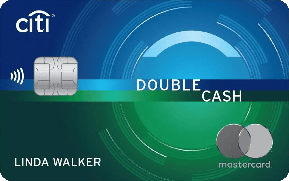
Citi Double Cash is a flat-rate card for readers who would rather make one good default choice than optimize every purchase. There are no quarterly categories to activate, no spending cap on the core cash-back rate and no annual fee to recover before the rewards become worthwhile. The result is a card that can sit at the center of a simple wallet and produce a competitive return on groceries, utilities, medical bills, insurance payments, online shopping and most other purchases that do not naturally fit a high-value bonus category elsewhere.
That simplicity is not the same as being the highest-earning card in every situation. A good grocery card can beat 2% at supermarkets. A dining card can beat it at restaurants. A travel card may offer richer rewards and protections on flights or hotels. Double Cash wins when the alternative is a collection of categories you do not want to track or a 1% to 1.5% catch-all rate that leaves money on the table.
The $0 annual fee strengthens that role. You do not need to spend a certain amount just to break even on a yearly charge, and there is less pressure to close the account if your spending pattern changes. That makes Double Cash useful both as a primary card for a minimalist and as a long-term backup card for someone who later adds specialized rewards products.
MarketReview rates Citi Double Cash 4.7/5 because it performs its core job unusually well. It is not trying to be a premium travel card or a complicated category maximizer. It is a strong general-purpose cash-back card with an additional balance-transfer use case. The main question is whether that straightforward proposition is more valuable to you than chasing higher rates in specific categories.
The 2% rate has an important two-step mechanic
Citi describes the core rewards as unlimited 2% cash back on purchases: 1% when you buy and another 1% as you pay. Cash back is tracked in the form of ThankYou® Points. Each billing cycle, Citi says you earn one ThankYou Point per $1 spent on qualifying purchases and another point per $1 paid on the corresponding purchase balance.
For someone who routinely pays the statement balance, the distinction is mostly about timing. A $1,000 qualifying purchase can ultimately produce the equivalent of $20 in total cash back under the 2% structure, but the second half arrives as the purchase balance is paid rather than all at once when the transaction posts. That is different from a conventional 2% card that awards the entire return from the purchase itself.
The payment-linked design reinforces a behavior that is already financially important: rewards are most useful when the card is paid without revolving high-interest debt. A 2% reward does not compensate for months of interest at a typical credit-card APR. The card does not make carrying a purchase balance a good strategy just because payment also earns the second half of the rewards.
The structure can also create a small psychological trap. Seeing “2%” may make the card feel like a guaranteed immediate return, but the full 2% is conditional on the purchase balance being paid. Readers should think of Double Cash as a 2% card for normal paid-off purchases rather than as a reason to spend more or delay repayment.
Compared with a 1.5% flat-rate card, the difference is easy to illustrate. On $20,000 of qualifying annual spending, 2% total cash back would equal $400 while 1.5% would equal $300, a $100 difference before considering welcome offers or bonus categories. Compared with another true 2% card, however, the decision comes down to features, redemption options, financing terms and whether you prefer Citi’s buy-and-pay mechanics.
Citi Travel adds a bonus category without changing the card’s basic character
Double Cash now earns 5% total cash back on eligible hotels, car rentals and attractions booked through Citi Travel. Citi explains the rate as the standard 2% structure plus an additional 3% on qualifying portal purchases. This gives a flat-rate card one meaningful bonus area without turning it into a category-management exercise.
The extra return can be worthwhile when Citi Travel has the hotel, rental car or attraction you already planned to book at a competitive price. A $500 eligible booking at 5% total could produce $25 in cash back under the current structure. At the ordinary 2% rate, the same amount would produce $10, so the portal bonus adds $15 in this simplified example.
The higher rate should not decide where you book by itself. Travel portals can differ from direct hotel or rental-car bookings in price, cancellation terms, loyalty recognition and how changes are handled. If a direct booking is cheaper or offers benefits you value, an extra few percentage points of cash back may not make the portal the better overall deal.
It is also important to notice what Citi does not list in this 5% category. The current Double Cash offer focuses on hotels, car rentals and attractions through Citi Travel. It should not be read as a blanket 5% rate on every travel purchase or every flight. For ordinary purchases outside the qualifying Citi Travel categories, the standard Double Cash earning structure applies.
This is a useful enhancement because it does not undermine the card’s main strength. Someone who never uses Citi Travel can still evaluate Double Cash as a 2% general-spending card. Someone who occasionally finds a good portal booking gets an additional upside. That is a healthier design than a rewards card whose advertised value depends almost entirely on using a proprietary portal.
Redemption is straightforward, but ThankYou Points create more than one path
Although Citi markets Double Cash as a cash-back card, the rewards are earned as Citi ThankYou® Points. Citi currently allows Double Cash cardholders to redeem for cash back as a statement credit, direct deposit or check by mail. The product page also points to other options including gift cards, Citi Travel and Shop with Points at participating retailers.
For a reader choosing Double Cash because of simplicity, cash redemption is the most natural benchmark. A statement credit can reduce the account balance, a direct deposit can move value to a bank account and a check can provide a more traditional cash payout. Citi’s current product materials say checks have a $5 minimum, while direct deposit and statement-credit options are more flexible.
The presence of ThankYou Points does not mean every redemption method is equally valuable. Citi explicitly notes that point values can vary depending on how you redeem. That matters for gift cards, shopping and travel because a redemption that uses more points for the same dollar value can quietly reduce the effective return below the headline 2%.
The practical rule is simple: compare the dollar value before redeeming. If a cash option provides a clear value and a shopping redemption provides less, there is little reason to accept the lower return unless convenience matters more to you. Double Cash is strongest when the rewards remain easy to understand, and unnecessarily complicated redemptions work against that advantage.
Citi also provides access to Citi Travel for points-based bookings and allows a combination of points and card payment in some travel contexts. That can be useful, but Double Cash does not need a travel strategy to justify itself. The card works perfectly well as a cash-back product for someone who has no interest in transfer partners, award charts or loyalty-program optimization.
The 18-month balance-transfer offer is useful, but mixing debt payoff and new purchases requires care
Citi Double Cash currently offers 0% introductory APR for 18 months on balance transfers from account opening, with qualifying transfers required within the first four months. Citi currently lists an introductory transfer fee of 3% of each transfer, with a $5 minimum, for transfers completed during that four-month window. After the introductory transfer-fee period, the fee rises to 5%, with a $5 minimum.
An 18-month window can be meaningful for someone moving high-interest debt. For example, transferring a $6,000 balance with a 3% introductory fee would add $180 in transfer cost, producing a starting transferred amount of roughly $6,180 if the fee is added to the balance. Dividing that by 18 months gives an illustrative repayment pace of about $343 per month before considering any other charges. The example is only a planning illustration, but it shows why the transfer fee and monthly payoff target should be evaluated together.
The most important Double Cash balance-transfer warning is about purchases. Citi states that the introductory transfer APR does not apply to purchases. It also warns that if you transfer a balance, interest can be charged on purchases unless you pay the entire balance, including transferred balances, by the due date each month. That makes Double Cash potentially awkward as both a debt-payoff card and an everyday spending card at the same time.
Someone using the card primarily for a balance transfer may be better off keeping new purchases off the account while the transferred balance remains. Otherwise the card’s 2% rewards can become a distraction from the more important objective of avoiding purchase interest and paying down the promotional balance before the 18-month period ends.
Citi’s current public pages also show slightly different ongoing APR ranges in different places. The product comparison page currently lists a post-intro balance-transfer variable APR of 18.24% to 28.49%, while Citi’s Double Cash balance-transfer guidance displays 17.49% to 27.49% in its pricing discussion. Our product snapshot separately uses Citi’s current published purchase APR information and flags the discrepancy internally. Applicants should rely on the Pricing Details attached to the specific application they submit rather than assuming a web article’s range will be their final rate.
For readers whose only goal is debt payoff, a specialist card can still be better. Some balance-transfer products may offer a longer promotional period or a different fee structure, even if they earn no rewards. Compare the total transfer cost and the number of months you need, not just the fact that Double Cash also offers 2% back. Our best balance transfer credit cards guide is the more relevant starting point when financing is the primary decision.
The welcome offer is accessible, but the 48-month rule matters
Citi currently offers $200 cash back after $1,500 in purchases in the first six months of account opening. The six-month window makes the spending target relatively gentle compared with offers that demand several thousand dollars in the first 90 days. Averaged evenly, $1,500 over six months is about $250 per month.
That does not mean every transaction counts. Balance transfers do not earn cash back and should not be treated as welcome-bonus spending. Cash advances, fees and other non-purchase transactions are also not the kind of ordinary purchases the offer is designed to reward. The safest approach is to meet the requirement with normal budgeted spending you would have made anyway.
Eligibility is more specific than simply being a new applicant. Citi currently states that bonus ThankYou Points are not available if you received a new-account bonus for a Citi Double Cash account in the past 48 months. It also excludes some applicants who converted another Citi credit-card account into Double Cash when the converted account had earned a new-account bonus within the last 48 months.
That 48-month language is worth checking before applying because a $200 offer can materially change the first-year comparison between otherwise similar no-fee cards. If you are not eligible for the bonus, Double Cash may still be a strong long-term card, but another product with an available signup offer can deliver more immediate value.
As with any card offer, the terms shown in the application channel you actually use should control. Citi warns that offers can vary and may not be available elsewhere. Reverify the bonus and eligibility language immediately before applying rather than assuming a previously saved offer is still current.
The card has useful extras, but rewards remain the main event
Citi Double Cash includes several secondary benefits, but none changes the basic reason to choose the card. Citi currently lists extended warranty protection, Citi Entertainment®, access to a FICO® Score, $0 liability on unauthorized charges and Mastercard® ID Theft Protection subject to enrollment and program terms.
Extended warranty protection can be meaningful on eligible purchases because it may extend qualifying manufacturer coverage, but limits and exclusions matter. Readers buying an expensive item should review Citi’s current protection guide before relying on the benefit. It is better treated as a useful safety net than as a guaranteed replacement policy for every product failure.
Citi Entertainment can provide presale access and selected ticket opportunities for concerts, sporting events and other experiences. That can be convenient if you already want the event, but access is not the same as a cash credit and should not be assigned a fixed annual value.
FICO Score access and account-management tools are practical conveniences. They do not make Double Cash unique, but they support the low-maintenance character of the product. Citi also allows cardholders to choose among available payment due dates, which can help align the bill with a monthly cash-flow schedule.
What Double Cash does not offer is equally important. It is not a premium travel card with lounge access, airline credits or a broad collection of travel insurance. It also charges a 3% foreign transaction fee. A $1,000 equivalent of foreign purchases would create roughly $30 in foreign transaction fees, more than the $20 total cash back the same spending could eventually earn at the standard 2% rate. That makes the card a poor default for international spending.
Who is the Citi Double Cash actually best for?
The clearest fit is a person who wants one strong rate on ordinary spending and does not want to remember which card earns more at the grocery store, gas pump or restaurant. If simplicity increases the chance that you consistently use the right card and pay it on time, a flat 2% structure can outperform a theoretically richer setup that you do not manage well.
Double Cash is also useful as the catch-all card in a more complex wallet. Someone might use a separate card for 4% or 5% in a specific category and Double Cash for everything that would otherwise earn only 1%. In that role, the card’s no annual fee and uncapped core rate are especially attractive because there is no cost to keeping it available for miscellaneous spending.
The balance-transfer offer creates a second audience: someone who needs up to 18 months of 0% APR on a qualifying transferred balance and can avoid using the same card for new purchases while paying the debt down. For that reader, rewards are a future benefit rather than the primary reason to open the account.
The welcome bonus also makes Double Cash more competitive for a first-year cardholder than a flat-rate card with no signup incentive. $200 after $1,500 in six months is not the largest offer in the market, but it is achievable without forcing an unusually high spending pace for many households.
Finally, the card fits someone who prefers cash value over travel-rewards complexity. ThankYou Points create additional redemption choices, but you do not need to learn airline programs or search for award availability to get value from the card. Cash-back redemption remains central to the product.
Who should skip Citi Double Cash?
Skip it if most of your spending is concentrated in categories where another no-fee card can reliably earn 3%, 4% or 5%. A household with heavy grocery, dining or gas spending may earn more from a category-focused card even if that card is slightly more complicated.
Frequent international travelers should also look elsewhere. The 3% foreign transaction fee directly conflicts with the card’s 2% cash-back proposition. A no-foreign-transaction-fee card can preserve more value on purchases abroad even if its domestic flat rate is similar.
Double Cash is not a good choice if you need a 0% introductory APR on new purchases. Its promotional financing is designed around balance transfers, not a new purchase you plan to pay over time. A dedicated 0% purchase-APR card is better suited to that goal.
Someone using a balance transfer but intending to keep spending heavily on the same account should be cautious. Citi’s purchase-interest warning makes that combination less clean than it appears. A separate rewards card for new purchases may be easier to manage while Double Cash is being used as a payoff tool.
And if you care about premium travel protections, airport perks or a transfer-partner ecosystem as the main reason for opening a card, Double Cash is not designed for you. Its strength is dependable cash back with minimal maintenance, not luxury travel value.
Is Citi Double Cash worth it?
Yes for readers who value a strong default return more than category optimization. A $0 annual fee, unlimited 2% total cash back as you buy and pay, a current $200 welcome offer and a useful 18-month balance-transfer promotion make Double Cash one of the better all-purpose no-fee cards.
The card is particularly convincing when compared with a 1% or 1.5% general-spending card. Over enough ordinary purchases, the higher flat rate creates real value without asking you to alter where you shop. The 5% Citi Travel category adds some upside for eligible bookings while leaving the basic card simple.
Its limitations are straightforward rather than hidden. The full 2% is earned in two stages. There is no 0% purchase APR. The foreign transaction fee is 3%. Category cards can earn more in targeted areas, and the benefit package is modest next to dedicated travel cards. Balance-transfer users also need to understand that new purchases can accrue interest even while the transferred balance is in a promotional period.
Those drawbacks keep Citi Double Cash from being a universal answer, but they do not weaken the core proposition. A person who pays purchases in full, wants a category-free rate and has no need to use the card abroad gets exactly what the product promises: a simple path to 2% total cash back on a broad range of spending.
That is why Citi Double Cash earns a 4.7/5 MarketReview rating and remains one of our strongest choices for flat-rate cash back. If you want higher earnings in specific categories, compare our best cash back credit cards. If your main goal is debt payoff, compare the financing terms in our balance-transfer guide before deciding whether Double Cash’s combination of rewards and a promotional transfer window is the right compromise.